Tarot Card Meanings: Your Complete Guide to Every Card
By Blair Andrews · Published April 19, 2026 · Updated May 10, 2026

What Is Tarot?
A tarot deck is 78 pictures that tell stories. Not fortune-telling stories, but the kind of stories that make you stop and think, "that's exactly what's going on in my life right now." That's how tarot actually works.
You look at an image, something clicks, and suddenly you see your situation differently. No psychic powers required.
But before you go further, it's worth knowing where these cards actually came from, because the real story is more interesting than the myths.
I came to tarot through numerology — each card in the Major Arcana carries a number, and those numbers correspond directly to the same system this site is built on.
After years of studying both traditions side by side, what struck me most was how much richer each system becomes when you read them together. A Life Path 7 and the Chariot card aren't just associated. They illuminate each other in ways that neither tradition captures alone.
A Surprising Origin
Tarot cards first appeared in northern Italy in the 1420s as a card game called tarocchi. They were hand-painted, expensive, and played by aristocrats for entertainment. There was nothing mystical about them for over three hundred years.
The mystical tradition started in 1781, when Court de Gébelin published a claim, without a shred of evidence, that the cards were actually pages from an ancient Egyptian book of wisdom. That claim was almost certainly false.
But it took hold, and it permanently changed the way people related to the deck. Within a generation, tarot had been absorbed into Western esoteric tradition, and the game became an oracle.
The deck most people picture when they imagine a tarot card was created in 1909. A scholar and mystic named Arthur Edward Waite commissioned it. A woman named Pamela Colman Smith drew every single card by hand in about six months, working from Waite's instructions.
Smith is the person responsible for the visual language that defines modern tarot for most readers, and her name rarely appears on the cover of the deck she created.
Knowing this history doesn't weaken tarot. If anything, it reveals something remarkable. A card game, reinterpreted through an unfounded Egyptian theory, illustrated by an overlooked artist, somehow became one of the most psychologically useful symbolic systems in Western culture.
The power was never in the origin story. It was in what the images do to the people looking at them.
How the Cards Actually Work
Tarot cards work like a psychological projective test. When you look at an ambiguous image - a woman closing a lion's jaws, a man hanging upside down from a tree, a tower struck by lightning, your response reveals you.
Your fears, your hopes, your blind spots, the thing you already know but haven't admitted yet. The cards don't predict your future. They mirror your present.
A standard deck contains 78 cards. Twenty-two form the Major Arcana - soul-level milestones of the human experience, from the innocent leap of The Fool to the joyful completion of The World.
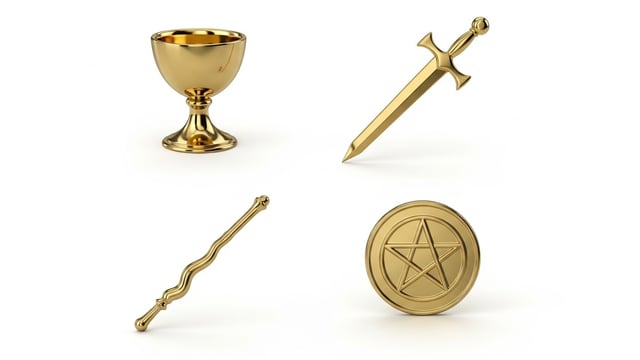
The remaining 56 cards make up the Minor Arcana, divided into four suits (Wands, Cups, Swords, and Pentacles), each representing a different dimension of everyday life: passion, emotion, thought, and material reality.
You don't need psychic gifts to read tarot. You need curiosity and a willingness to sit with honest questions. The cards don't have answers. You do. They just help you find them.
This guide walks you through every section of the deck, with links to in-depth articles so you can go as deep as you like. Use the table of contents below to jump straight to the section that calls to you.
THE SHORT VERSION
Tarot is a 78-card system that works as a psychological mirror, not a fortune-telling device. The 22 Major Arcana cards trace a journey of psychological maturation from innocence to wholeness.
The 56 Minor Arcana cards - across Wands, Cups, Swords, and Pentacles - map the everyday terrain of passion, emotion, thought, and material life. Every card carries a number, and that number is the key to understanding the entire system without memorizing 78 separate definitions.

The Major Arcana
 0 - Fool
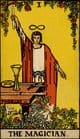 I - Magician
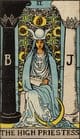 II - Priestess
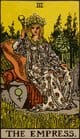 III - Empress
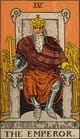 IV - Emperor
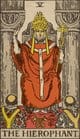 V - Hierophant
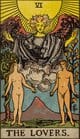 VI - Lovers
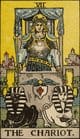 VII - Chariot
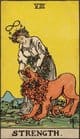 VIII - Strength
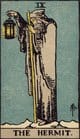 IX - Hermit
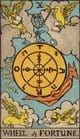 X - Wheel
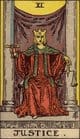 XI - Justice
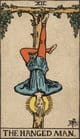 XII - Hanged Man
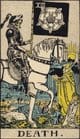 XIII - Death
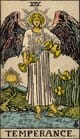 XIV - Temperance
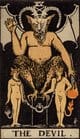 XV - Devil
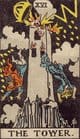 XVI - Tower
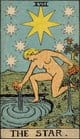 XVII - Star
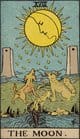 XVIII - Moon
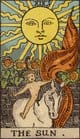 XIX - Sun
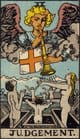 XX - Judgement
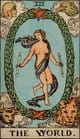 XXI - World
 | The 22 Major Arcana cards are the spine of the tarot deck. While the Minor Arcana handles the practical textures of daily life, these cards speak to the soul: the turning points, the initiations, the moments that rewrite who you think you are. |
Three Levels of Consciousness
The first three cards establish everything that follows. I didn't see this until I'd been studying the Major Arcana for years: the whole system is a set of variations on three themes laid down in the first three cards. The Fool (0) represents superconsciousness, pure life-force before it takes any particular form. The Magician (1) is self-consciousness, the focused mind that concentrates and directs. The High Priestess (2) is subconsciousness, the deep interior mind that remembers, connects, and reflects.
Every card that comes after is the Fool wearing a different costume. The Empress is the Fool creating. The Hermit is the Fool withdrawing to listen. The Tower is the Fool shattering a structure that no longer serves. One energy, 22 expressions.
The Maturation Arc
The Major Arcana isn't 22 separate ideas. It's one continuous journey, and each card carries a little of the card before it.
The Emperor must retain the Empress's heart or he becomes cold and disconnected. Strength must carry the Chariot's will or her gentleness has no direction. The sequence builds, step by step, toward a fully mature personality navigating the world.
The first half of the journey (The Fool through the Wheel of Fortune) tends to focus outward - identity, relationships, authority, learning how the world works. The second half, Justice through The World, turns inward, confronting shadow, practicing surrender, and arriving at spiritual integration.
The Hidden Structure
There's a mathematical architecture most people never notice, first mapped in detail by Paul Foster Case. Arrange cards 1 through 21 in three rows of seven.
Row 1 (Magician through Chariot) represents the level of instinct and desire, the raw drives of earthly life. These are the appetitive forces: will, memory, creativity, authority, learning, love, and the ambition to master the physical world. It's the part of you that wants, reaches, claims.
Row 2 (Strength through Temperance) represents the level of discipline and discernment. Here the raw drives meet restraint, reflection, justice, and surrender. The Hanged Man stops striving.
Death lets go of what no longer works. Temperance practices balance. This is the executive layer of the psyche, the part that chooses wisely rather than reacting.
Row 3 (The Devil through The World) represents the level of integration and transcendence. The Devil confronts bondage. The Tower demolishes false structures. The Star, Moon, and Sun work through progressively clearer states of consciousness. Judgement calls for complete self-reckoning. The World arrives at wholeness.
These three rows trace a psychological arc from desire to discipline to transcendence - a model of the mind that Plato described two thousand years before the first tarot deck was painted: one part that hungers, one part that governs, one part that seeks the whole.
Justice (11) sits at the mathematical center of the entire system. Every pair of cards equidistant from it sums to 22. This isn't decorative. It means Justice is the pivot point, the fulcrum around which the whole journey balances.
When a Major Arcana card appears in a reading, pay attention. It signals that something bigger than a passing mood is at play, a karmic lesson, a life turning point, a spiritual invitation you won't want to ignore.
If several Major Arcana cards show up in a single spread, the universe is practically tapping you on the shoulder. These tend to mark the chapters you'll look back on years from now and say, "That changed everything."

Suit of Wands
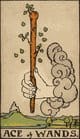
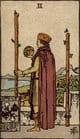
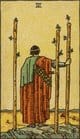
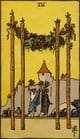
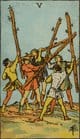
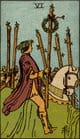
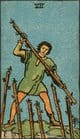
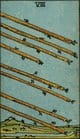
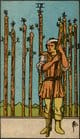
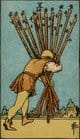
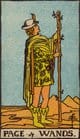
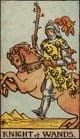
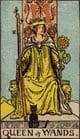
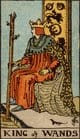
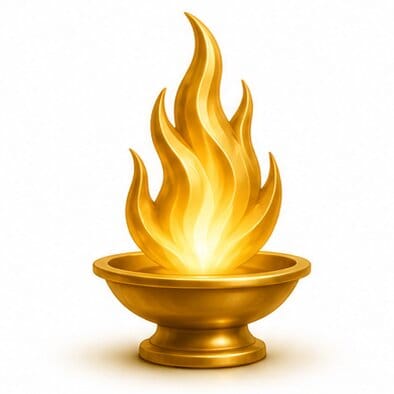 | Wands are the fire of the tarot, and fire is a specific kind of power. In the esoteric tradition, Wands represent inherent force: the energy you already carry inside you. |
Not borrowed, not invoked, not claimed from outside. The spark is yours. The leaves on every Wand card are alive and growing, reminding you that this power isn't static. It renews itself.
Why fire? Because will acts like fire. It ignites, it spreads, it burns through resistance, and it needs fuel or it goes out. Wands carry fire because they represent the burning, creative, directed force that starts things.
When you feel that restless need to do something that matters - that's Wands energy. That's fire looking for somewhere to land.
When Wands fill a reading, the question usually involves passion - a career calling, a creative project, or the restless urge to do something that matters.
The suit moves from the raw spark of the Ace to the heavy burden of the Ten, reminding us that passion without boundaries can burn as easily as it can warm.
Watch the numbers as you move through this suit. The Three of Wands is expansion, your initial spark growing beyond its original container.
The Five brings outer conflict, the friction that happens when your fire meets the world's resistance. The Seven is a struggle to maintain your ground against competing forces. These number patterns repeat across all four suits, and once you see them, you'll never need to memorize individual card meanings again.
Court cards in this suit show people (or parts of yourself) at different stages of mastering that fire. The Page discovers a spark of inspiration.
The Knight charges after it at full speed, all courage and no caution. The Queen channels it with warmth and magnetism. The King commands it with seasoned authority - fire that knows when to blaze and when to hold steady.

Suit of Cups
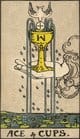
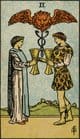
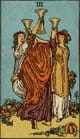
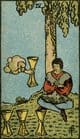
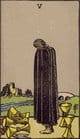
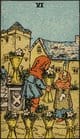
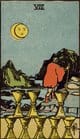
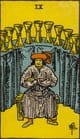
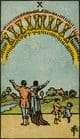
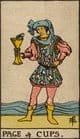
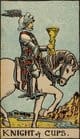
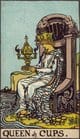
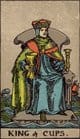
 | Cups are the water element made visible: flowing, feeling, deeply personal. This suit governs the emotional landscape: love, grief, intuition, connection, and the quiet inner life we don't always show the world. Where Wands are the fire you carry, Cups are the depths you contain. |
Water is the right element here because emotion and imagination share water's nature. They are receptive, formless until held, capable of extraordinary depth, and impossible to control by force.
You can dam water but you can't make it flow uphill. Cups represent that same quality in you - the inner world that moves according to its own logic, regardless of what your rational mind demands.
From the Ace's overflowing offering of new love to the Ten's picture-perfect emotional fulfillment, Cups trace the arc of our most intimate experiences. They can also reveal emotional avoidance - the upturned cups we refuse to look inside, the fantasies we choose over reality, the nostalgia that keeps us anchored to the past.
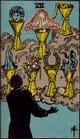
The Seven of Cups is one of the most quietly devastating cards in the entire deck, not because it promises suffering, but because it shows all your potential and none of your action.
Every possibility floats in a cloud, beautiful and untouched. I've pulled the Seven of Cups for more people in their thirties than any other card. Something about that decade: old enough to see what's possible, not yet committed to a specific version of it. The question it asks is uncomfortable — are you dreaming, or are you doing?
The court cards of this suit are some of the most nuanced in the deck. The Page arrives with a sweet, unexpected emotional message.
The Knight rides in with romantic idealism. The Queen holds space for deep feeling with compassion and grace. The King has learned to lead from the heart without being swept away by it - though his mastery has a shadow side. Subconscious feeling ruled too severely will eventually erupt.

Suit of Swords
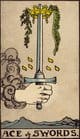
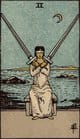
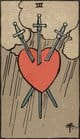
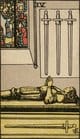
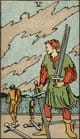
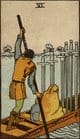
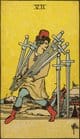
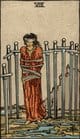
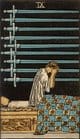
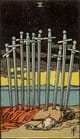
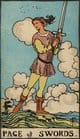
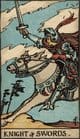
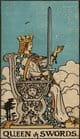
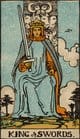
 | If Wands represent the fire you carry inside, Swords represent the force you invoke. Governed by the air element, this suit belongs to the mind - thoughts, beliefs, communication, decisions, and the conflicts that arise when truth collides with comfort. |
Air is the element of the mind because thought, like air, is invisible, sharp, and everywhere at once. A well-wielded thought cuts cleanly through confusion. A poorly wielded one wounds. Swords carry air because they represent the intellect in action - the part of you that analyzes, decides, and sometimes overthinks until the blade turns inward.
Swords energy isn't inherent the way Wands energy is. It's claimed, directed, wielded. That distinction matters.
A spread full of Swords can feel intense, and that's by design. The suit chronicles the journey from the Ace's breakthrough clarity to the Ten's painful but ultimately liberating moment of surrender.
Along the way you'll meet the sleepless anxiety of the Nine, the strategic deception of the Seven, the paralysis of the Two (thinking so much you can't move) and the Eight's complete analysis paralysis, where the mind has literally bound and blindfolded itself.
Swords get a reputation for being "negative," but that isn't fair. They're the cards that hand you the truth, even when it stings.
The court cards here are sharp. The Page is the curious questioner who hasn't yet learned tact. The Knight charges in with intellect blazing and no restraint. The Queen of Swords is one of the most powerful cards in the deck: clear-eyed, often marked by loss, and absolutely unwilling to lie to herself or anyone else. The King wields thought with precision and authority, though his mastery can shade into coldness if empathy doesn't keep pace.
A Sword card in your reading is not a punishment. It's an invitation to see clearly and make the hard decisions you've been avoiding.

Suit of Pentacles
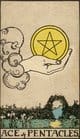
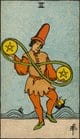
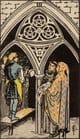
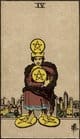
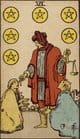
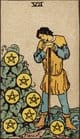
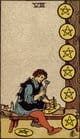
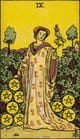
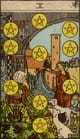
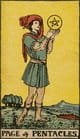
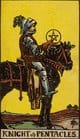
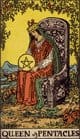
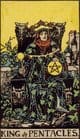
 | Pentacles ground us in the physical world. Linked to the earth element, this suit covers money, career, health, home, and the slow, steady work of building something that lasts. When Pentacles appear, the reading is often practical: What are you creating with your hands, your time, and your resources? |
Earth is the element of form: what persists, what has weight, what you can hold. Pentacles carry earth because they represent the part of life that you can actually touch. After the fire of will, the water of feeling, and the air of thought, Pentacles ask the plainest question: what did you actually build?
From the Ace's seed of new opportunity to the Ten's generational abundance, Pentacles remind us that spiritual growth and material reality are not at odds; they're partners.
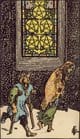
The Five of Pentacles is one of the most misunderstood cards in the deck: two figures trudging through snow, walking right past a building full of warm light.
The suffering isn't that life is harsh. It's that they've walked right past the door. I've pulled this card for people genuinely struggling financially and watched them realize the card wasn't about money at all. It was about the help they refused to ask for.
The number patterns are especially clear in this suit. Threes bring expansion - your initial seed growing into something others can see. Fives bring material hardship, the outer-world friction that tests whether your foundation is real. Sevens ask whether you've been patient enough, whether the harvest is ready or you're pulling at unripe fruit.
The court cards here are the most grounded in the deck: the Page studies with diligence, the Knight works with quiet persistence, the Queen creates abundance through generosity, and the King has mastered the art of building wealth that supports not just himself but everyone around him.

History & Systems
Tarot has a richer and more surprising history than most people realize. These articles trace the cards from their origins in 15th-century Italy through the occult revival and into modern practice, and explore the different systems readers use today.
- A Brief History of Tarot
- The 3 Main Systems of Tarot
- Tarot & Numerology: Where Cards Meet Numbers
- Tarot Spreads & Reading: From Beginner to Confident Reader
- What is the Major Arcana? (Classic Overview)
- What is the Suit of Swords? (Classic Overview)
- What is the Suit of Pentacles? (Classic Overview)

How to Read Tarot
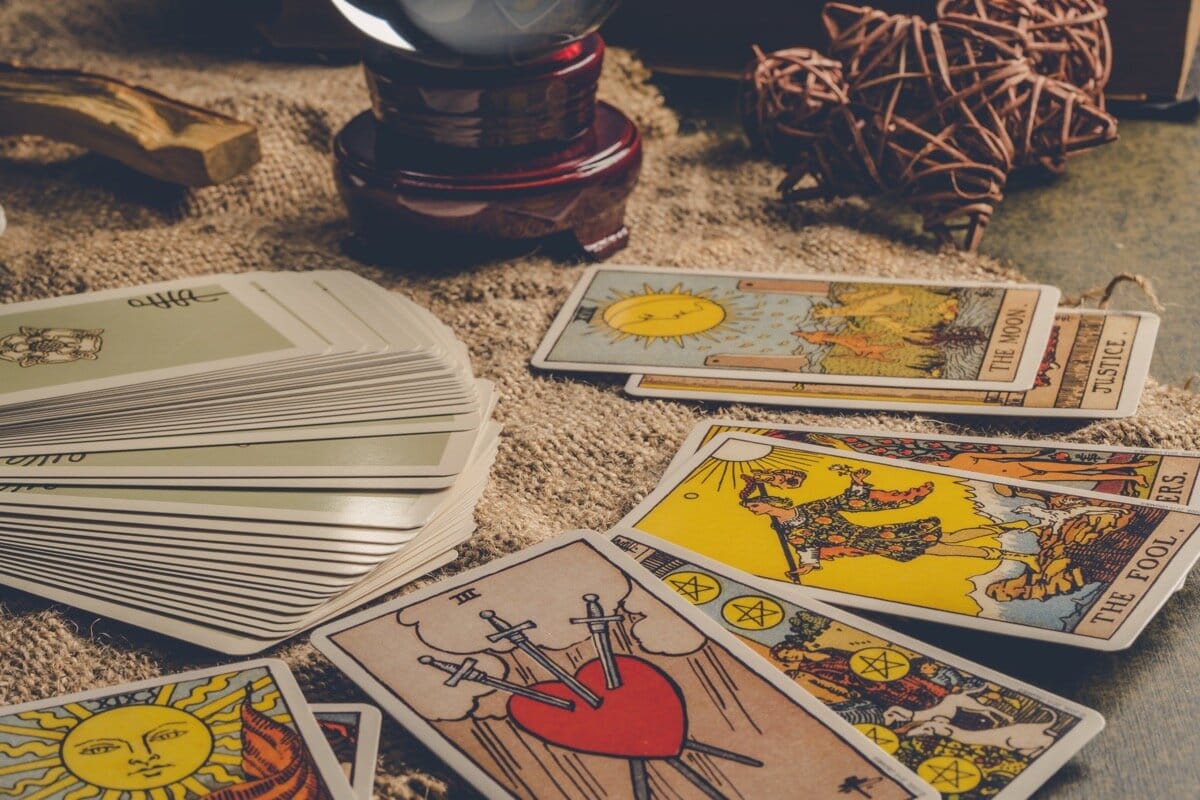
I spent months memorizing keyword lists for all 78 cards. Upright meanings, reversed meanings, love meanings, career meanings, flash cards and cheat sheets and highlighted textbooks. I could recite definitions on command. And my readings were mediocre.
Then I learned the system underneath, and everything changed.
The secret most tarot resources won't tell you: you don't need to memorize 78 separate definitions. You need to understand the numbers, understand the suits, and understand how they intersect.
A Three is always expansion. Cups are always emotion. The Three of Cups is the expansion of emotion - joy shared, celebration, connection multiplying. Once you see this grid, every card in the deck becomes readable without a reference book.
But that's the intellectual framework. The real magic happens somewhere else entirely.
The Cards Are a Mirror
Tarot imagery works like a psychological projective test. When you place an ambiguous image in front of a person and ask "what do you see?" - their answer tells you about them, not about the image.
In a tarot reading, your response to the card's imagery reveals your own psychological state, your concerns, your desires, your fears.
This means there's no wrong interpretation. If The Tower makes you think of relief rather than disaster, honor that. The card didn't tell you anything - it gave you a surface to project onto, and what you projected is the reading.
Choose a Deck That Speaks to You
There are hundreds of tarot decks, from the classic Rider-Waite-Smith to beautifully modern reimaginings. The "right" deck is whichever one you actually want to pick up. If the imagery pulls you in, that's your deck talking. Trust the attraction.
Ask Better Questions
The quality of a reading depends on the quality of the question. Avoid simple yes-or-no framings. Try open-ended prompts like "What do I need to understand about this situation?" or "What energy should I bring to this challenge?" A vague question gets a vague answer. A brave, honest question can crack something wide open.
Start Simple
A single daily card pull can teach you more than any textbook. Draw one card each morning, sit with its image, notice what draws your eye and what unsettles you. That response is the reading. Over weeks, patterns emerge and the cards start to feel like old friends rather than strangers.
When you're ready for more structure, three-card spreads - past-present-future, situation-challenge-advice - are the natural next step. They give you a narrative without overwhelming you. From there, explore the Celtic Cross and other classic layouts.
Reversed Cards
When a card lands upside down, some readers interpret it as blocked or internalized energy - a softer or shadow version of the upright meaning. Others don't read reversals at all. Neither approach is wrong. Experiment and see what feels most useful to you.
Trust the Process
Books and guides (including this one) are scaffolding. Your intuitive response to a card is just as valid as any published meaning. The best tarot readers aren't the ones who memorize every keyword - they're the ones who learn to listen to what the cards stir up inside them. That stirring is the point.
Ready to go deeper? These guides will help:
- How to Read Reversed Tarot Cards
- How to Choose a Tarot Deck
- Best Tarot Questions to Ask
- How to Make a Tarot Cheat Sheet
- Court Card Meanings Explained
- Minor Arcana Card Meanings
- Your Guide to the Best 3-Card Spreads

Tarot & Numerology
This is where it all clicks. And it's the thing most tarot resources completely miss.
Every card in the tarot deck carries a number. That number is not decorative. It's not an arbitrary sequence. Each Major Arcana card is its number. The Magician doesn't just happen to be numbered 1 - it embodies the same initiating, focused, singular energy as Life Path 1 in numerology.
The Empress doesn't just sit at position 3 - she radiates the same creative abundance as the number 3 everywhere it appears. The Hermit is 9: completion, wisdom, the lamp held up for others.
The numerology underneath tarot isn't a parallel system. It's the same language spoken through a different medium.
The number patterns that define your Life Path or Expression number are the same patterns that give each card its meaning. Both traditions grew from the same root, the ancient conviction that number is the language the cosmos speaks in.
The Reduction Bridge
Here's where it gets interesting. In numerology, double-digit numbers reduce to single digits. The same principle unlocks hidden connections in tarot.
Death is card 13. Reduce it: 1 + 3 = 4. Card 4 is The Emperor: structure, order, foundation. What does that tell you? Death isn't destruction. It's restructuring. Tearing down what's outlived its form so a new order can be built. The number told you that before you ever looked at the imagery.
The Tower is card 16. Reduce it: 1 + 6 = 7. Card 7 is The Chariot: control, will, directed movement. The Tower is catastrophic disruption, lightning, collapse, the structure that could no longer hold.
But underneath that collapse lives the energy of 7 - the Chariot's victory through focused will. The Tower doesn't destroy for destruction's sake. It clears the path the Chariot needs. The scary card is secretly pointing toward its own resolution.
The Star is 17: 1 + 7 = 8, Strength. And suddenly you understand why The Star feels so quietly powerful - it's Strength internalized, made calm, poured out as healing rather than held as force.
Numbers Across the Minor Arcana
The number patterns work across suits too, and this is the practical shortcut that makes 78 cards manageable:
Aces are always beginnings - the pure seed of each element. Twos are always duality and reflection. Threes are always expansion, the initial energy growing beyond itself.
Fours bring structure and stability. Fives bring disruption - outer, physical problems that test what you've built. Sixes restore harmony and balance. Sevens are internal struggle, the effort to hold your ground. Eights bring rhythm and movement. Nines approach completion. Tens are the end of a cycle and the threshold of the next one.
Learn the ten numbers. Learn the four suits. You now have a grid that covers all 40 pip cards without memorizing a single keyword list. The court cards add personality - the Page, Knight, Queen, and King each represent a stage of maturity within that element's energy.
One Critical Distinction
The same number carries different weight in the Major and Minor Arcana. Five in the Major Arcana is The Hierophant - inner wisdom, spiritual mediation, hearing the voice within.
Five in the Minor Arcana is outer conflict, physical disruption, problems in the material world. Seven in the Major Arcana is The Chariot - victory, triumph, will made manifest. Seven in the Minor Arcana is the struggle to balance energy, the fight before the victory is won.
This distinction is subtle but essential. The Major Arcana shows the principle. The Minor Arcana shows the principle in action - which is messier, harder, and more human.
Your Tarot Birth Card
Your birth date produces a Tarot Birth Card - a Major Arcana card that acts as a lifelong spiritual companion, illuminating your strengths and growth edges in much the same way your Life Path number does.
Knowing your Birth Card adds a personal anchor point to every reading. It becomes the card that always has something to say to you, no matter what question you're asking.
Explore the connection:
Tarot Birth Cards by Life Path
For the complete set of all 11 Tarot Birth Cards, see our Life Path Guide.
Where to Go From Here
If you're brand new, start with the Major Arcana. These 22 cards form the backbone of every reading, and understanding their story - from the Fool's naive optimism through the World's integrated wholeness - gives you a framework for everything else.
Don't try to memorize them. Learn the numbers, learn the journey, and let the images do their work as mirrors.
If you've been reading for a while, use this page as a hub. Bookmark it, return when you pull a card you want to explore more deeply, and follow the links to our in-depth guides.
Every card page includes upright and reversed meanings, symbolism, and reflection prompts designed to bring the card off the table and into your lived experience.
And remember: tarot cards are four-color pictures printed on cardboard. They have no more power than the power you give them. That's not a limitation; it's a liberation. It means the wisdom was never in the cards. It was always in you. The deck just helped you find it.
Tarot is one part of a larger pattern. See how it connects to numerology, astrology, and palmistry