Tarot Card Meanings: What is the Major Arcana?
By Blair Andrews · Published February 18, 2017 · Updated May 21, 2026
Twenty-two cards carry the weight of the entire tarot deck. The other fifty-six deal with the practical details of daily life, with emotions, decisions, and situations. The Major Arcana operates on a different scale entirely. These are the cards of the big questions. Who am I becoming? What patterns keep running my life? Where is this all going?
When a Major Arcana card appears in a reading, it demands attention. A relationship question that produces The Lovers is not about whether to go on a second date. It is about the fundamental nature of choice and the integration of opposing forces within yourself. A career question that produces The Tower is not about a bad day at the office. It is about the demolition of structures that can no longer hold what you're becoming.
Understanding these 22 cards is essential for reading tarot with real depth. They are mirrors, not fortune-telling tools, reflecting the universal patterns of human development, from the innocent leap of The Fool to the completed wholeness of The World.

The Hidden Architecture: Three Rows of Seven
Most introductions to the Major Arcana present the 22 cards as a straight line, a story that starts with The Fool and ends with The World. A useful way in. But the deck has a deeper structure that a linear reading misses.
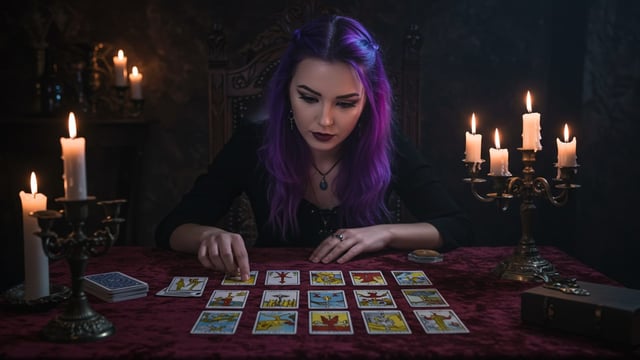
Lay out the 21 numbered trumps (setting The Fool aside for a moment) in three rows of seven. Cards 1 through 7 in the first row. Cards 8 through 14 in the second. Cards 15 through 21 in the third. The Fool (0) floats above the grid, observing.
Something immediately becomes visible. Each row describes a different level of experience.
The first row (Magician through Chariot) maps the conscious world: your will, your intuition, your creativity, your authority, your spiritual teachers, your choices, and your determination. These are the forces you can see and direct. The Fool encounters them as external teachers.
The second row (Strength through Temperance) maps the realm of inner reckoning: courage, solitude, fate, accountability, surrender, dissolution, and integration. These are forces that act on you from inside. The Fool doesn't choose them. They come for him.
The third row (Devil through World) maps spiritual awakening: bondage, shattering, hope, confusion, illumination, reckoning, and completion. This is the final arc: seven stages of spiritual unfoldment from self-imposed chains to cosmic wholeness. The Devil is bondage. The Tower is awakening. The Star is revelation. The Moon is the dark passage of reorganization. The Sun is regeneration. Judgement is realization. The World is cosmic consciousness.
At the center of this grid sits Justice, card 11. And here's what makes the structure genuinely elegant: every pair of cards equidistant from Justice sums to 22. The Magician (1) and The World (21). The High Priestess (2) and Judgement (20). The Empress (3) and The Sun (19). All the way through. Justice is the mathematical pivot of the entire deck, the balancing point around which every other card is symmetrically arranged.
This isn't a coincidence. It's a design feature. And it reveals something important: the Major Arcana is not just a story. It's a balanced system where every card has a mirror.

Three Forces, Twenty-Two Faces
The first three cards after The Fool establish the psychological framework for the entire deck.
The Magician (1) represents self-consciousness, the part of you that focuses, chooses, and directs. He points upward with one hand and downward with the other: "as above, so below." In esoteric symbolism throughout the deck, "up" means deeper within, not elevated above others. The Magician's upward gesture points to the self.
The High Priestess (2) represents subconsciousness: the vast reservoir of memory, intuition, and pattern-recognition that operates below your awareness. She sits between two pillars, guarding the threshold.
The Fool (0) represents superconsciousness, the animating force behind both. Pure awareness before it splits into conscious and subconscious. Pure potential before any path is chosen.
Every card from 3 onward shows these three forces in different configurations. The Empress is what subconsciousness creates when left to flourish. The Emperor is what self-consciousness builds when given authority. Temperance is the two forces blending. Death is what happens when one configuration ends so a new one can begin.
Once you see this pattern, you stop memorizing card meanings and start reading them.

The 22 Cards of the Major Arcana
0 - The Fool: New beginnings, innocence, spontaneity, and the leap of faith. The Fool is pure potential before any path is chosen, the moment of unlimited possibility. Where in your life are you being called to begin without guarantees?
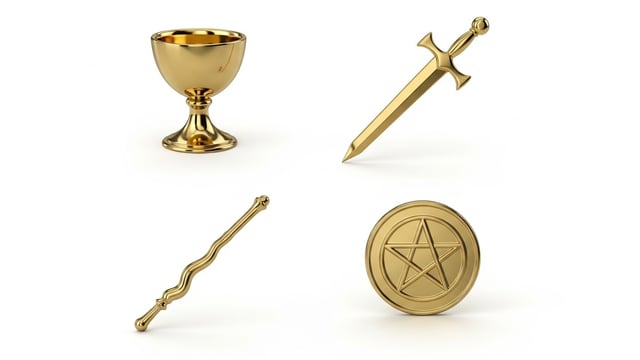
1 - The Magician: Willpower, resourcefulness, skill, and focused intention. The four tools on his table (wand, cup, sword, pentacle) represent the four powers available to every person. You already have what you need. The question is whether you'll focus it.
2 - The High Priestess: Intuition, mystery, inner knowledge, and the subconscious mind. She guards the threshold between the seen and unseen worlds and invites you to trust what you know beneath the surface of rational thought.
3 - The Empress: Abundance, fertility, nurturing, and creative completion. Three is the number of perfection in Pythagorean philosophy - "the world is perfected by three." The Empress is the creative force of nature at full bloom. Growth requires nourishment, patience, and genuine care.
4 - The Emperor: Authority, structure, stability, and protective power. The Emperor represents the masculine principle of order and the ability to build lasting institutions through discipline and clear leadership.
5 - The Hierophant: Inner hearing, spiritual mediation, and the bridge between worlds. Five in number philosophy is "the seal that binds all things" - the point where spirit meets matter. The Hierophant connects you to accumulated wisdom and asks what enduring truths can guide your path.
6 - The Lovers: Choice, values, and the integration of opposites. In the older Marseilles design, this card shows a man choosing between two women - one with flowers (sensuality), one with a laurel wreath (virtue). It's the Pythagorean lesson of the letter Y: the fork in life's road between the easy path and the hard-won one. Beyond romantic love, this card represents every significant choice where two paths diverge.
7 - The Chariot: Determination, disciplined will, triumph over obstacles. Seven is "the vehicle of man's life" in Renaissance number philosophy - the number that joins soul (3) to body (4). The Chariot represents the moment when conflicting forces are harnessed and directed toward a single goal. It completes the first row of seven.
8 - Strength: Inner courage, patience, compassion, and mastery over instinct. True strength is not force but the quiet power that comes from gentleness, self-awareness, and emotional resilience. The woman opens the lion's mouth with bare hands. No weapon. No cage.
9 - The Hermit: Solitude, inner guidance, contemplation. Nine is the number of completion and attainment, the end of the first cycle before the Wheel (10) begins a new rotation. The Hermit is the Fool after a full descent and reascent. Both carry a sense of solitary transcendence, but where the Fool doesn't know what lies ahead, the Hermit has already been there. His mountaintop is inwardness, not superiority.
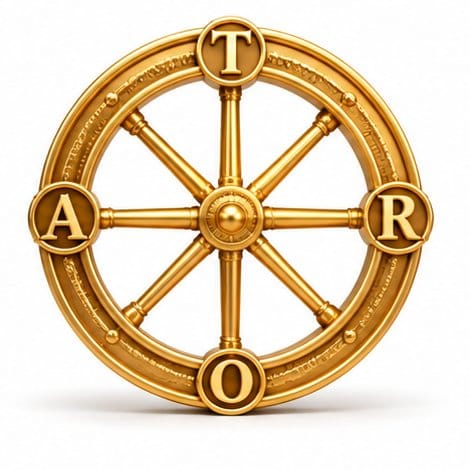
10 - The Wheel of Fortune: Cycles, destiny, turning points. Ten is the "universal number" that returns to unity, the cycle of fate that brings everything back to its starting point. The Wheel carries the letters T-A-R-O inscribed around its rim, which also reads R-O-T-A - the Latin word for wheel. The Wheel of Tarot speaks the Law.
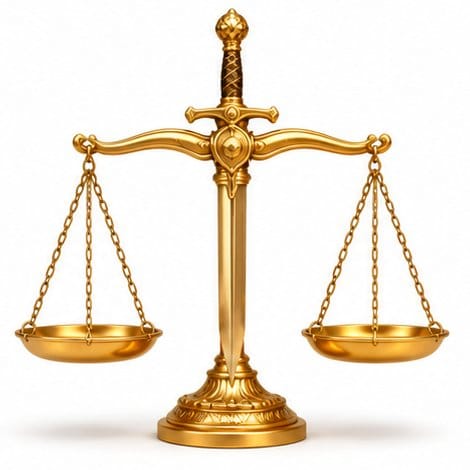
11 - Justice: Truth, fairness, accountability, and cause and effect. Justice sits at the mathematical center of the three-by-seven grid, the pivot around which every other Major Arcana card is balanced. She asks you to examine your actions honestly and accept both rewards and consequences.
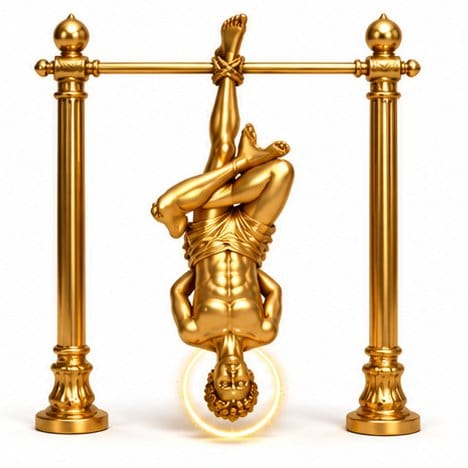
12 - The Hanged Man: Surrender, new perspective, and voluntary sacrifice. In Renaissance Italy, traitors were publicly hung by the foot as punishment - the card was originally called "the Traitor." The modern interpretation as voluntary spiritual surrender came later, and it's a fascinating example of how tarot meanings evolve. Look at the figure's posture: the legs form an inverted 4 (reason), the arms and head form a triangle (3, imagination). Imagination placed beneath reason - the reversal of the usual human condition, where reason is dominated by imagination.
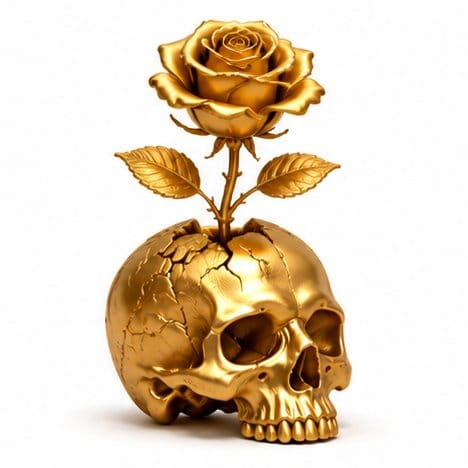
13 - Death: Endings, release, and profound renewal. Thirteen sits at a threshold. In Hebrew gematria, 13 is the value of both the word for "Unity" and the word for "Love" - dissolution and love share a numerical root. This is the key to why the Death card rarely signals physical death. It signals the kind of ending where everything that isn't essential falls away, and what remains is unified. The composting that makes future growth possible.
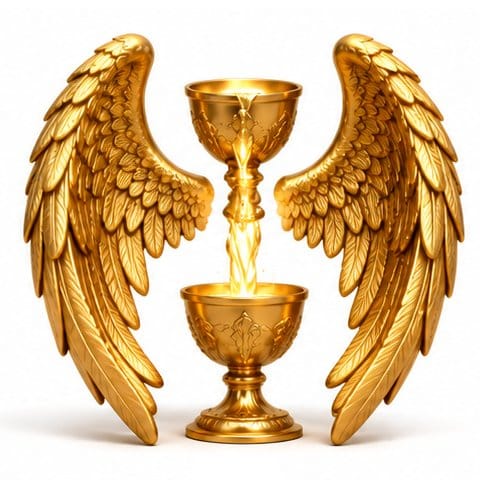
14 - Temperance: Balance, moderation, patience, and the art of blending opposites. Temperance is the alchemist's card, the careful, patient process of combining different elements to create something greater than the sum of its parts. She completes the second row of seven.
15 - The Devil: Shadow, bondage, and the illusion of powerlessness. Look closely: the chains around the figures' necks are loose. They could lift them off at any time. Bondage here is self-imposed ignorance, not external punishment. The Devil begins the final seven-card arc of spiritual awakening.
16 - The Tower: Awakening through crisis, the destruction of false structures. The Tower is one of the most feared cards in the deck, but its destruction is always purposeful. It tears down what was built on unstable foundations so something authentic can rise. In traditional imagery, the tower is built of bricks laid in 22 courses, a structure of human-made concepts. The Tower shatters not a building but a belief system. What structure in your life is built on a foundation you no longer believe in?
17 - The Star: Hope, inspiration, renewal, and spiritual connection. After the devastation of The Tower, The Star arrives as a reminder that peace, healing, and purpose still exist. The universe has not abandoned you.
18 - The Moon: Illusion, fear, the subconscious, and the passage through darkness. The Moon represents the bewildering passage through uncertainty that must be completed before true clarity can dawn. Things are not what they seem. Keep walking.
19 - The Sun: Joy, vitality, and radiant clarity. One of the most positive cards in the entire deck. Confusion lifts. Truth shines through. Life feels abundant and full of possibility. The Sun does not ask complicated questions. It simply illuminates.
20 - Judgement: Reckoning, rebirth, answering a higher calling. Judgement asks you to look back on everything you have lived through, find its meaning, and rise renewed. It is the integration of the entire journey into a single clear note of purpose.
21 - The World: Completion, wholeness, and the dance at the end of the journey. The World is the successful completion of the Fool's Journey - the moment when all the pieces come together and a full cycle of growth reaches fulfillment. What would completion actually feel like, and are you allowing it?

The Fool's Journey: One Story, Three Acts
The narrative that connects all 22 cards is called The Fool's Journey. The Fool - card 0 - is the protagonist. Each subsequent card is a teacher, challenge, or initiation encountered along the way.
Act One (cards 1-7) is about encountering the external world. The Fool meets willpower, intuition, creativity, structure, tradition, choice, and determination. These are the forces you can name and negotiate with. By the time the Fool reaches The Chariot, he's learned to harness opposing forces and drive them toward a goal. He thinks the journey might be over. It isn't.
Act Two (cards 8-14) is about the inner reckoning. The Fool discovers that mastering the external world isn't enough. Strength teaches him that real power is gentle. The Hermit sends him inward. The Wheel shows him that fate doesn't care about his plans. Justice demands honesty. The Hanged Man demands surrender. Death strips away everything that isn't essential. Temperance slowly, carefully, puts the pieces back together in a new configuration.
Act Three (cards 15-21) is the spiritual passage. The Devil shows the Fool where he's still chained. The Tower destroys the last false structure. The Star restores hope. The Moon plunges him into the deepest uncertainty. The Sun burns it all clean. Judgement calls him to account. The World welcomes him home.
This three-act structure maps directly to the three-row grid. And it maps to a much older idea, the Platonic model of the soul's three parts. The first act corresponds to appetite and worldly engagement. The second to will and moral struggle. The third to reason and spiritual ascent. The tarot's architecture carries six centuries of philosophy in its bones.

Major Arcana vs. Minor Arcana
The 22 Major Arcana cards represent archetypal, soul-level themes that transcend everyday circumstances. They speak to the deep currents of your life, the patterns and turning points, the forces that shape who you become. When multiple Major Arcana cards appear in a single reading, you're in a period of significant development. Pay attention.
The 56 Minor Arcana cards deal with practical, emotional, and interpersonal life. Divided into four suits (Wands for fire/action, Cups for water/emotions, Swords for air/thought, and Pentacles for earth/material world) they describe the circumstances, choices, and feelings you navigate day to day. "Ordinary" does not mean unimportant.
In a reading, the two work together. The Major card provides the overarching theme. The Minor cards fill in the practical details. Death alongside the Three of Cups might mean the ending of one social chapter is making room for deeper, more authentic connections. The Major card tells you what's happening at the soul level. The Minor cards tell you how it's playing out in your everyday life.
The Numbers Behind the Cards
The Major Arcana sequence is also a numerological sequence. Each card's number carries meaning that illuminates the card itself.
Three (Empress) is the number of creative completion - "the world is perfected by three." Five (Hierophant) is the seal between spirit and matter - the mediator. Seven (Chariot) joins soul to body - the vehicle of human life. Nine (Hermit) is attainment and the end of the first cycle. Ten (Wheel) is the universal number that returns to unity.
The total count of 22 Major Arcana (including 0) matches the 22 letters of the Hebrew alphabet. In Renaissance number philosophy, 22 represented "the fullness of wisdom." The deck's count isn't arbitrary - it's the number of the complete alphabet of human spiritual experience.
This numerical structure is the genuine mechanism behind tarot birth card calculations. You reduce your birth date to a number between 0 and 21, and that number points to your Major Arcana birth card. It's the same arithmetic logic that underlies Life Path calculation - numerological reduction applied to the tarot's own numbering system. If the connection between tarot and numerology interests you, the birth card calculation is the most immediate, practical place to experience it.

Reading Tips
When a Major Arcana card appears in your reading, give it extra weight. It is often the key to the entire spread. Let the other cards orbit around its meaning rather than treating all cards as equal.
Reversed Major Arcana cards typically indicate that the card's energy is being blocked, internalized, or resisted. A reversed Tower might mean you're clinging to structures that need to fall - the awakening is being delayed, usually by fear. Reversals are not inherently negative. They're invitations to examine where you might be avoiding necessary growth.
When multiple Major cards appear, look at their numerical sequence. Cards in order (Hermit followed by the Wheel of Fortune) suggest natural progression. Cards out of sequence may mean you're revisiting earlier lessons or being called forward to growth you've been postponing.
When four or more Major Arcana cards cluster in a single reading, something significant is at work. This isn't a passing mood or a minor decision. A major life theme is active, and the reading is asking you to pay attention to the pattern, not just the individual cards.
For a comprehensive introduction to all aspects of tarot reading, including the Minor Arcana, court cards, and spread techniques, explore our complete tarot guide.

Frequently Asked Questions
What is the difference between the Major Arcana and Minor Arcana?
Major Arcana (22 cards, The Fool through The World): archetypal, soul-level themes - the big patterns, turning points, forces shaping who you become. When Major cards appear, they demand attention. Minor Arcana (56 cards in four suits): practical, emotional, interpersonal circumstances of daily life.
What is the Fool's Journey in tarot?
The Fool (card 0) is the protagonist moving through all 22 Major Arcana as a story. Three acts: Act 1 (cards 1-7) = encountering the external world, learning to harness opposing forces. Act 2 (cards 8-14) = inner reckoning - Strength, Hermit, Wheel, Justice, Hanged Man, Death, Temperance.
What does it mean when a Major Arcana card appears reversed?
Reversed typically means the card's energy is blocked, internalized, or being resisted. A reversed Tower might mean clinging to structures that need to fall - awakening delayed by fear. Reversals are not inherently negative; they're invitations to examine where you're avoiding necessary growth. Some readers also treat reversals as indicating the energy is expressing inwardly rather than outwardly.
How does the structure of the Major Arcana work as a system?
Lay the 21 numbered cards (not The Fool) in three rows of seven. Row 1 (Magician-Chariot): conscious world forces you can see and direct. Row 2 (Strength-Temperance): inner reckoning - forces that act from inside.
What is a tarot birth card and how is it calculated?
A birth card is calculated by reducing your full birth date to a number between 0 and 21, pointing to the corresponding Major Arcana card. The same arithmetic logic as Life Path calculation - numerological reduction applied to the tarot's numbering system. The page links to /numerology/what-your-tarot-birth-card-says-about-you/ for full instructions. The connection between tarot and numerology is structural: same Pythagorean-Neoplatonic tradition, same numerical framework.