The Pattern Underneath: Why Numerology, Astrology, Tarot, and Palmistry Are One System
By Blair Andrews · Published May 5, 2026 · Updated May 10, 2026
Most people find one system and stay there.
You get curious about astrology. You learn your Sun sign, then your Moon and Rising. You start tracking transits. Before long you have a vocabulary for yourself that feels right, and you stop looking for other lenses. Or you stumble onto numerology through a Life Path calculation that lands like a punch, and you go deep on numbers without ever looking sideways at the tarot deck on your friend's shelf.
Completely normal. And it works. Any one of these systems (numerology, astrology, tarot, palmistry) gives you a genuine, useful map of who you are and how your life unfolds.
But here is something worth knowing: these four systems were not always separate. The separation is modern. For centuries, particularly during the Renaissance synthesis, they were branches of the same tree, taught by the same people, used in the same readings, built on the same architecture. The most respected practitioners of the Renaissance would have found our bookshelf categories strange. Imagine walking into a library and finding separate sections for "nouns" and "verbs" and "sentences." Roughly how the old masters would see our division of numerology from astrology from tarot from palmistry. To them, it was all one language.
This page is about that language. Not to convince you to learn all four systems. You do not need to. But understanding the shared root changes how you see whichever system you already use. It adds depth. It explains why certain things keep showing up across different traditions. And it might answer a question you have had quietly for a while: why does the number that describes my life also seem to show up in my birth chart, and on my palm, and in the cards I keep pulling?
Because it is all the same pattern. You are just seeing it from different windows.
I discovered this gradually, over twenty-five years and the millions of readings delivered through this site. I'd describe someone's Life Path and they'd say "that's exactly what my astrologer told me." I'd read a palm and find the same dominance the birth chart predicted. After enough repetition, coincidence stopped being a plausible explanation.

The Shared Root
Seven classical planets. That is where it starts.
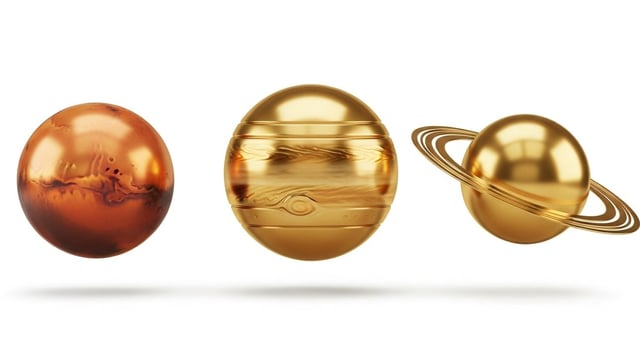
Before telescopes, before Uranus and Neptune and Pluto, the sky held seven visible moving lights: the Sun, the Moon, Mercury, Venus, Mars, Jupiter, and Saturn. Every major civilization noticed them. And the civilizations that built our interpretive traditions (Babylonian, Egyptian, Greek, Indian, Persian) all organized their knowledge of human nature around these seven.
Not as a loose metaphor. As a precise architecture.
The seven planets became seven numbers. They became the seven mounts of the palm. They became the organizing structure of the tarot's major arcana. They became the seven days of the week. This was not four groups of people independently arriving at the number seven by coincidence. It was one integrated system, recorded most thoroughly by Agrippa in his Three Books of Occult Philosophy (written 1510, printed 1533), which synthesized centuries of Pythagorean, Kabbalistic, and Chaldean material into a single framework.
Here is how the correspondences work:
| Planet | Number | Palm Mount | Tarot Trump | Quality |
|---|---|---|---|---|
| Sun | 1 | Mount of Apollo | The Magician (I) | Individuality, creative will, vitality |
| Moon | 2 | Mount of Luna | The High Priestess (II) | Intuition, receptivity, reflection |
| Jupiter | 3 | Mount of Jupiter | The Empress (III) | Expansion, generosity, abundance |
| Mercury | 5 | Mount of Mercury | The Hierophant (V) | Communication, speed, adaptability |
| Venus | 6 | Mount of Venus | The Lovers (VI) | Love, beauty, harmony, warmth |
| Saturn | 7 / 8 | Mount of Saturn | The Chariot (VII) | Discipline, depth, earned wisdom |
| Mars | 9 | Plain of Mars | The Hermit (IX) | Courage, assertion, completion |
(You'll notice the number 4 is absent. It sits outside the classical seven-planet system. It was assigned to Uranus after that planet's 1781 discovery, which is why the old correspondence table has a gap here. The Emperor card, trump IV, holds the space.)
This is not a table someone invented last Tuesday. These correspondences were documented by Renaissance philosophers drawing on Pythagorean, Kabbalistic, Indian, and Chaldean sources going back centuries further. The classical texts spell it out: each number is a planetary vibration. Each palm mount is named after the same planet. The tarot's numbered trumps echo the same sequence. And astrology, of course, is the planetary system itself.
They are not four parallel systems. They are one system with four expressions.

One Number, Four Windows
Abstract tables are useful, but the connection becomes real when you follow a single archetype across all four systems. Take the number 7.
In numerology, Life Path 7 is the seeker. The analyst. The person who cannot stop asking why. Sevens are drawn to solitude not because they dislike people but because their best thinking happens in quiet. They process deeply. They trust their own investigation more than anyone else's conclusions. The classical sources called 7 "the vehicle of human life" and the number of rest, not laziness, but the productive stillness that follows effort.
Now look at the same energy in tarot. The Chariot is card VII, the seventh major arcana trump. It shows a figure who has harnessed two opposing forces and is moving forward not through brute strength but through alignment. The Chariot is not about fighting harder. It is about knowing which direction to go and holding steady. Victory through clarity, not force. The signature 7 quality.
On the palm, the Mount of Saturn sits beneath the middle finger, the longest, the central, the most prominent. When this mount is well-developed, palmists read it as a sign of depth, seriousness, and hard-won wisdom. Saturn's mount belongs to someone who earns their understanding the slow way. No shortcuts. No borrowed answers. That is Life Path 7 described in flesh and bone.
And in the birth chart, Saturn is the planet of discipline, time, and earned authority. Saturn does not give you anything for free. It makes you work for twenty years and then hands you something that cannot be taken away. A strong Saturn placement produces the same quality that Life Path 7 describes: someone who goes deep, pays the price, and comes back with something real.
Same energy. Four angles. A person who only reads their Life Path gets one view. Someone who reads all four gets the full picture, and the confirmation that what they sense about themselves is not wishful thinking. It is showing up everywhere.
Working across multiple systems wasn't something I set out to do. It happened because the same patterns kept appearing no matter which lens I picked up. A Life Path 7 with a strong Saturn and a developed Mount of Saturn isn't a coincidence that needs explaining. It's three systems pointing at the same person from three angles. After enough of those moments, the shared root stopped being theory and became just how the work looks.

Where the Systems Agree (and Where They Don't)
It would be dishonest to suggest these four systems are perfectly interchangeable. They are not. Each one has a range the others cannot reach.
Numerology maps the personal. The numbers 1 through 9, and the master numbers 11, 22, 33, describe your core drives, your developmental rhythm, your annual cycles. They answer: who are you at the center, and what season of life are you in right now? A powerful range, and where most people's real questions live.
Astrology approaches the same territory from a different angle, mapping planetary positions at a specific moment rather than reducing a date or name to its essence. It adds timing precision that numerology handles differently, through Personal Year cycles rather than transits. Each system has tools the other lacks, which is exactly why the classical practitioners used both.
Palmistry does something neither numbers nor stars can do: it shows what you have actually built. Your birth chart describes the blueprint. Your Life Path describes the pattern. But your palm (especially your dominant hand) shows what you have done with it. The mounts develop over time. The lines deepen or fade. A palmist reads not just your potential but your track record. No other system offers this perspective. Your numbers tell you what you came here to do. Your palm tells you how far along you are.
Tarot operates differently from all three. It is not a fixed reading of who you are. It is a conversation about where you are right now. The cards you pull today will be different from the cards you pull next month, because tarot responds to the present moment: your questions, your energy, the situation you are sitting in. Numerology, astrology, and palmistry all describe relatively stable structures. Tarot is fluid. It meets you where you are and reflects something back that is useful for this specific moment.
So the honest picture looks like this. Numerology gives you precision about your personal pattern. Astrology gives you range into collective and transpersonal territory. Palmistry gives you a physical record of what you have actually developed. And tarot gives you a real-time reading of what is happening now. They overlap in the middle. All four agree on the core planetary archetypes, but each one extends into territory the others do not cover.
Which is exactly why using more than one makes sense.

How to Read Yourself Across All Four
You do not need to become an expert in four systems. But you can run a simple cross-reference that takes less than an hour and will show you where your strongest patterns live.
Start with your Life Path number. This is the fastest calculation in all four systems - just your birth date, reduced to a single digit. It tells you which planetary energy sits at the center of your life pattern. If you are a 6, you are working with Venus. If you are a 9, you are working with Mars. Use the table above to find your planet.
Then check your Sun, Moon, and Rising signs. You can get these from any free birth chart calculator with your date, time, and place of birth. Look at which planets are strongest in your chart - are any of them angular, meaning they sit near the four most powerful points? Is your Life Path planet prominent in your birth chart, or is it quiet? When the same planet shows up loud in both your numbers and your stars, you are looking at a core theme you cannot ignore.
Next, find your tarot birth card. Add the digits of your full birth date (day + month + year) until you reach a number between 1 and 22. That number corresponds to a major arcana trump - your birth card. Compare it to your Life Path. They often echo the same archetype in a different key. If your Life Path is 7 and your birth card is The Chariot (VII), both systems are pointing at the same thing. If they differ, the difference itself is interesting - it shows you a dimension of yourself that one system sees and the other does not.
Finally, look at your dominant palm mount. Hold your hand relaxed under good light and press gently on each mount - beneath the index finger (Jupiter), middle finger (Saturn), ring finger (Apollo), little finger (Mercury), at the thumb base (Venus), and along the outer lower edge (Luna). Whichever feels fullest and most developed is your dominant mount. Most people are surprised by what they find. The mount they expect to be dominant, based on their self-image, often isn't. The one that is dominant tends to describe who they've actually become. Does it match your Life Path planet? If it does, your numbers and your body agree - you are living in alignment with your core energy. If it does not, the gap between the two is not a mistake. It is information about where your growth wants to happen next.
The convergences are where your strongest patterns live. Readers who run this cross-reference for the first time almost always find at least one theme that shows up in three or four systems simultaneously. When that happens, you know you're looking at something load-bearing. These are the themes that show up no matter which lens you use. They are load-bearing. Pay attention to them.
The divergences are equally valuable. When your numbers say one thing and your palm says another, you are looking at the space between potential and activation. Your numbers describe what you came here to do. Your palm shows what you have done so far. The gap is not failure. It is the work still ahead.

Explore the Connections
This page is the overview. Each of the pages below goes deep into a specific pairing. Start with whichever one pulls you. The pattern underneath doesn't care which door you use.
Astrology and Numerology Together - How your Life Path planet shows up in your birth chart, the 29.5-year convergence between Saturn returns and numerology cycles, and practical methods for using both systems on timing questions.
Palmistry and Numerology - The mount-number correspondence table in full, how to identify your dominant mount, and what it means when your Life Path and your palm agree or disagree.
Tarot Major Arcana Meanings - The full set of 22 trumps, their meanings, and how to find your tarot birth card.
Your Complete Numerology Chart - All five core numbers (Life Path, Expression, Soul Urge, Personality, Birthday) explained and calculated.
Free Calculators - Life Path, Expression, Soul Urge, Personal Year, and more. Start with your Life Path. It takes thirty seconds.
Frequently Asked Questions
Do I need to learn all four systems?
No. You can spend a lifetime going deep in numerology alone and never run out of useful material. The same is true of astrology, tarot, or palmistry. But understanding the shared root - the planetary framework that connects them - will deepen whichever one you focus on. You do not need to become a tarot reader to notice that your Life Path number matches a specific major arcana card and carries the same meaning. That kind of cross-reference takes five minutes and adds a dimension you would not get otherwise.
Which system should I start with?
Your Life Path number. It takes thirty seconds to calculate - just add the digits of your birth date and reduce to a single digit (keeping 11, 22, and 33 as master numbers). It gives you a clear, specific description of your core pattern that you can immediately test against your own experience. From there, follow your curiosity. If the planetary connection interests you, look at your birth chart next. If the physical dimension appeals to you, look at your palm. There is no wrong order.
Are these systems scientifically proven?
They are not predictive sciences in the laboratory sense, and it is important to be honest about that. No controlled study has demonstrated that Life Path numbers or Saturn transits cause specific outcomes. What these systems are - and what they have been for thousands of years - are frameworks for self-reflection. They give you a structured vocabulary for patterns you already sense but might not have language for. The value is practical: people who use these frameworks consistently report that they understand themselves better, make decisions with more clarity, and recognize turning points they might otherwise have missed. None of this proves cosmic mechanism. It is evidence that good pattern languages work.
What if my numbers and my birth chart seem to contradict each other?
That is usually where the most interesting information lives. If your Life Path is 1 (independence, creative leadership) but your chart is dominated by Cancer and the 4th house (home, family, emotional roots), you are not looking at an error. You are looking at a specific kind of person: someone whose path to individuality runs through deep family bonds, or someone who leads by creating spaces where others feel safe. The "contradiction" is actually a more precise description of your complexity than either system provides on its own. When two systems disagree, read the tension as a creative instruction, not a mistake.