Tarot Explained: What are the Court Cards?
By Katherine Anne Lee · Published February 26, 2017 · Updated May 21, 2026
Sixteen cards in the tarot deck carry faces, names, and personalities, and they’re the ones most readers find hardest to interpret. Not because the court cards are obscure, but because they’re mirrors. They show you people, aspects of yourself, or forces moving through your life, and the same card can mean any of those things depending on the question you asked and the feeling you get when it lands.
The pip cards (Ace through Ten) describe situations. The Major Arcana describes the deep archetypal forces shaping your life. Court cards sit in between. They describe how someone carries energy. Not what’s happening, but the character it’s happening through.
There are four ranks (Page, Knight, Queen, King) and four suits - Wands, Cups, Swords, and Pentacles. Each rank represents a stage of development. Each suit represents a domain of life and an elemental energy. The court card you draw is the intersection of those two things - a specific level of mastery meeting a specific kind of power.

Four Stages, Not Four Ages
The most common mistake with court cards is treating the ranks as age ranges. Pages are children. Knights are young adults. Queens are middle-aged women. Kings are older men. This system falls apart immediately in practice. A sixty-year-old pulling the Page of Wands isn’t getting a message about youth - they’re discovering a new creative power. A twenty-five-year-old pulling the King of Cups has fully integrated their emotional intelligence in some area of life, at least for now.
The ranks are stages of mastery, and you cycle through them every time you encounter a new dimension of life.
Page - The Apprentice
The Page is discovering a power they didn’t know they had. Everything about this rank carries the energy of early contact - curiosity without confidence, enthusiasm without experience. Pages haven’t learned to filter yet, which is both their vulnerability and their gift. They bring raw, unprocessed signal.
This is why Pages traditionally function as messengers. They carry news because they sit at the boundary between inner development and outer expression. The Page of Cups doesn’t yet know what to do with the emotional depth rising inside them - they just feel it, openly, sometimes overwhelmingly. The Page of Swords has discovered the power of ideas but hasn’t yet learned when to speak and when to stay quiet.
When a Page shows up, something new is trying to enter your life. Will you let it in, or dismiss it as too raw, too small, too unfamiliar to take seriously.
Shadow side: Naivety that refuses to learn. Perpetual beginner syndrome. Enthusiasm that burns out the moment real effort is required.
Knight - The Quester
Knights have taken their new power into the world and they’re showing it off. This is the stage of active testing - going to extremes, pushing boundaries, learning through excess. Knights are bold and sometimes reckless, always in motion. They embody the energy of their suit at its most intense and least modulated.
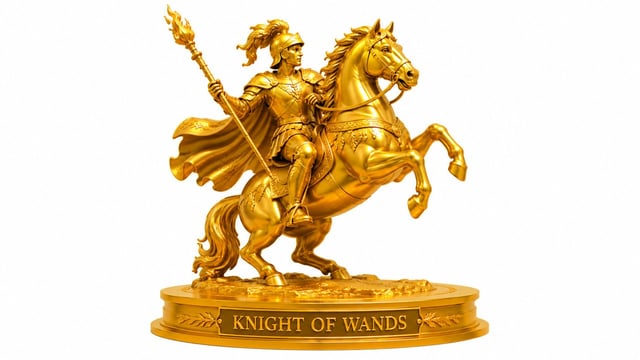
The Knight of Swords illustrates this perfectly. The word "clever" comes from the same root as "cleaver," and this Knight cuts to the point with intellectual force that can be brilliant or destructive, often both at once. The Knight of Wands rides with total conviction and no brakes. The Knight of Cups pursues emotional or romantic ideals with a sincerity that can look either heroic or painfully naive.
Knights represent the moment when you’ve moved past discovery and into action, but you haven’t yet learned restraint. The energy is powerful and directional. It just isn’t subtle.
Shadow side: Arrogance. Recklessness. The conviction that intensity equals mastery. Charging forward without pausing to see whether the direction is right.
Queen - The Holder
The Queen has fully integrated her suit’s energy from the inside. She doesn’t need to prove anything or pursue anything. She holds the power, sustains it, and lets it work through her. Where the Knight acts, the Queen allows. Where the Knight pushes outward, the Queen draws inward.
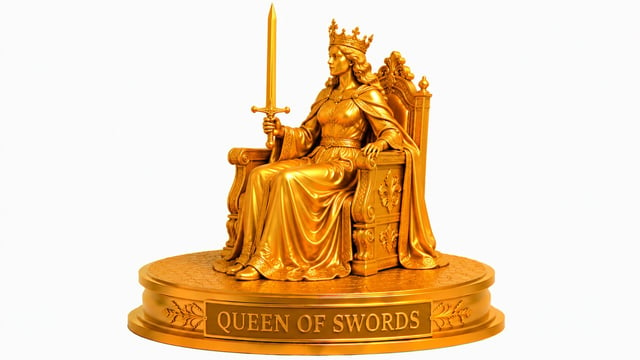
This is receptive mastery, not passive but absorbing. The Queen of Swords sees through pretense with a clarity she doesn’t need to announce. The Queen of Pentacles creates material abundance through patient, sustained attention to what actually needs doing. The Queen of Wands carries creative authority that other people instinctively trust and follow.
Queens represent order, efficiency, and composure. They maintain standards. But don’t mistake composure for softness. A Queen who is pushed too far has more real power than any Knight, because she knows exactly where her limits are and she doesn’t bluff.
Shadow side: Control that masquerades as care. Emotional manipulation. Using receptive power to pull others into dependency rather than fostering their independence.
King - The Director
The King has fully integrated his suit’s energy and directs it outward. He is projective where the Queen is receptive, decisive where she is sustaining. Kings take the mature understanding of their element and use it to shape the world around them.
The King of Pentacles builds institutions, systems, and material security - not because he’s still figuring out how wealth works, but because he’s already figured it out and now he’s building for others. The King of Swords wields intellectual authority with the precision of someone who has already cut through every illusion that mattered.
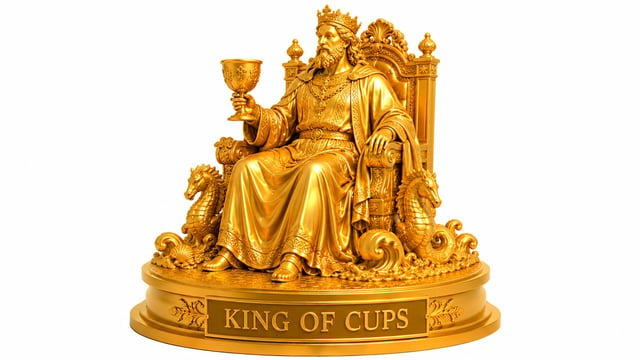
But the King of Cups deserves a special note. He is the most emotionally complex figure in the court cards: artistic, subtle, deeply intuitive. Yet when the subconscious is ruled too tightly for too long, it erupts. The King of Cups who refuses to feel eventually gets flooded by everything he’s been holding back. Of all the court figures, he is the most dangerous when he’s out of balance, precisely because his power runs so deep.
Shadow side: Tyranny. Rigidity. Using authority to impose rather than to serve. The belief that mastery entitles you to control others’ experience.

The Four Suits as Four Kinds of Power
Each suit corresponds to an element, a domain of life, and a fundamental force. A key from the Major Arcana makes this framework clear: the four objects on the Magician’s table are a wand, a cup, a sword, and a pentacle. They represent the four powers the Magician wields: Will, Imagination, Action, and Form.
The court cards within each suit are different expressions of that fundamental power. A Knight of Cups is imagination in its active, questing mode, pursuing emotional or creative ideals with intensity. A Queen of Cups is imagination in its sustaining, receptive mode: holding emotional space, nurturing creative life from the inside. Once you understand the suit’s core force, you can generate the court card meanings yourself rather than memorizing a keyword list.
Wands (Fire) - Will, creative energy, passion, initiative. The domain of what drives you. Wand court cards carry salamander energy: bright, fast, warm, sometimes destructive if uncontained.
Cups (Water) - Imagination, emotion, intuition, relationships. The domain of what you feel and what connects you. Cup court cards carry the fluidity of water: empathic, deep, sometimes overwhelming.
Swords (Air) - Action through thought, analysis, communication, conflict. The domain of what you think and how you speak. Sword court cards carry intellectual force: precise, penetrating, and sometimes cutting without meaning to.
Pentacles (Earth) - Form, material reality, body, craft, wealth. The domain of what you build and what sustains you physically. Pentacle court cards carry grounded stability: patient and embodied, sometimes stubborn to the point of immobility.
Historically, the four suits also mapped to the four medieval social classes: cups for clergy, swords for nobility, coins for merchants, and staffs for peasants. The court cards within each suit encoded real social hierarchies. The King of Swords wasn’t just an archetype; he was a specific class of person, a noble warrior-lord whose authority came from his blade. These historical roots explain why the royal hierarchy maps so naturally onto attributes of authority and character.
There’s also a psychological dimension worth knowing. The four suits correspond to four psychological functions: intuition (Cups), thinking (Swords), sensation (Pentacles), and feeling (Wands). The court card ranks represent different levels of integration of that function. A King of Pentacles is someone who has fully integrated the sensation function - grounded, embodied, materially fluent. A Page of Pentacles is someone just beginning to develop it - curious about the physical world, awkward with money, still learning what their body needs.

Elemental Dignity: Where Rank Meets Suit
Here’s where court cards get genuinely interesting. Each court figure carries two elemental qualities - the element of their suit and the element of their rank, and the combination tells you how the card’s energy actually moves.
Pages carry Earth energy across all suits: grounding, receptive, material. Knights carry Fire: active, questing, consuming. Queens carry Water: receptive, sustaining, deep. Kings carry Air: directive, communicative, penetrating.
So the King of Cups is Air of Water, the intellect directing emotional depth. That’s why this figure is artistic, subtle, and potentially volatile: when air stirs deep water, the surface looks calm but the currents underneath are powerful. The Knight of Swords is Fire of Air: will energizing thought. That’s brilliance moving at speed, which can mean insight or volatility depending on how it’s directed.
The Queen of Pentacles is Water of Earth, feeling nurturing form. She sustains material reality through emotional attunement to what actually needs doing. She knows when the garden needs watering without checking the schedule. The Page of Wands is Earth of Fire: the first material spark of creative will. Raw, small, easily extinguished, but genuinely alive.
You don’t need to memorize these combinations. Just ask yourself: what happens when this rank’s energy meets this suit’s element? The answer is usually the card’s meaning.

How to Read a Court Card
When a court card shows up in a reading, sit with it for a moment before deciding what it means. There are three possibilities, and your gut reaction usually points to the right one.
A person in your life. Does this card remind you of someone? Not just their demographics, but their energy - how they carry themselves and how they make you feel. The Queen of Swords might be your therapist, your most honest friend, or the colleague who sees through every excuse. If a face comes to mind immediately, that’s probably it.
An aspect of yourself. Does this card describe a part of you that’s active right now? Maybe you’re being the Knight of Wands at work - charging ahead on a project with full conviction. Maybe you’re being the Page of Cups in a new relationship, open, tender, not yet sure what you’re feeling. Court cards often show up to say: this is who you’re being in this situation. Is that who you want to be?
A force or situation. Sometimes the court card describes the quality of energy around you rather than a specific person. The King of Pentacles energy in a career reading might not mean a wealthy man is about to help you. It might mean the situation calls for King of Pentacles behavior from you. Steady authority, material competence, building something meant to last.
Notice which interpretation makes you slightly uncomfortable. That’s often the one carrying the real information.

The Mirror Problem
Court cards are the most projective cards in the deck. When you draw the King of Swords, you might see a wise authority figure or an oppressive tyrant. Neither reading is "wrong." But your reaction tells you something about your relationship to that particular kind of power.
If you immediately feel threatened by a court card, ask yourself: is this figure actually threatening, or does it represent a power I haven’t integrated in myself? A person intimidated by the Queen of Wands might need to develop their own creative authority. A person who dismisses the Page of Cups as naive might be suppressing their own emotional openness.
The court cards are not prescriptive. They’re diagnostic. They show you who’s in the room - and then they let you decide what to do about it.

Court Cards and Numbers
Standard tarot decks don’t print Arabic numerals on the court cards. But in the occult tradition, they carry implied numbers: Page = 11, Knight = 12, Queen = 13, King = 14. These numbers matter because they place the court cards beyond the 1-10 completion cycle of the pips. The court cards represent what happens after the suit’s energy has fully expressed itself through the ten numbered cards.
If you reduce these numbers the way numerology reduces any multi-digit number, the results line up with each rank’s actual character in ways that feel too precise to be coincidental.
Pages (11, reduces to 2) carry the energy of reflection, duality, and receptive awareness. The Page receives before it acts - exactly how a beginner learns.
Knights (12, reduces to 3) carry the energy of expression, growth, and creative action. The Knight takes inner potential and pushes it outward - exactly how the number 3 functions in numerology.
Queens (13, reduces to 4) carry the energy of order, structure, and sustaining foundation. The Queen doesn’t build from scratch - she maintains, organizes, and holds the center. That’s the 4 in every system.
Kings (14, reduces to 5) carry the energy of mediation, adaptation, and directed force. The King sits between the material and the spiritual and governs the tension between them. Five is the number of the human being - the mediator between heaven and earth.
The Page as the 11th card of any suit also carries a special threshold energy. In Renaissance number philosophy, 11 was described as the number that "exceeds the law (10) yet falls short of grace (12)." The Page has moved beyond the completed cycle but hasn’t yet arrived at mastery. That’s why Pages feel so energetically alive - they’re standing at a threshold, past one stage and not yet inside the next.

The Sixteen Court Cards at a Glance
Page of Wands - A new spark of creative energy. Enthusiasm for a project or passion that hasn’t been tested yet. News about creative endeavors.
Knight of Wands - Creative will in full motion. Confidence bordering on recklessness. The energy to start, not necessarily to finish.
Queen of Wands - Creative authority held with warmth and composure. Magnetic presence. She knows what she wants and she attracts it.
King of Wands - Visionary leadership. Creative force directed with strategic intelligence. Inspires others through the sheer clarity of his conviction.
Page of Cups - A new emotional opening. Tender, dreamy, sometimes psychic. Brings unexpected emotional news or a creative gift rising from the unconscious.
Knight of Cups - The romantic idealist in motion. Pursuing love, beauty, or an emotional vision with sincerity that can look naive. Heart-first energy.
Queen of Cups - Deep emotional intelligence held quietly. She sees what everyone else is feeling without needing them to explain it. The most intuitive figure in the court.
King of Cups - Emotional mastery directed outward. Artistic, subtle, diplomatic. The most complex King - powerful when balanced, volatile when his feelings are denied too long.
Page of Swords - A new idea taking shape. Curiosity that hasn’t yet learned tact. Vigilant, observant, sometimes argumentative. Learning to think for themselves.
Knight of Swords - Intellectual force at speed. Debate, argument, decisive action. Cuts to the point brilliantly or ruthlessly; sometimes there’s no difference.
Queen of Swords - Clarity held with quiet authority. She has lived through enough to know what is true and what is performance. Honest, sometimes uncomfortably so.
King of Swords - Intellectual authority at its most refined. Judgment, law, ethical standards. He doesn’t need to raise his voice because his reasoning is already airtight.
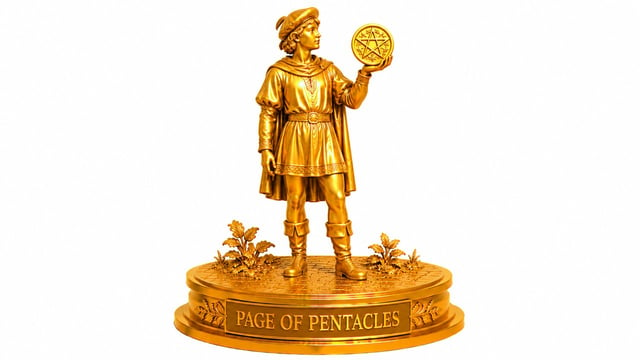
Page of Pentacles - A new relationship with the material world. Studying, apprenticing, learning a craft. Taking the first practical steps toward something real.
Knight of Pentacles - The most patient Knight. Methodical, reliable, slow but unstoppable. He builds by showing up every single day.
Queen of Pentacles - Material wisdom held with grace. She creates abundance through attention, not ambition. Everything she touches seems to grow because she knows what it actually needs.
King of Pentacles - Material mastery in its fullest form. Wealth, security, generational thinking. He builds things designed to outlast him.

Frequently Asked Questions
How do I know if a court card represents a person or a situation?
Start with your gut reaction. If a specific person’s face comes to mind when you see the card, it probably represents them - or at least how you experience them. If no person comes to mind, the card is more likely describing an energy or approach the situation requires from you. Sometimes it’s both. The Queen of Swords in a work reading might mean your very direct manager, or it might mean the situation calls for you to be more direct yourself.
Can court cards represent someone of a different gender than the card shows?
Absolutely. Kings and Queens represent projective and receptive modes of mastery, not gender. A woman in full command of her intellectual authority is the King of Swords. A man who nurtures creative growth with quiet, steady warmth is the Queen of Wands. The ranks describe how energy moves - outward or inward - not who carries it.
Why are court cards so hard to read?
Because they’re mirrors. Pip cards describe situations. Major Arcana describe archetypal forces. Court cards describe character - and character is always partly projection. When you draw the King of Cups, your reading depends on whether you see him as a wise emotional guide or a dangerously repressed figure - and that distinction says as much about you as it does about the card.
Do court cards connect to numerology?
Yes. In the occult tradition, Pages = 11, Knights = 12, Queens = 13, Kings = 14. Reduced numerologically, these become 2, 3, 4, and 5 respectively - numbers whose core meanings align with each rank’s character. The Page’s receptivity matches the 2, the Knight’s expressiveness matches the 3, the Queen’s sustaining order matches the 4, and the King’s mediating authority matches the 5. These aren’t arbitrary - the numerical logic runs parallel to the character logic.