Knight of Wands Tarot Card Meaning
By Blair Andrews · Published July 14, 2017 · Updated May 10, 2026
Picture this: you've been thinking about making a big change for months. Weighing pros and cons. Making lists. Telling yourself you'll decide next week. Then one Tuesday, something snaps. You book the flight. You send the resignation email. You sign the lease. And the moment you do it, the relief is so enormous you wonder why you waited so long.
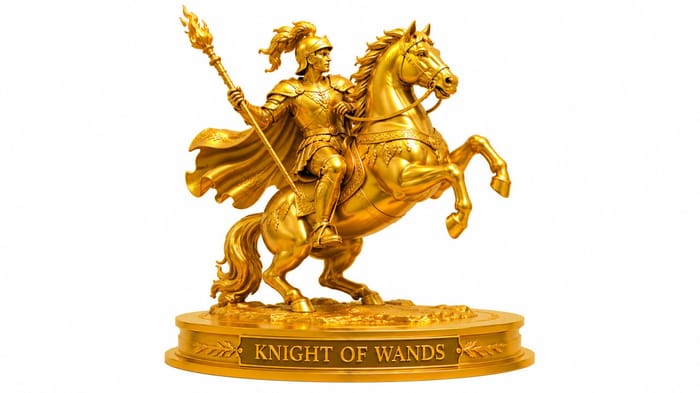
That Tuesday-afternoon snap is the Knight of Wands. He doesn't deliberate. He charges. Horse at full gallop, cloak flying, wand raised like a torch.
The landscape behind him is a blur because he's already past it. If you pulled this card, something in your life is accelerating - and the acceleration probably feels more like release than recklessness.
Whether it turns out to be brilliant or chaotic depends entirely on where you're pointing.
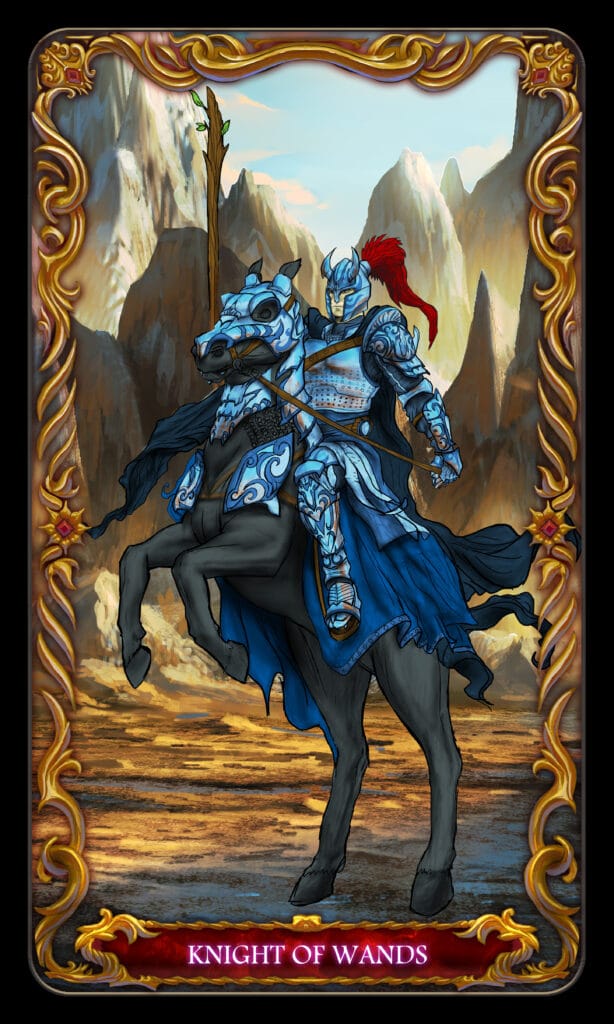
But here's the honest truth about the Knight of Wands: even when the direction is wrong, the courage is real. The fire in the Wands suit is alive - the leaves on the wand are growing, the energy is genuine, not manufactured.
When the Knight charges, it's because the fire demanded it. He can't not be brave, because the alternative - sitting still, being cautious, waiting for permission - feels like a kind of death to him.

The Elemental Combination
Knights carry Fire energy in the court card system - the rank of action, questing, and going to extremes. Wands also belong to Fire. So the Knight of Wands is Fire of Fire. Maximum intensity. All flame, no containment.
That double-fire combination is why this is the most impulsive court card in the entire deck. There's nothing moderating the energy. No Earth to ground it, no Water to cool it, no Air to strategize. Just raw creative will, fully activated and pointed forward at speed.
You can feel this in the card's energy. It's not thoughtful. It's not cautious. It's the surge you get when the decision is already made and your body knows before your brain catches up. Pure momentum.

As a Person in Your Life
If the Knight of Wands describes someone you know, you probably recognized them before finishing this sentence. They walk into a room and the energy changes. They're funny, bold, possibly a little loud, and they make things happen. They have ideas at 2 AM and act on them by sunrise.
They tend to be charismatic without trying. People are drawn to anyone burning that bright. They're exciting company - the friend who convinces you to do the spontaneous road trip, the colleague who pitches the wild idea in the meeting and somehow sells it.
The catch: they might be gone by Thursday. The Knight of Wands is magnificent to be around and terrible at staying around. They get bored fast. They chase the next thing before the current thing is finished. They start ten projects with genuine passion and complete maybe two.
If you're depending on this person for consistency, you're going to be disappointed. If you're joining them for an adventure, you probably won't be.

As an Aspect of Yourself
When this card points to a part of you rather than someone else, it usually means your bold, impatient side is running the show. You're tired of waiting. You're tired of planning. You want to move, and the urge to move has gotten strong enough that caution feels like cowardice.
This energy tends to surface after a period of being stuck. You've been responsible. You've been patient. And now something has reached a boiling point - the creative project you've been sitting on, the life change you've been avoiding, the conversation you keep rehearsing instead of having. The Knight in you says: enough. Go.
Pay attention to whether you're actually moving toward something, or just away from something. The Knight of Wands at his best has a destination. At his worst, he just has velocity.

The Quest at Full Gallop
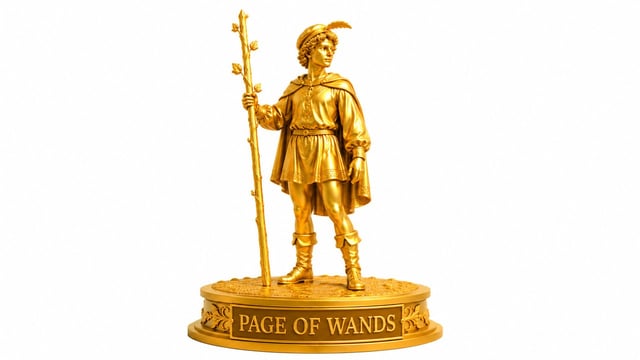
Knights represent the questing stage in the court card progression. The Page discovered the fire. The Knight takes it into the world and tests it at full intensity. This is the stage of learning through doing - sometimes spectacularly, sometimes catastrophically, almost always both at once.
The Knight of Wands is early-twenties energy in its purest form. Old enough to have real power, young enough to believe you're invincible. He hasn't been burned enough times to develop caution. That's part of the gift - sometimes the thing that needs doing requires someone too bold to calculate the odds.
But this stage has a built-in error. The Knight tends to confuse intensity with mastery. Burning bright is easy. Burning long is the hard part. He starts things brilliantly and loses interest the moment the excitement fades and the actual work begins. The charge is dazzling. The follow-through is where he stumbles.

Upright and Shadow
Upright, this card often signals a departure. A change of location, job, or direction. A sudden move that feels less like a decision and more like a compulsion. The traditional keyword is literally "departure" - the Knight is leaving somewhere, heading somewhere else, and doing it with confidence that makes people either inspired or nervous.
In creative work, the Knight of Wands is the burst that produces twenty pages in a single sitting. The all-night studio session. The pitch meeting where you wing it and nail it. He doesn't plan the performance. He is the performance.
The shadow shows up when all that energy has no direction. The horse is galloping, but there's no road under it. Quitting a job with no backup plan. Starting a fight because the energy needed somewhere to go. Making a dramatic exit when the situation called for a conversation.
The other shadow is the Knight who stopped. The passion burned up all at once on something that didn't deserve it, and now frustration has replaced enthusiasm. The fire didn't vanish - it turned inward. Anger instead of adventure.
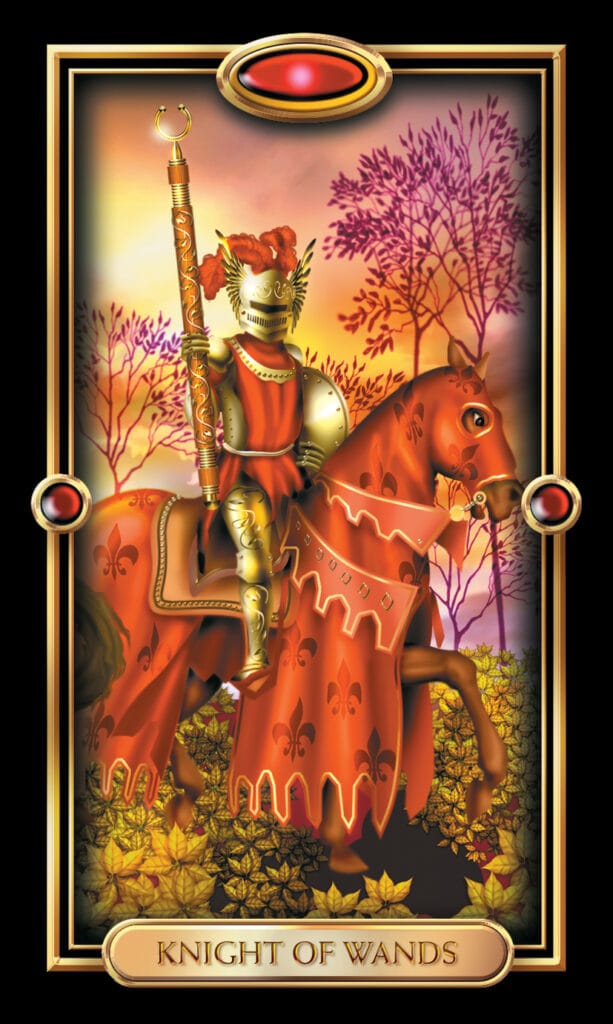
The Gilded Tarot Deck by Ciro Marchetti © 2004 Llewellyn Worldwide, Ltd. All rights reserved, used by permission.
Salamanders decorate the Knight's tunic in many versions of this card. In classical lore, salamanders are creatures that live in fire without being consumed. The Knight is still developing this quality.
He burns bright, but he also burns out - and that cycle of ignition and exhaustion is the Knight's developmental pattern. He'll eventually learn to sustain the flame. Right now, he's still figuring out that fire has more than one speed.
If you're watching someone in your life go through a Knight of Wands phase, the best thing you can do is enjoy the energy without trying to contain it. The Knight doesn't respond well to being managed. He responds to having something worth riding toward. Give him a direction, not a leash.

In Relationships
In love, the Knight of Wands is thrilling and uncertain. This is the whirlwind romance - the person who pursues you with such confident intensity that it takes your breath away. Flowers. Grand gestures. Plans that feel like destiny unfolding. The chemistry tends to be immediate and overwhelming.
The honest question is whether the fire can sustain itself past the first few months. The Knight of Wands falls in love easily and genuinely - but genuine doesn't always mean lasting.
He's better at sparks than sustained warmth. If this card represents your partner, look for signs that they can show up on the boring Tuesday afternoons, not just the exciting Friday nights.
If the Knight represents you in a relationship reading, it's worth asking whether you're genuinely connecting or just enjoying the rush. There's a difference between being excited about someone and being excited about being excited.
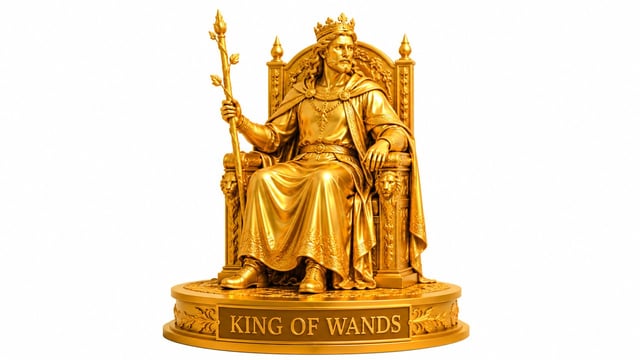
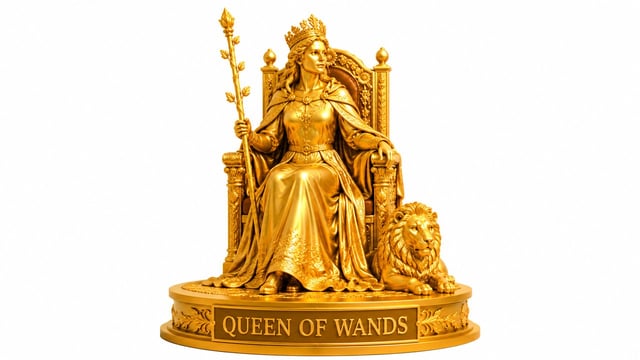
There's a particular quality to the Knight of Wands that separates him from the other fire court cards. The Page is fascinated by fire. The Queen radiates it. The King directs it. The Knight is consumed by it - and that consumption looks like liberation.
He's the freest figure in the Wands court, because he hasn't yet learned that freedom without direction is just motion. But sometimes pure motion is exactly what's needed. Sometimes the act of leaving is the thing that saves you.
The Numerology Connection
Knights correspond to 12 in the deeper tarot structure, which reduces to 3 - the number of expression, growth, and creative expansion. You can see how the single-digit numbers connect to each rank to understand why.
Three is the number that takes inner potential and pushes it outward. It multiplies. It grows. It expresses. That's exactly what the Knight does - he takes the Page's private discovery and broadcasts it to the world.
The 12 itself carries a sense of cosmic completeness - twelve months, twelve signs - but expressed through active service rather than quiet contemplation.
The Knight of Wands as a 3 makes intuitive sense. Three energy is social, expressive, sometimes excessive. It wants to create, to perform, to be seen. Combined with Wands' fire, you get someone whose creative expression happens at full volume.

Frequently Asked Questions
Does the Knight of Wands mean someone is leaving?
Often, yes. "Departure" is one of the traditional keywords - a change of residence, job, or direction. But the departure isn't always physical. Sometimes it's a sharp internal shift, the moment when you stop deliberating and start acting. Look at the surrounding cards to see whether the departure is literal or energetic.
Is the Knight of Wands a yes or no card?
Upright, it leans strongly toward yes - especially for questions about taking bold action, making a change, or starting something new. The energy is forward-moving and confident. Just understand that the Knight's "yes" comes with speed and intensity, not careful planning.
What does the Knight of Wands mean for love?
Passionate pursuit, strong attraction, and possibly a whirlwind dynamic. If someone is approaching you, expect confidence and heat. The question is staying power. The Knight is better at dramatic beginnings than quiet middles. Reversed, it can point to someone whose words are more exciting than their follow-through.
How is the Knight of Wands different from the Knight of Swords?
The Knight of Swords charges with his mind - cutting arguments, forced decisions, truth delivered without cushioning. The Knight of Wands charges with his passion - creative impulse, bold action, the fire that wants to build or explore. Swords are about thinking fast.
Wands are about feeling fast. Both are impulsive, but the source of the impulse is different. If you want to know which Knight you're dealing with, ask what's driving the charge: an idea or a feeling. Swords charges because the thought demands it. Wands charges because the fire won't wait.