Tarot Card Meanings: What is the Minor Arcana?
By Blair Andrews · Published February 18, 2017 · Updated May 10, 2026
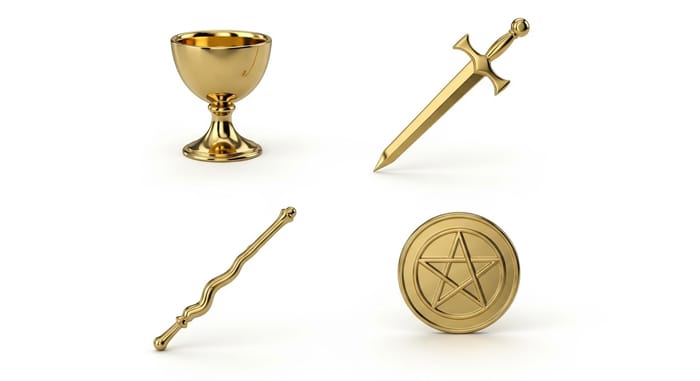
The Tarot deck contains 78 cards, and 56 of these belong to the Minor Arcana.
While the Major Arcana cards represent the grand archetypal forces and pivotal turning points of life, the Minor Arcana deals with the everyday: the practical situations, emotional currents, mental challenges, and material concerns that make up the fabric of daily existence. These cards are not less important than the Major Arcana.
They are simply operating at a different scale, addressing the immediate rather than the monumental.
Understanding the Minor Arcana gives you fluency with the largest portion of the Tarot deck and the ability to interpret readings with nuance and practical detail. Where the Major Arcana tells you the big story, the Minor Arcana fills in the plot points, the character development, and the specific scenes that bring that story to life.

The Four Suits
The Minor Arcana is organized into four suits, each corresponding to an element and governing a specific domain of human experience. Understanding the suits is the first key to reading Minor Arcana cards with confidence.
Wands - Element of Fire
The suit of Wands channels the energy of fire: passion, motivation, ambition, creativity, and spiritual drive. Wands cards address what ignites you - your career ambitions, creative projects, entrepreneurial ventures, and the raw energy that propels you forward.
When Wands appear in a reading, the message relates to action, inspiration, and the courage to pursue what matters to you. Shadow themes include burnout, impatience, conflict, and ego-driven competition.
Cups - Element of Water
The suit of Cups embodies water: emotion, intuition, relationships, love, and the inner world of feeling. Cups cards speak to matters of the heart - romantic partnerships, family bonds, friendships, self-love, and the full spectrum of human emotion from ecstatic joy to profound grief.
When Cups appear, the reading is addressing how you feel, what you need emotionally, and the quality of your connections with others. Shadow themes include emotional manipulation, codependency, escapism, and emotional unavailability.
Swords - Element of Air
The suit of Swords represents air: thought, communication, intellect, truth, and conflict. Swords cards deal with the mind - decisions, beliefs, mental health, honest communication, and the sometimes painful process of seeing things clearly.
When Swords appear, the message involves clarity, truth-telling, intellectual challenge, or mental struggle. Swords are often considered the most difficult suit because truth-telling and clear thinking frequently involve discomfort. Shadow themes include anxiety, overthinking, cruelty, deception, and mental anguish.
Pentacles - Element of Earth
The suit of Pentacles channels earth: material reality, finances, physical health, work, and the tangible world. Pentacles cards address your relationship with money, career, home, body, and the practical foundations of your life.
When Pentacles appear, the reading is grounded in real-world concerns - income, investments, health habits, work environment, and physical comfort. Shadow themes include greed, workaholism, stagnation, material obsession, and neglect of the spiritual or emotional dimensions of life.

The Number Progression: Ace Through Ten
Each suit contains ten numbered cards (Ace through 10) that tell a story of progression - from the seed of potential in the Ace to the completion and culmination in the 10. Understanding this numerical journey is the second key to reading Minor Arcana cards intuitively.
Ace (1): The seed. Pure potential. A new beginning in the suit's domain. The Ace of Cups is a new emotional beginning; the Ace of Pentacles is a new financial or material opportunity. Aces represent gifts being offered - it is up to you to accept and develop them.
Two: Partnership, balance, choice. The initial energy has encountered another force and must negotiate. The Two of Swords presents a mental dilemma; the Two of Wands shows a decision between two paths forward.
Three: Expansion, growth, initial fruition. The energy has gained momentum and is producing early results. The Three of Cups celebrates friendship and community; the Three of Pentacles represents collaboration on a shared project.
Four: Stability, structure, consolidation. The energy has settled into a form. This can be restful (Four of Swords) or confining (Four of Pentacles). Fours pause the forward motion to establish foundations.
Five: Disruption, challenge, conflict. The stability of the Four is shaken. Fives are the cards of crisis and change within each suit. The Five of Cups represents emotional loss; the Five of Wands shows competitive struggle. Fives are uncomfortable but necessary for growth.
Six: Harmony, recovery, generosity. After the disruption of the Five, balance is restored. The Six of Pentacles represents charitable giving; the Six of Cups evokes nostalgia and innocent joy. Sixes bring relief and equilibrium.
Seven: Reflection, assessment, inner work. The journey deepens and becomes more complex. Sevens often involve moral or strategic choices. The Seven of Cups presents multiple options (not all of them real); the Seven of Swords involves strategy or deception.
Eight: Mastery, movement, power. The energy accelerates toward its conclusion. The Eight of Wands represents rapid forward motion; the Eight of Pentacles shows dedicated skill development. Eights carry momentum and determination.
Nine: Near-completion, culmination, heightened intensity. The suit's energy reaches its peak expression. The Nine of Cups is the "wish card" of deep satisfaction; the Nine of Swords represents peak anxiety. Nines bring the fullest expression of each suit's themes.
Ten: Completion, fulfillment or burden, the end of a cycle. The Ten of Pentacles represents generational wealth and family legacy; the Ten of Swords marks the absolute end of a painful situation. Tens signal that a chapter is closing and a new Ace is preparing to emerge.

The Court Cards
Each suit also contains four Court Cards - Page, Knight, Queen, and King - representing people or personality energies at different stages of maturity.
Pages represent beginners, students, and messages. They carry the curious, exploratory energy of youth. The Page of Swords is the eager student of ideas; the Page of Cups is the daydreamer exploring emotions for the first time. Pages often signal news arriving or a new phase of learning.
Knights represent action, pursuit, and extremes. They carry the suit's energy with intensity and sometimes recklessness. The Knight of Wands charges forward with passionate enthusiasm; the Knight of Pentacles plods steadily toward material goals. Knights bring movement and energy but may lack the wisdom of experience.
Queens represent mastery of the suit's inner qualities - emotional intelligence, creative power, and the ability to nurture and sustain.
The Queen of Cups embodies emotional wisdom and intuitive depth; the Queen of Pentacles is the master of creating comfort and material abundance. Queens have internalized their suit's energy and express it with grace.
Kings represent external mastery - leadership, authority, and the ability to direct the suit's energy in the world.
The King of Swords is the sharp-minded judge and decision-maker; the King of Wands is the visionary leader who inspires action in others. Kings have achieved command of their suit's domain but may sometimes become rigid or controlling.

Reading Minor Arcana Cards
When Minor Arcana cards appear in a reading, they indicate things that are happening in your everyday life - situations, feelings, challenges, and opportunities that are within your power to influence and direct.
Even though these are "minor" in comparison to the sweeping themes of the Major Arcana, they are still affecting you. Do not discount them. Ignore the little things and they can become big things.
The more fleeting nature of the Minor Arcana also means that it is well within your power to change or direct the events they describe. Where a Major Arcana card might signal an unavoidable life lesson, a Minor Arcana card presents a situation you can navigate, alter, or leverage to your advantage.
Minor Arcana cards may also appear to support themes highlighted by other cards in the spread. They indicate opportunities, avenues to explore, or people who may assist you on your path toward a larger purpose described by the Major Arcana cards in the reading.

Reversed Minor Arcana Cards
There are several ways to interpret reversed (upside-down) Minor Arcana cards:
- A reversed card may indicate a situation or quality in your life that needs further development or attention.
- It may suggest that the energy the card represents is receding from your life or being blocked.
- It may describe a difficulty, delay, or internal resistance related to the card's upright meaning.
The most important thing with reversals is to interpret them in context. A reversed card's meaning shifts depending on the question asked, the position in the spread, and the surrounding cards. A reversed Five of Swords means something very different next to The Star than it does next to The Tower. Always read the whole picture, not isolated cards.
For a comprehensive introduction to the complete Tarot system, see our Tarot guide.