How to Read Reversed Tarot Cards: Turn Upside-Down Cards Into Powerful Insights
By Blair Andrews · Published September 21, 2015 · Updated May 10, 2026
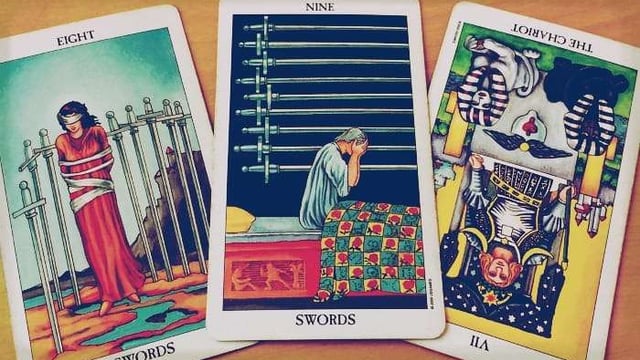
Reversals are one of the genuine dividing lines in tarot. Some readers swear by them. Others, including at least one respected tarot historian, consider them a distraction from how the cards were designed to work. Both positions have real weight behind them, and understanding why people disagree will make you a better reader regardless of which side you land on.
The case against reversals is straightforward. The imagery on each card was designed to be read in a specific orientation. Turning a card upside down interferes with the visual language - you can't read the symbolism the same way when everything is inverted. And the math is on this side of the argument, too. A standard three-card spread with 78 cards produces over 450,000 possible combinations without adding reversals. There's no shortage of nuance in an upright-only reading.
The case for reversals is equally compelling: life isn't binary. Energy doesn't only flow one way. Sometimes you're not experiencing something directly - you're resisting it, or sitting in its aftermath, or watching it build just below the surface. Reversals give you a vocabulary for those in-between states. Without them, you're limited to "this energy is present." With them, you can say how it's present.

Why Reversals Have Esoteric Roots
There's a deeper principle at work here than most reversal guides acknowledge. The Hanged Man - Key 12 in the Major Arcana - is assigned the Hebrew letter Mem, which means "waters." Water reflects everything upside down. Stand at the edge of a still lake and the trees, the sky, the mountains all appear inverted in the surface. Same reality, reversed orientation.
This isn't just a poetic coincidence. In the esoteric tradition behind the tarot, the Hanged Man embodies a structural principle: the approach that isn't working is often the exact inversion of what will work. You've been pushing; the answer is yielding. You've been holding on; the answer is releasing. You've been trying to climb the tree; the answer is hanging from it.
Reversed cards tap into this same principle. When a card flips, it's asking you to consider the mirror image - not the opposite, but the reflection. What does this energy look like when it's turned around? That's a genuinely useful question, and it goes well beyond "upright means good, reversed means bad."

Five Lenses for Reading Reversals
Here's where most reversal guides fall short. They teach you one framework and present it as the framework. But experienced readers actually work with several different lenses, choosing whichever one fits the context of the reading. Think of these as different angles on the same card, not competing theories.
The first lens is internalization. The card's energy is present, but it's happening inside you rather than playing out in the world. The Five of Wands upright is conflict with other people. Reversed, it's the argument happening inside your own head, different parts of you wanting different things. This is probably the most widely taught framework, and it's genuinely useful. But it's not the only one.
The second lens is resistance. You're actively refusing what the upright card is offering. The energy is knocking on the door and you won't answer it. Death reversed through this lens isn't just internal transformation - it's the grip on something that's already ended, the refusal to let a chapter close. The energy of change is right there, and you're bracing against it.
The third lens is excess or deficiency. The upright card has a natural range, and the reversal means you've drifted outside it - either too much of that energy or not enough. The Emperor upright is healthy structure and authority. Reversed, he's either a tyrant (too much control) or absent (no structure at all). Which one depends on the rest of the reading and the question being asked. This is where your intuition earns its keep.
The fourth lens is timing. The energy hasn't arrived yet, or it's already passed. The Ace of Cups reversed might mean the emotional new beginning you're asking about is forming but hasn't broken through to conscious awareness. Or it could mean the opportunity was already offered and you didn't recognize it at the time. The card's energy is real but displaced in time, either on its way or already in the rearview mirror.
The fifth lens is aftermath. The event the upright card describes has already happened, and what you're dealing with now is the residue. The Tower reversed through this lens isn't resistance to change - it's the stunned aftermath of a shattering that already occurred. The lightning struck months ago. The structure came down. But you're still standing in the rubble, treating the aftermath as a crisis instead of a clearing.
You don't pick a lens before the reading starts and apply it mechanically. You look at the card, consider the question, feel into the spread's context, and let the right framework surface. Sometimes it's obvious. Sometimes two lenses overlap and both are true. That's not a flaw in the system - it's how living symbology actually works.

The Numerological Clue Inside Every Reversal
Here's something most reversal guides never mention: the card's number tells you what kind of energy is being disrupted. Every number in the tarot carries a specific quality, and when that number appears reversed, you know something about the shape of the disruption before you even look at the suit or the imagery.
A reversed card carrying four energy (structure, stability, foundation) points to something in the architecture of your life. Structure is either collapsing where you need it or calcifying into rigidity where you need flexibility. The Four of Pentacles reversed might mean security dissolving, or it might mean you're finally loosening a death grip on resources you've been hoarding. The four tells you the issue lives in the realm of stability and form.
A reversed five - the number of change, disruption, freedom - tells a different story entirely. Fives already carry unstable energy, so a reversed five often means that necessary change is being resisted or that freedom is being misused. The natural disruption that a five brings is getting stuck somehow, either because you won't let it happen or because it's spinning out of control with no productive direction.
Aces reversed suggest a beginning that's delayed or a gift that isn't being received. Tens reversed point to a completion that's falling apart before it fully arrives, or a cycle that refuses to close. Threes reversed indicate creative expression that's blocked or scattered. You get the principle: the number tells you the domain of the disruption, and the suit tells you the element - whether it's happening in your thinking (Swords), your emotions (Cups), your energy and passion (Wands), or your material world (Pentacles).
This gives you a structural starting point before your intuition even enters the conversation. A reversed Four of Swords and a reversed Four of Cups are both about disrupted stability, but one lives in the mental realm and the other in the emotional. The number is the skeleton. The suit is the flesh.

Three Cards, Three Different Readings
Theory is useful, but let's put it to work. Here are three commonly pulled cards and how the different frameworks produce genuinely different (and all valid) readings when they appear reversed.
The Tower reversed. Through the internalization lens, this is a belief system crumbling inside you while the external world looks unchanged. Through the resistance lens, it's worse. You can feel the cracks in the structure but you keep reinforcing the walls, holding a crumbling tower together by force of will. The site's own Tower page describes this as "more dangerous than the upright card," and that framing is worth sitting with. Through the aftermath lens, the lightning already struck and you're still treating the rubble as a disaster instead of noticing the open sky above you. Three valid readings, same reversed card, and the right one depends entirely on what's actually happening in the querent's life.
The Sun reversed. This is a good example of how positive cards behave differently when flipped. The Sun reversed doesn't become The Moon. It doesn't invert into darkness. It dims. Through the timing lens, the clarity the Sun promises is forming but hasn't arrived yet. Dawn is happening and you've got the curtains pulled. Through the internalization lens, your joy is real but private, not yet visible to the world around you. Through the excess lens (and this one surprises people) it can point to burnout, too much intensity with no shade. Even light needs pacing. The Sun reversed is still fundamentally a positive card. It's just a quieter one.
The Devil reversed. This card genuinely goes two different ways, and that's worth acknowledging honestly. Through one reading, the Devil reversed is liberation. The chains are coming off, a pattern is breaking, you've finally seen through an illusion that had power over you. Through another equally valid reading, the reversal means deeper entanglement - the bondage has become so internalized that you can't even see the chains anymore. They've become part of your identity. Which reading applies? The rest of the spread will tell you. The querent's own reaction when they see the card will tell you. Your gut will tell you. The point is that you hold both possibilities open instead of snapping to one keyword.

Should You Use Reversals?
This is an honest question that deserves an honest answer, and the honest answer is: it depends on how you read.
If you read intuitively - working with the images, letting the cards speak through visual impression and felt sense - reversals might genuinely interfere. The imagery was designed to communicate in a specific orientation. Turning it upside down disrupts the visual language that your intuition is reading from. Some very skilled readers work exclusively with upright cards and produce readings of extraordinary depth. There's nothing incomplete about that approach.
If you read more systematically, working with correspondences, positional meanings, and structured spreads, reversals add a layer of information that's hard to replicate any other way. They give you polarity. They let a single card speak in more than one voice depending on its orientation. For readers who like precision, that additional variable is genuinely useful.
If you're just starting out, there's real wisdom in learning the cards upright first. Get comfortable with what each card means when it's right-side up before you start asking what happens when it flips. Adding reversals too early can feel like doubling the amount you need to memorize, and that's discouraging. But you're not actually memorizing 156 meanings instead of 78. You're learning 78 energies and then developing the flexibility to read each one in multiple registers.
A practical middle ground: try reading with reversals for a month. Then try reading without them for a month. Pay attention to which approach gives you more useful readings - not more complex ones, but more accurate and actionable ones. Your own experience will answer the question better than anyone else's opinion.

The Reversal as Mirror
When a card appears reversed, something in you is being asked to look at a familiar energy from an unfamiliar angle. The water reflects the landscape, but not exactly. The trees look different upside down. The proportions shift. What was in the background comes to the foreground.
That shift in perspective is the real gift of reversal reading. It's not about adding a "negative" meaning to every card. It's about developing the flexibility to see the same energy from more than one direction - and trusting yourself enough to choose the reading that fits. The frameworks are tools. The real skill is knowing which tool to pick up and when to set it down.

Reader Questions
Do reversed cards always mean the opposite of the upright meaning?
Almost never, actually. A reversal is more like a variation than an inversion. The Sun reversed doesn't mean misery - it means the joy is quieter, delayed, or private. The Ace of Cups reversed doesn't mean emotional emptiness - it means the new feeling is gestating below the surface. Think of it as the same song played in a different key rather than a completely different song. The core energy is still there; what's changed is how it's expressing.
How do I shuffle to include reversals?
The simplest method is to split your deck into two roughly equal halves, rotate one half 180 degrees, and then shuffle everything together thoroughly. Some readers prefer to cut the deck into three piles and rotate just one. Others do a messy pile shuffle on a table, which naturally rotates some cards. The exact method matters less than consistency - pick an approach and stick with it so your reversals feel like a natural part of the reading rather than something you're engineering. And if a card flips during shuffling, let it stay however it lands. Those accidental reversals are often the most pointed ones.
Can I change my mind about using reversals mid-reading?
You can, but be honest with yourself about why. If a difficult reversal appears and you suddenly decide you're an "upright-only" reader, that's avoidance - and the card probably has something worth hearing. If you genuinely realize partway through a reading that the reversals are cluttering the message rather than clarifying it, turning the remaining cards upright is a valid choice. The cards are tools for your intuition, not a test you can fail. What matters is that you're reading with integrity, not convenience.

Explore Further
Deepen your understanding of tarot fundamentals and spread techniques to put your reversal skills into practice. For the full symbolism behind the cards themselves, explore the Major Arcana and Minor Arcana guides. And if you'd like to see how your personal numbers connect to the cards, try the Life Path Calculator - your life path number corresponds to a specific Major Arcana card, and understanding that connection can transform how you read the entire deck.