How to Choose Your First Tarot Deck: A Complete Guide
By Blair Andrews · Published November 19, 2015 · Updated May 10, 2026
 Choosing your first Tarot deck is one of the most personal decisions you will make on your spiritual journey. With thousands of decks available - from faithful reproductions of medieval originals to modern minimalist designs - the sheer volume of options can be paralyzing.
But the truth experienced readers know: the right deck is not the most popular one, the most beautiful one, or the one your favorite influencer uses. It is the one that speaks to you in a language your intuition recognizes.
This guide will help you navigate that choice with clarity, whether you are a complete beginner or someone returning to the Tarot cards after a long break.
The principles below apply regardless of your experience level, because the relationship between a reader and their deck is fundamentally about resonance - and resonance does not care how much you know.

Step 1: Find a Deck That Speaks to You Personally
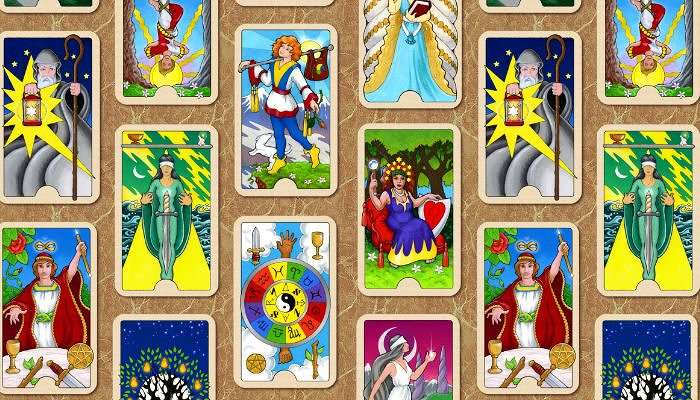
Tarot decks are highly visual and deeply symbolic. Each deck has its own aesthetic language, its own emotional tone, and its own way of communicating meaning through imagery. The most important criterion for choosing your first deck is not which one is "best" objectively but which one creates a felt sense of connection when you look at it.
If you have access to a store that sells Tarot decks, spend time handling the display copies. Hold them. Look at the artwork. Notice which deck makes you want to keep looking and which ones you put down after a few cards.
Pay attention to the energy you receive from the deck - not in a mystical, woo-woo sense, but in the practical sense of noticing which images hold your attention, provoke curiosity, and make you want to understand more.
If you do not have a local store, browse deck images online. Most publishers and independent deck creators share full card galleries on their websites. Spend time with these images. Notice which art style draws you in: realistic paintings, abstract designs, photographic imagery, hand-drawn illustrations.
Your aesthetic preference is not superficial - it determines whether you will actually want to sit with these cards regularly, and regular practice is what transforms a Tarot purchase into a Tarot practice.
Some people feel drawn to the more traditional decks such as the Original Rider Waite or the Tarot de Marseilles. Others connect immediately with modern decks like the Wild Unknown or the Modern Witch Tarot. Neither preference is more "authentic" or advanced.
The deck that keeps getting your attention - the one you find yourself returning to even after looking at dozens of others - is the one worth buying.

Step 2: Consider Available Learning Resources
Not all Tarot decks come with equal support for learning. Some decks have extensive companion books, online courses, and communities of readers who share interpretations and insights.
Others come with nothing more than the Little White Book - the slim pamphlet tucked inside the box that provides one-line keyword meanings for each card. Some decks come with no written material at all.
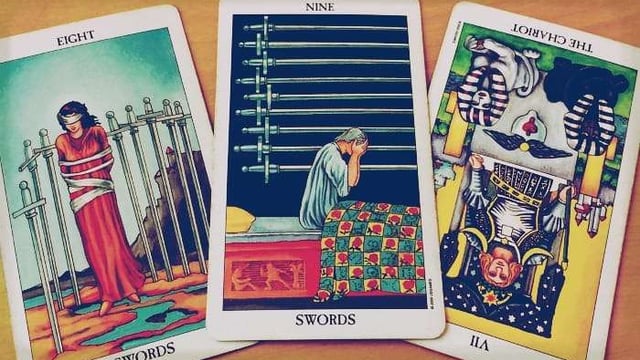
For beginners, this matters. A great deal. The Rider-Waite deck (or its modern variant, the Radiant Rider-Waite) is the most commonly recommended first deck precisely because the volume of learning material available for it is unmatched. Hundreds of books have been written about this deck specifically.
Every online Tarot course uses it as the default reference. When you encounter a confusing card in a reading, you can find detailed interpretations for the Rider-Waite version within seconds.
If you are more experienced or prefer to read intuitively - trusting the images to speak to you without needing to look up "official" meanings - then your options broaden considerably. Choose a deck with strong, evocative imagery that stimulates your intuitive response.
Highly visual decks with rich, detailed illustrations tend to work well for intuitive readers because they provide enough symbolic content to spark insight without needing external reference.

Step 3: Match the Deck to Your Reading Style
Different decks suit different reading approaches. If you are drawn to the structured, symbolic tradition of Western esotericism, the Thoth deck (designed by Aleister Crowley and painted by Lady Frieda Harris) offers extraordinary depth - though it has a steeper learning curve than most beginner decks.
If you prefer clean, accessible imagery that communicates meaning at a glance, the Rider-Waite family of decks is hard to beat. If you are drawn to Eastern philosophy, the Osho Zen Tarot offers a fundamentally different approach that emphasizes present-moment awareness over predictive reading.
Think about how you want to use the cards. Are you interested in detailed, structured readings with specific positions and interpretive frameworks? A traditional deck with established meanings will serve you well. Are you more interested in using the cards as a mirror - a visual meditation tool that reflects your current state back to you?
A more abstract or artistic deck may be a better fit. There is no wrong answer. The right deck is the one that matches the way you naturally want to engage.

Your Numerological Affinity
Something most Tarot guides do not mention: your Life Path number can offer a clue about which type of deck will resonate with you most deeply. Life Path 1 readers tend to prefer bold, assertive imagery - decks with strong colors and clear, decisive symbolism.
Life Path 2 readers are drawn to softer, more emotionally nuanced decks with delicate artwork and gentle color palettes. Life Path 7 readers often gravitate toward complex, layered decks that reward deep study and reveal new details with every viewing.
This is not a rule - it is a tendency. But if you are torn between two or three decks and cannot decide, consider which one aligns with the energetic qualities of your Life Path.
The deck that matches your numerological frequency is often the one that feels the most natural in your hands, as though it were designed specifically for the way your mind processes symbolic information.

A Few Practical Recommendations
For absolute beginners who want maximum learning support: the Radiant Rider-Waite. The colors are vibrant, the imagery is the gold standard for Tarot education, and every resource you will ever need is built around this deck.
For beginners who want a more modern aesthetic: the Modern Witch Tarot or the Light Seer's Tarot. Both follow the Rider-Waite structure (making them compatible with most learning resources) while offering updated, contemporary artwork that many modern readers find more relatable.
For intuitive readers who want to work primarily with imagery: the Wild Unknown or the Fountain Tarot. Both prioritize evocative, emotionally rich imagery that speaks directly to intuition without requiring extensive memorization of traditional meanings.
For readers interested in nature-based spirituality: the Gaian Tarot. This deck has a nurturing, earth-centered energy that is particularly well suited for readings focused on personal growth, healing, and connection to the natural world.
Whatever deck you choose, remember that the cards are a tool. The real reader is you. Your intuition, your life experience, your ability to make connections between symbols and meaning - these are the actual instruments of a Tarot reading.
The deck is simply the medium through which those instruments express themselves. Choose the medium that feels right, and then trust yourself to use it. For a deeper exploration of Tarot card meanings and reading techniques, visit our comprehensive Tarot guide.