Why You Should Learn Tarot: 4 Reasons That Go Beyond Fortune-Telling
By Blair Andrews · Published September 22, 2015 · Updated May 21, 2026
What Tarot Actually Is
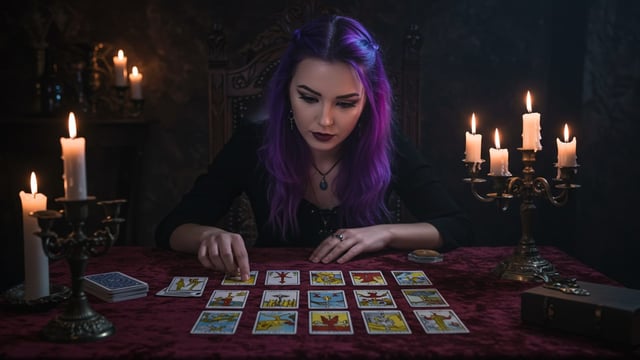
There is a version of tarot that most people carry in their heads, absorbed from movies and Halloween decorations and that one scene in every thriller where a mysterious woman flips over the Death card and gasps. In that version, tarot is fortune-telling. It is prediction. It is someone in a dark room telling you what is going to happen to you, and your job is to sit there and receive the verdict.
That version has almost nothing to do with how tarot actually works, or why it is worth learning.
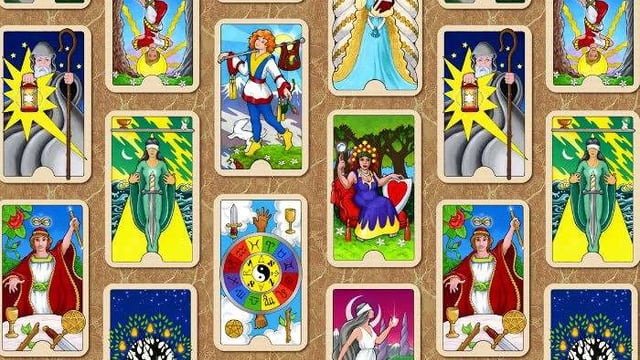
The real tarot is a system of 78 images that, taken together, map the full range of human experience. Every situation you will face, every emotional state you will pass through, every type of person you will encounter, every stage of growth and loss and recovery and triumph - all of it is represented somewhere in those 78 cards.
The deck is not a crystal ball. It is a mirror, and learning to read it is learning to use that mirror with increasing precision and honesty.
That distinction matters because it determines what you get out of the practice. If tarot is fortune-telling, then learning it gives you predictions - which may or may not be accurate, and which you have no control over either way.
If tarot is structured self-reflection, then learning it gives you a tool for thinking more clearly about your own life. A tool you can use anytime, on any question, for as long as you live.

A Framework for Making Decisions
The struggle with decisions rarely comes from lacking information. It comes from having too much of it - too many options, too many conflicting feelings, too many other people's opinions rattling around in their heads. And no reliable way to sort through it all.
Tarot provides that sorting mechanism. When you pull cards for a specific question, you are not asking the universe to hand you an answer. You are using a structured set of symbols to externalize the tangle of thoughts and feelings inside you so that you can look at them from the outside.
The cards give shape to things you already know but have not been able to articulate. They highlight dynamics you have been sensing but not naming. They put the conflicting parts of a situation side by side where you can see them clearly, rather than leaving them swirling together in a fog of indecision.
This is not mystical. It is a form of structured reflection, and it works for the same reason that writing in a journal works, or talking to a good therapist works, or sleeping on a problem works.
It moves information from the background of your awareness to the foreground, where your conscious mind can engage with it properly.
The difference between tarot and those other tools is specificity. A journal page is blank - you have to generate the structure yourself. A therapist responds to what you bring up. But a tarot spread is pre-structured.
The positions in the spread tell you what to look at (past influence, present situation, obstacle, outcome, advice), and the cards that land in those positions give you concrete symbols to interpret. The framework does half the cognitive work for you, freeing your mind to focus on meaning rather than organization.
Over time, people who read tarot regularly report that they become better decision-makers even when they are not using the cards. The practice trains a particular kind of thinking - the ability to hold multiple perspectives simultaneously, to consider both what you want and what is actually happening, to recognize patterns across different situations. Over time, that becomes habitual.
The cards are the training wheels. The skill is yours to keep.

An Emotional Processing Tool
Grief, anger, confusion, anxiety, heartbreak. These are not problems to be solved. They are experiences to be processed, and processing them requires something that modern life is not very good at providing: a structured space for sitting with difficult feelings without rushing to fix them.
Tarot creates that space. When you pull cards about something painful, the images give you a way to look at the pain without being swallowed by it.
The card is not the pain itself but a representation of it, held at just enough distance that you can examine it, turn it over, consider what it means and where it came from and where it might be leading. That slight externalization is often exactly what emotional processing requires.
There is a particular relief that comes from seeing a card that perfectly captures what you are going through. Not because the card tells you anything new, but because it confirms that your experience is recognizable - that it has a name, a shape, a place in the larger map of human experience.
You are not lost in uncharted territory. You are somewhere that others have been before, and the card is proof of that. Something about that recognition makes the feeling more bearable, more workable, more human.
This quality makes tarot especially useful during transitions - the periods where you are between identities, between phases of life, between the person you were and the person you are becoming. Those in-between times are often the hardest because normal frameworks for understanding yourself stop working.
You do not fit your old story anymore, but the new one has not formed yet. Tarot gives you a way to navigate that ambiguity by providing a symbolic language that is comfortable with paradox, with change, with the coexistence of seemingly contradictory truths.

A Pattern Recognition Practice
One of the quieter benefits of regular tarot practice is what it does to your ability to recognize patterns - in your own behavior, in your relationships, in the recurring themes that structure your life.
When you read tarot regularly, you start noticing that certain cards come up again and again in response to certain types of questions. The Seven of Cups keeps appearing when you ask about a particular relationship. The Four of Pentacles shows up every time you consult the cards about money. The Tower has visited you three times in the last six months.
These repetitions are not spooky. They are useful. They point to patterns that your day-to-day awareness tends to miss because you are too close to them.
When the same card keeps appearing, it is an invitation to ask yourself what recurring dynamic in your life matches that card's energy - and what you might want to do about it. The cards do not create the patterns. They make them visible.
This extends beyond personal readings. People who work with tarot over time develop a sharpened sense for pattern and symbol in general.
They become better at reading situations, at sensing the emotional undercurrents in a room, at noticing when a relationship or a project is following a trajectory they have seen before. The deck trains a kind of perception that applies far beyond the reading table.

Why Now
Tarot has been around for centuries, but access to it has never been more open than it is right now. For most of its history, serious tarot study required either a teacher willing to take you on as a student or access to a small number of specialized books that were difficult to find and sometimes deliberately obscure.
The knowledge was real, but it was gatekept by tradition, by cost, by social barriers that kept it in the hands of a narrow community.
That has changed dramatically. High-quality tarot education is now available in forms that did not exist a generation ago. Decks are produced by artists from every background and tradition, which means you can find imagery that actually resonates with your experience rather than forcing yourself to connect with a visual language that feels foreign.
The old gatekeeping has not disappeared entirely, but the gates are wider than they have ever been, and the path from curious beginner to competent reader is clearer and more accessible than at any point in tarot's long history.
The other reason "now" matters has less to do with tarot and more to do with everything else. We live in a time of extraordinary information overload and extraordinary disconnection from inner life.
Most people spend the majority of their waking hours consuming content produced by other people and reacting to events they have no control over. The muscles of self-reflection, inner listening, and personal meaning-making have atrophied for a lot of people, not because they are weak, but because the environment does not exercise those muscles.
Tarot does. Sitting down with a deck and asking a genuine question requires you to slow down, turn inward, and engage with your own thoughts and feelings in a structured way.
It is a practice of attention in an age of distraction. That alone makes it valuable, even before you consider the specific insights any individual reading might produce.

The Difference Between Parlor Trick and Thinking Tool
The reason tarot has a credibility problem in mainstream culture is that its most visible form has always been its least serious one. The carnival fortune teller. The late-night television psychic. The social media reader who posts a "pick a card" video promising to tell you what your crush is thinking.
These are entertainment, and there is nothing wrong with entertainment, but they represent tarot the way karaoke represents music - a fun surface version that gives no indication of the depth available underneath.
Tarot as a thinking tool is something else entirely. It is a practice with intellectual rigor, psychological depth, and practical applicability. The 78 cards encode a coherent model of human experience drawn from numerology, astrology, elemental philosophy, and centuries of observational psychology.
Learning to read them is not learning a party trick. It is learning a symbolic language - one that gives you access to dimensions of your own experience that ordinary language struggles to reach.
The difference between these two versions is not in the cards themselves. It is in the intention and skill of the person using them.
The same deck that produces a vague, flattering reading in the hands of someone performing entertainment produces a precise, genuinely useful reading in the hands of someone who has studied the system and approaches it with honesty. Learning tarot means crossing from the first category to the second, and the crossing is worth the effort.
If you have been curious about tarot but held back because the fortune-telling image did not appeal to you, that instinct is correct. Fortune-telling is not what tarot does best.
What tarot does best is give you a structured, symbol-rich practice for understanding yourself and your life with more clarity, more honesty, and more depth than casual reflection alone can provide. That is a practical benefit with real-world applications, and it is available to anyone willing to pick up a deck and learn.
For a complete introduction to the system, the tarot guide covers the structure of the deck, the meaning of each card, and the basics of reading for yourself and others. For guidance on asking effective questions - which is where most beginners should start - that resource will help you frame the kinds of questions that produce genuinely useful readings from day one.

Frequently Asked Questions
Do I need to be psychic to read tarot?
No. Tarot does not require psychic ability any more than writing in a journal requires psychic ability. It is a structured reflective practice that works through symbol, pattern recognition, and honest self-examination. Some readers do describe their process in terms of intuition or psychic perception, and those descriptions may be valid for them, but they are not prerequisites. If you can look at an image and notice what it makes you think and feel, you can read tarot.
Is tarot connected to any specific religion or belief system?
Tarot has historical connections to Kabbalah, Hermeticism, and various Western esoteric traditions, but it is not tied to any single religion. People of every faith background - and people with no religious affiliation at all - use tarot productively. The system is flexible enough to accommodate whatever worldview you bring to it. You can read tarot as a spiritual practice, as a psychological tool, as a creative exercise, or as some combination of all three.
How long does it take to learn tarot?
You can begin doing meaningful readings within weeks of starting, especially if you learn the suit-and-number framework rather than trying to memorize all 78 cards individually. Developing real fluency - the kind where you can read complex spreads with confidence and nuance - typically takes six months to a year of regular practice. Mastery is an ongoing process that deepens for as long as you continue working with the cards. Most experienced readers say they are still learning after decades.
What deck should I start with?
The standard recommendation is the Rider-Waite-Smith deck (or one of its many modern descendants) because its imagery is fully illustrated on every card, which gives you visual cues to work with even before you have learned the traditional meanings. That said, the best starter deck is one whose artwork genuinely appeals to you. If the images on a deck make you want to look at them, study them, and sit with them, that deck will teach you faster than any "correct" recommendation that leaves you cold.