Angel Number 1811: The Rhythm That Was Installed Before You Remember
By Blair Andrews · Published October 31, 2023 · Updated May 21, 2026
The numbers inside 1811

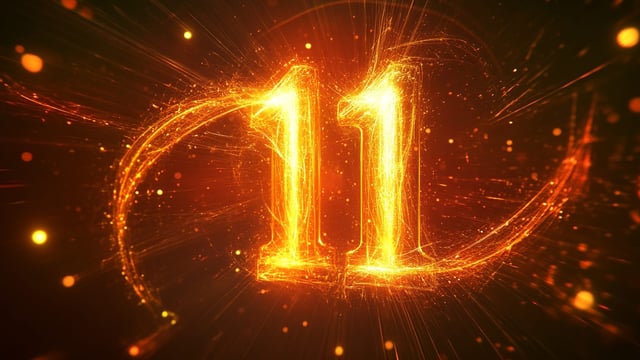
1 + 8 + 1 + 1 = 11
11: Heightened awareness, sensing what others miss
Rhythm was the foundational condition - every beginning that followed inherited a pulse it didn’t create. 1811 says the established beat preceded the new starts, and Justice asks whether those beginnings are working with or against the inherited structure.
What 1811 means for you specifically depends on which of the 11 Life Paths you’re on. Your birthday determines that.
Enter your birthday below:

Some people never start from scratch. Not because they are unoriginal - but because a pulse was laid down early enough in their lives that every later beginning inherits it.
1811 is the number for those people. And the position of its 8 is the tell.

The number as a sequence, not a sum
Before the arithmetic, look at the shape.
One. Eight. One. One.
Four digits in that order, and the order is doing most of the work. A beginning. Then a rhythm. Then two more beginnings. The pulse does not arrive at the end of the number, where a sum or a conclusion would sit. It arrives in the second position, right after the first beginning, before the second and third.
That placement is unusual, and it is the whole reason 1811 behaves differently from its nearby cousins.
Compare it to 118, where the rhythm sits at the end, two beginnings that have finally found their pulse.
Compare it to 1118, where three beginnings come before the rhythm, each one founded in earnest before the pulse has a chance to declare which of them is central. Compare it to 1181, where a rhythm already in play meets a third beginning knocking at the door.
1811 is none of these. The 8 arrives after only one beginning - and then two more beginnings follow. The rhythm is installed early, and everything after it is downstream.

What it means for rhythm to come early
The sequence suggests, in compressed form, a life story.
A first beginning happens. Often a small one. A child's first serious attention, a family pattern absorbed before it could be questioned, an early calling that began before anyone around the person thought to call it a calling. Something began, and it began early.
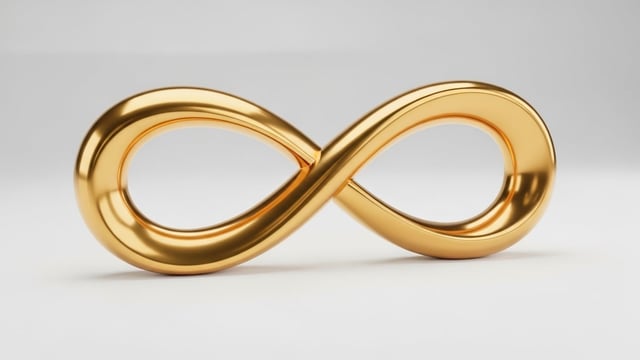
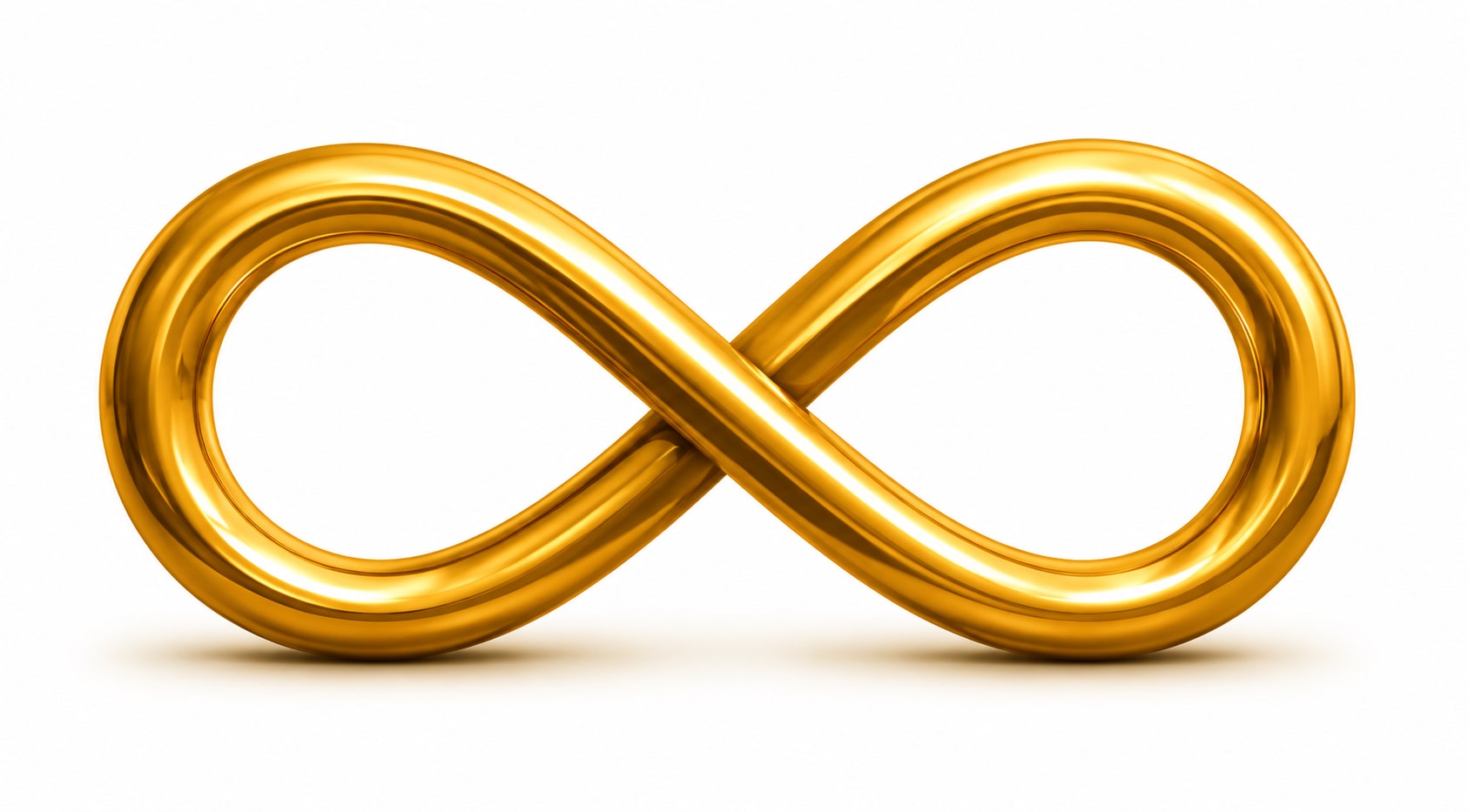
Then, almost immediately in the shape of the number, the 8 arrives. Eight is the lemniscate - the figure turned on its side, two loops joined at a single crossing, energy circulating through itself without needing to be refreshed from outside.
It is not wealth and it is not accumulation. It is rhythm. The breath-pattern of a practice that has stopped needing decisions.
For the 8 to sit in the second position means the rhythm established itself very early in the sequence of this particular life. Before the person had founded more than one thing, the pulse was already there. The practice that began first did not end, it settled into its own circulation, and it has been breathing, quietly, ever since.
This is uncommon. For many people, several founding acts are needed before a rhythm forms at all.
The sequence for most people looks more like 1-1-1-8 or 1-1-8-1 - several founding moves and then, maybe, a pulse that has to be discovered and protected. 1811 describes a smaller number of people in whom the rhythm was installed before the rest of the life began.
And this is the part that matters: every subsequent beginning they have made has inherited that pulse.

The two later beginnings
After the 8 in 1811 come two more 1s.
These are not founding beginnings in the same sense as the first. The first beginning happened in a life that had not yet established a rhythm, it was an opening, a risk, a genuine leap into uncertainty. The 8 that followed turned it into a practice.
The two later beginnings arrived into a life that already had a pulse.
That redefines what a beginning is for this kind of person.
When a rhythm is already in place, a new beginning does not have to invent itself from silence. It does not have to generate its own breath. The pulse that was installed years or decades earlier lends its tempo to whatever is starting.
The second beginning finds, almost immediately, the circulation it needs in order to sustain itself - because the circulation was already there, waiting to include it.
The third beginning is the same. Whatever it is : a creative direction, a relationship, a commitment to a new field of study, a venture that would be difficult for most people to begin mid-life - it arrives into a system that already knows how to keep something alive. It does not have to be taught. It slots into the pulse.
This is why the people who carry 1811 can often look, from the outside, as though beginnings come easily to them. Their apparent ease has a different source.
It is that starting is a different activity for them than it is for others. They are not striking matches in the dark. They are lighting candles from a flame that has been burning since before they were paying attention.
For more insight: Browse our complete angel numbers guide

Why the early pulse is both a gift and a constraint
There is a reason 1811 is not only a fortunate configuration, and the reason belongs to the whole point of the number.
When a rhythm is installed early, it shapes what is possible later. The same pulse that makes subsequent beginnings feel fluent also imposes a kind of requirement on them. They have to be beginnings the rhythm can carry.
The practitioner whose early music lessons produced a rhythm of daily attention to sound may later begin a writing practice, a teaching practice, a listening practice, all of which the musical pulse can absorb. But they will find it difficult to begin a life that has no place for attention, or that requires a fundamentally different tempo.
The person whose childhood was organized around the rhythm of a family farm may later begin a business, a scholarship, a caregiving vocation - all of which can be set inside the same rising-early, working-with-the-weather pulse. But they will struggle with beginnings that ask them to abandon the seasonal shape they were formed inside.
The rhythm shapes what can be begun.
This shaping operates as an instrument of coherence.
The reason the later beginnings of a 1811 person tend to belong to one another, tend to form, in retrospect, a single coherent life rather than a collection of disparate chapters - is precisely that they all inherited the same pulse. The rhythm chose them before the person did.
But it means the scales become necessary.

The sum that does not reduce
Add the digits of 1811. 1 + 8 + 1 + 1 = 11.
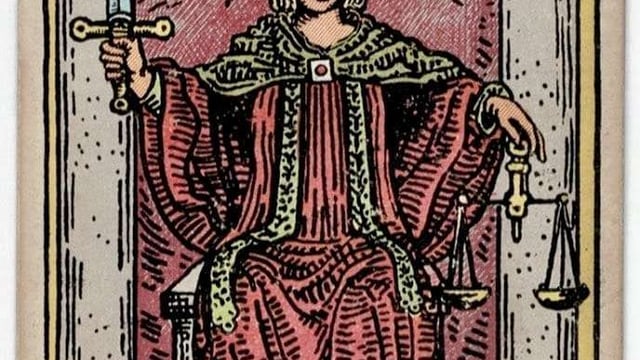
Eleven does not further reduce. It is one of the master numbers, and it holds its weight. The eleven is the Justice card of the older tarot, a seated figure with scales in one hand and a sword in the other. The scales for measuring actual weight. The sword for the clean cut that follows honest measurement.
Eleven is the scales - patient, unhurried, grounded. It is the patient, unhurried function of weighing two things against each other until the truer one declares itself.
In 1811, the scales arrive with a specific job.
They do not weigh whether the three beginnings are worthy. They do not weigh the first against the later two. What they weigh is narrower, and more exact. They weigh whether a given beginning honors the rhythm already set - or whether it will disrupt it.
Whether 1811’s shadow side applies to you — and how strongly — depends on your core numbers. Your birthday reveals the first one.
Enter your birthday below:

Rhythm-ruled discernment
This is the particular instrument of Justice that 1811 produces, and it does not look like the Justice of other master-11 numbers.
The Justice of 38 asks whether a creative voice is being used for something worth making. The Justice of 722 asks which of the people who arrived after a victory are there for the person and which are there for the thing they made. The Justice of 1118 asks which of three founded patterns the rhythm has already chosen to be the central life.
The Justice of 1811 asks something quieter. It asks, of any new beginning: does this fit the breath-pattern of the life so far?
The scales are weighing something more fundamental than impressiveness, morality, or likelihood of success. They are weighing something that only makes sense once you know the rhythm exists.
Will this beginning continue the pulse, or interrupt it?
This is a useful question, and most people never learn to ask it, because most people do not have a coherent enough pulse for the question to apply. For the person who carries 1811, the pulse is audible.
It has been audible for years, maybe for their whole conscious life. They know, if they stop and listen, what their life sounds like when it is well. They know the tempo of their days when the rhythm is uninterrupted.
And the scales, when they lift a possible beginning onto one side of the balance, can tell.
Some beginnings settle into the pulse almost without effort. They were made for it. They arrive and the rhythm expands to include them, and within a short time they are part of the circulation, indistinguishable from the practices that came before.
Other beginnings, however attractive on their own merits, cannot be carried by this particular pulse. They would require the rhythm to break and reform around a different tempo.
This is not impossible - but it is not what 1811 is for. 1811 is not asking its carrier to reinvent the pulse. It is asking them to discern which new arrivals belong to the pulse they already have.
Continue your journey: Calculate your Life Path Number

The sword and the beginnings that must be refused
The sword of Justice does its work here, and its work is honest.
Some beginnings that arrive in a 1811 person's life will be genuinely compelling on their own terms, and still wrong for this particular rhythm. This is a difficult thing to name.
The person may have to refuse opportunities that would look, from the outside, like obvious goods. A career turn that other people would celebrate. A move that would make practical sense. A relationship that checks all the reasonable boxes.
The sword does not ask whether these things are bad. It asks whether they would require the pulse to be broken.
If the pulse would have to be broken, the sword cuts the line between what this person's life is and what it would become if the pulse were lost. The discernment is not punitive. It is protective.
The rhythm that was installed early is the coherence of the life. Its maintenance is not optional in the way that optional things are optional. It is what this particular person was given. Losing it would not be a trade for something better. It would be a trade of the instrument for the sale of the instrument.
And some beginnings that arrive will be less impressive on their surface, quieter, stranger, harder to explain to people who do not know the pulse exists - and will, nonetheless, belong. The scales lift them briefly, and the indicator settles, and the person understands that this unremarkable-looking thing is actually part of the pattern.
The sword here does its other work. It cuts the hesitation. It lets the person say yes to what looks small, because the scales have shown that it is made of the same fabric as the rhythm that runs through the rest of their life.

Why 1811 is not a beginner's number
This is not a number that arrives early. It almost never does.
To read 1811 accurately, a person has to be far enough along in their life that they can hear the pulse that has been running underneath it.
The rhythm was installed in childhood or soon after, but most people do not become conscious of it until they have lived enough years to notice that something has been sustaining them that they did not put in place.
The awareness is usually late. Someone in middle life looks back and sees, for the first time, that the early practice they took up at six or nine or eleven was not incidental, it set a tempo the rest of their life has been running to.
Someone further along sees that the pulse their childhood installed has been carrying them through every later chapter, visible only in retrospect, audible only once they slowed down enough to hear it.
1811 tends to arrive around the moment that recognition becomes possible. To direct the person's attention to the rhythm that has been there the whole time. To say: the pulse you are finally hearing is real.
It has been running since before you could name it. And the scales you are about to pick up are specifically designed to weigh your future beginnings against it.
This is the deep gift of the number. It is not telling the person to start something new. It is telling them that they already have the instrument they need to decide what, among the many possible beginnings still ahead of them, will continue the music.

The quiet shape the number leaves behind
Picture, to close, the life the number describes.
A person in the second half of their life, somewhere they have been for long enough that the room does not announce itself. The rhythm that was installed when they were young is audible to them now in a way it was not when they were younger.
They can hear it. They can describe its tempo. They can point to the pulse in their days even when nothing dramatic is happening, the particular quality of attention that has been running underneath their years since long before they named it.
In front of them, on a table, a new possible beginning sits.
It is not dramatic. It does not announce itself with the urgency that beginnings sometimes have in younger life. It sits on the table and waits to be weighed.
They pick up the scales - the ones the eleven has been building inside them for years, whether they noticed or not. They lift the possible beginning onto one side of the balance and listen to their own pulse on the other. They do not hurry.
The indicator settles one way or the other.
If it settles toward the pulse, they begin. The new thing enters their life, and within a season it is inside the rhythm, breathing the same breath the practices of their first half have been breathing since they were young.
They will not remember, years later, exactly when it stopped being new. It will have joined the pulse too naturally for a seam to be visible.
If it settles away from the pulse, they set it down. Not in anger. Not with regret. With the quiet recognition that this particular beginning, whatever its merits, was not going to belong to the rhythm their life is made of, and that the rhythm matters more than any single beginning they might have taken in order to break it.
Either way, the pulse continues. It was installed early. It is still running.
And the scales the master number gave them are doing the work they were given to do - weighing each new possible start against the breath-pattern of a life that has, quietly and without interruption, been playing the same steady music since before they could remember it starting.
The practitioner lowers the scales. The rhythm plays on.

What 1811 Gets Asked
What does angel number 1811 mean?
1811 describes a life where a core rhythm was established very early - before you even knew to call it that - and every later beginning you have made has inherited its tempo. The digits add to 11, the master number of Justice.
You are being asked to weigh your next moves not by how impressive they look, but by whether they fit the pulse that has been sustaining you since before you were paying attention.
Why does 1811 reduce to 11?
Because the number is asking you to use the scales. 11 is Justice in the tarot - a seated figure with scales in one hand and a sword in the other.
In 1811, the scales are weighing something very specific: does this new beginning continue the rhythm of your life, or would it require the rhythm to break? That is a narrower and more honest question than "is this a good opportunity?"
What does 1811 mean for my life direction?
It means your direction was set earlier than you think. The practice, habit, or pattern that began in childhood or early life was not incidental - it installed a tempo the rest of your life has been running to. Your job now is not to find a new rhythm but to recognize the one you already have and let it guide which beginnings you say yes to.
Is 1811 about new beginnings?
Yes, but a specific kind. The two 1s at the end of the number are not blank-slate starts. They are beginnings that arrive into a life already pulsing with an established rhythm. They do not have to generate their own momentum.
They slot into the existing beat. That is why starting can look easy for people who carry this energy - they are lighting candles from a flame that has been burning for a long time.
What should I do when I see 1811?
Stop and listen for the pulse underneath your days. You probably already know what it is - the particular quality of attention, the practice, the way you show up that has been running since you were young. Then, when a new opportunity arrives, weigh it against that pulse.
If it fits, begin without hesitation. If it does not, set it down without guilt. The rhythm matters more than any single beginning.
Curious which numbers are active in your chart right now? Your birthday is the starting point.
Enter your birthday below:
Explore Angel Numbers
| Digit meanings | Angel Number 1, Angel Number 8 |
| Reduces to | Angel Number 11 |
| Mirror | Angel Number 1181 |
Behind Your Angel Number
numerology chart calculator·life path number calculator·numerology guide