Angel Number 1118: The Justice of the Three Beginnings
By Blair Andrews · Published October 31, 2023 · Updated May 10, 2026
The numbers inside 1118

1 + 1 + 1 + 8 = 11
11: Heightened awareness, sensing what others miss
Which of your established patterns has become your actual daily life? 1118 carries the energy of Justice weighing your rhythms - not to punish, but to clarify what each path will honestly look like going forward.
What 1118 means for you specifically depends on which of the 11 Life Paths you’re on. Your birthday determines that.
Enter your birthday below:

Some people begin three things and then must choose which of the three is their actual life.
The beginner has only started one thing, and the question before them is whether they will see it through. 1118 is describing a later scenario, someone who has already proven, more than once, that they can begin.
The founding instinct is no longer in question. They have answered it repeatedly. What is in question is something harder.
Of the three patterns they have founded, which one is actually where their life lives?

The architecture of the number
Look at 1118 as a shape before looking at it as arithmetic.
Three ones at the front. Then an eight.
The three ones are the founding moves - three separate beginnings that this person has, at some point in their life, genuinely committed to. Not three ideas. Not three whims. Three founded patterns, each of which asked for real effort and received it.
The eight at the end is rhythm. The lemniscate turned on its side. The pulse that forms when an energy has been going long enough to establish its own ebb and flow. Not a beginning. Not a finish. The sustained practice in which an activity has stopped being an event and become a way of being alive.
The sequence 1118 puts those two facts against each other. Three beginnings, and a rhythm. Three founded patterns, and one sustained pulse.
Which of the three has established the pulse?

Why this particular arithmetic matters
The counterfactuals matter here.
If the sequence were 1111, you would have four beginnings and no rhythm yet - a person whose founding energy has multiplied without any of the starts having settled into a steady practice. That is a different situation. That person is still in the early weather of initiation.
If the sequence were 118, you would have a doubled start that had already found its rhythm. Two beginnings, one pulse - a more ordinary arithmetic, less demanding. You can usually find the rhythm of two things if they pay attention. A doubled start is weighty but it is not unusually crowded.
1118 is something else. Three starts, one pulse.
The arithmetic is telling you that somewhere in this life, a third beginning has been made without the rhythm of the earlier two yet being settled - or, just as often, the rhythm has begun to establish itself around only one of the three, and the person carrying the number has not yet admitted which one.
That admission is what 1118 is asking for. And the admission is not easy, because the other two beginnings are not frivolous. They are real. They took years. They are still there, half-founded, half-rhythmic, taking up space on the shelf of the life.

The founding instinct, examined
Before going further, it is worth saying something about the kind of person who receives this number.
The founding instinct is rarer than it sounds. The effort required to start anything from scratch is large enough that many people do it once in their lives if they do it at all. They take one leap - the first job, the first marriage, the first creative act performed in earnest - and they spend the rest of their years refining or protecting it.
The person who has founded three distinct patterns is therefore not a dabbler. A dabbler does not count as a founding. A dabbler never crossed the threshold where the thing begins to ask something of them in return. 1118 is not interested in people who merely tried three things. It is interested in people who genuinely started three.
Three marriages that were real marriages, even if some of them did not last. Three businesses that were real businesses, even if the first two closed. Three creative practices that were real practices - novels begun and continued, instruments studied long enough to become second-hand, disciplines taken up and maintained for years at a stretch.
The founding instinct in this kind of person is not a weakness. It is a capacity. What matters is whether the capacity has begun to scatter the life it built.

The discipline hidden inside the eight
The eight at the end of the number shifts the entire picture, and it is the part most likely to be overlooked.
In the older tradition, eight is not a number of money. It is the lemniscate - the figure-eight turned on its side - representing the ebb and flow of energy that has learned to move without being forced. A pulse that sustains itself because the person carrying it has stopped interrupting it.
A sustained practice has this quality. It does not require motivation each morning. It does not require a fresh decision to begin again. The practitioner at the piano who has played every day for twenty years is not deciding whether to play. The rhythm has become the person, and the person has become the rhythm.
The eight at the end of 1118 is naming that kind of rhythm. And it is telling the person carrying the number that such a rhythm is available - has already begun to form, in fact - but only around one of the three founded patterns.
The other two are still at the stage of requiring decisions. Not founding decisions anymore - those happened long ago. But maintaining decisions. Will I return to this today? Will I pick this up again next week? Will I give this the hour it needs this month?
The third one, the chosen one, does not require those decisions. It is simply what the person does.

The scales arrive
This is where 1118 becomes a master-11 number, and where the Justice imagery that the older tradition associates with eleven becomes essential.
Add the digits: 1 + 1 + 1 + 8 = 11.
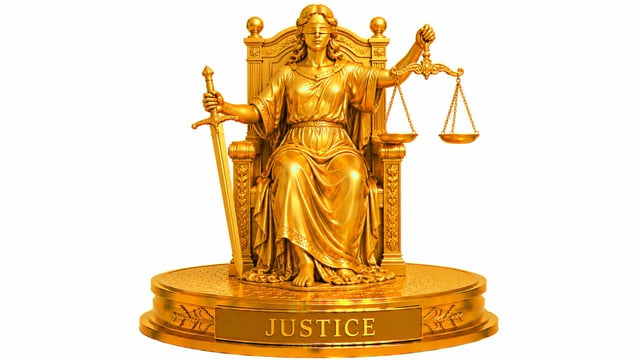
Eleven is the number of Justice in the classical tarot. A seated figure, scales in one hand, sword in the other. The sword for discernment - cutting through to what is true. The scales for proportion - measuring action against its actual weight.
The scales that eleven produces in 1118 are specific to this arithmetic. They are not weighing good against evil.
They are not weighing which of the three beginnings was "best," because all three were real and all three were founded in earnest. The person carrying 1118 cannot produce a scale on which one of the three is heavier in any obvious sense.
The scale here is different. What is being weighed is not the inherent merit of each founded pattern. What is being weighed is the rhythm.
Which of the three, when you examine the actual pulse of your days, has become the activity you keep showing up to?
The one you'll actually keep showing up to. Not the one your older self promised would be central. The one that, when the day is described honestly, is what you did.
Whether 1118’s shadow side applies to you — and how strongly — depends on your core numbers. Your birthday reveals the first one.
Enter your birthday below:

A harder assessment than it sounds
This honesty is where most people get stuck, and why the Justice of 1118 is uncomfortable.
The three founded patterns rarely announce themselves as equal. There is almost always one the person has a moral commitment to - the one they want to be the central life - and one the rhythm has actually chosen. These are sometimes the same. Often they are not.
The novelist who has also founded a small business and a family life may wish to be the novelist primarily. The rhythm of their actual days may have, without their noticing, made the family the central pulse.
The musician who has also founded a teaching practice and a research discipline may wish the music to be the chosen one. The rhythm may have, year by year, made the teaching the activity that actually holds the week together.
These discoveries are not failures. The scales of eleven are not punitive. They are descriptive. They are telling the person what is already true, not assigning a penalty for it being true.
But the person has to be willing to look.

The sword and the two unsung patterns
The sword is the other half of the Justice card, and it matters here.
Once the scales have indicated which of the three is the chosen rhythm, the sword does its work on the other two. Without destroying them. The sword of Justice is a discernment instrument, not an execution instrument. It cuts the honest line between what the other two beginnings will continue to be and what they will stop being.
Some of the other two will become occupations rather than central practices - real, honored, kept up. Part of it, not the whole thing.
Some will become seasons that have ended gracefully and can now be named as completed chapters. The novel that was genuinely begun and genuinely put down, rather than left in a state of limbo that drains the person every time they walk past the drawer where the pages live.
Some will become inheritances - patterns the person hands to someone else, because the founding work has been done and the rhythm is not going to be theirs to carry.
None of this is diminishment. All of it is clarification. The person who has founded three patterns is not being told to abandon two of them.
They are being told to name, with precision, what each of the three is actually going to be - and to stop pretending that the rhythm will eventually distribute itself evenly across all three. It will not. The rhythm has already chosen. The honesty is in noticing.

Why this is the work of someone late enough to do it
1118 does not tend to show up early in a life.
A younger person may begin three things, but usually not with enough time invested in each for the rhythm question to have a real answer.
The founded patterns need years before the pulse can be read. Too early, and all three look like they might still become the rhythm. The person is not yet in a position to weigh. They are still in the founding stage of the third.
The person for whom 1118 becomes legible is usually somewhere past the first half of a committed life. Long enough that the three beginnings have been in place for years - some of them for decades. Long enough that the rhythm has, in fact, already formed, whether or not the person has acknowledged it.
This is why the number so often arrives with the quality of a recognition rather than a prediction. The answer is already in the days. The number is simply directing the person to look at what the days have quietly been showing them.

The practitioner at the table
Picture, to close, the person this number describes most accurately.
They are at a work-table in the late afternoon. On the table are three notebooks. Each of the three notebooks is well-used - this is not a person who abandons projects lightly. The leather or cloth on each cover is worn in the particular places the person's hand has settled across years of returning.
Between the notebooks sits a small set of scales.
The scales are not there to decide which notebook contains the best writing, or which pattern the person ought morally to keep. The scales are there to weigh something quieter.
They are weighing the rhythm - the actual pulse the days have established around these three - and they are weighing it with the kind of honesty master numbers require of anyone willing to carry them.
The person at the table has already known, for some time, which of the three the pulse has chosen. They have suspected it. They have not quite admitted it.
They pick up the scales. They lay each of the three notebooks, briefly, on one side. They watch the indicator settle.
The indicator, as they knew it would, settles the same way all three times. The rhythm has chosen one of the three to be the place the life lives.
The other two do not leave the table. They do not have to. They will remain - one as an occupation the person keeps, one as a season that is ready to be named complete.
They will continue to receive their share of care. But they will no longer be asked to be the central rhythm, and the person will no longer be asked to pretend that all three are equally the life.
The chosen notebook stays open at the center of the table.
The scales are set down beside it. Their work, for now, is done. The practitioner returns to the pulse that was already underway before the scales were ever picked up - the pulse they had only to stop arguing with in order to hear.

1118 Explained
What does angel number 1118 mean?
1118 is asking you to look honestly at three things you genuinely started and notice which one has become your actual daily rhythm.
The 8 at the end is not money - it is the pulse that forms when something has been going long enough to sustain itself. One of your three patterns has that pulse. The other two are still being maintained by willpower. 1118 is asking you to name which is which.
Does 1118 mean I have to give something up?
It's more complicated than that. The Justice card (11, which this number reduces to) holds scales and a sword, but the sword is for clarification, not execution.
You are being asked to name, with precision, what each of your three founded patterns will actually be going forward. One is the life. The others may become honored occupations or completed chapters - not abandoned, but honestly placed.
Why is this number uncomfortable?
Because the honest answer is often different from the answer you want. You might wish the novel was your central rhythm, but the teaching is what actually holds your week together.
The scales of Justice are not punitive - they are descriptive. They are telling you what is already true, and accepting that can feel like a loss even when it is actually a relief.
What does 1118 mean for my career?
If you have been juggling multiple professional directions, 1118 is saying the rhythm has already chosen for you. Look at what you actually do, day after day, without having to convince yourself to do it.
That is the one the 8 has settled around. The others are real and they matter, but they are not where the life lives. Naming that honestly is the work this number is asking of you.
Curious which numbers are active in your chart right now? Your birthday is the starting point.
Enter your birthday below:
Explore Angel Numbers
| Digit meanings | Angel Number 1, Angel Number 8 |
| Reduces to | Angel Number 11 |
| Mirror | Angel Number 8111 |
Behind Your Angel Number
numerology chart calculator·life path number calculator·numerology guide