Two leavings and two returnings that collapse into a single creative act. 5511 says the sabbatical revealed the pattern; the second sabbatical revealed the pattern underneath the pattern - and the creative expression at the root is what all four movements together produce.
Angel Number 5511 Meaning: Master Twice, Then Begin Twice
By Blair Andrews · Published June 10, 2023 · Updated May 10, 2026
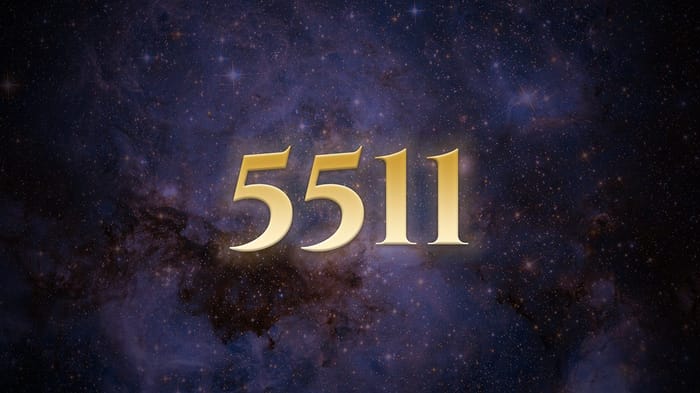
The numbers inside 5511

5Change, freedom, a new direction

1New beginnings, independence, going first
5 + 5 + 1 + 1 = 12 → 3
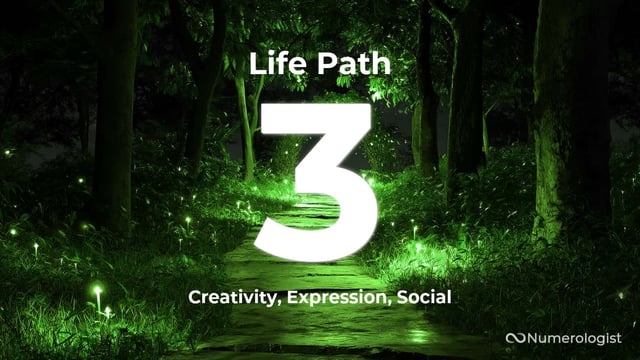
3: Creativity, expression, communication
What 5511 means for you specifically depends on which of the 11 Life Paths you’re on. Your birthday determines that.
Enter your birthday below:

Imagine someone who took two sabbaticals. Not the trendy kind - the real kind, where you leave a life that was working well enough and walk into open country because something inside you demanded it.
The first time you left, people understood. Career break, burnout, finding yourself. The second time you left, people were confused. You had already found yourself. Why leave again?
Because the first sabbatical showed you the shape of a pattern you had been living inside. And the second sabbatical - the one nobody understood - showed you the shape of the pattern underneath the pattern. The deeper layer. The one you could only see after the first departure cleared your eyes.
Then you came back. Twice. Two fresh starts, each carrying the knowledge of its corresponding departure. And the number 5511 is the story of what happens when all four of those movements - two leavings, two returnings - collapse into a single creative act.

Two Departures That Were Actually One Motion
The two 5s at the front of this number are not a stutter. They are a deepening.
Agrippa placed 5 at the center of the first ten numbers and called it the Seal of the Holy Ghost, the bond that binds all things. He noted that 5 "consists of the first even and the first odd, as of a Female and Male" and called it the number of Wedlock and Justice.
In simpler terms: 5 is the point where opposites meet. The number of the five senses, the five powers of the soul, the five wandering planets. The living center.
Balliett called the 5 person someone who finds itself in high unexplored country with paths in all directions - self-sufficient, well-poised, possessed of unlooked-for knowledge. She also noted the shadow: "outstanding bills often unpaid," a wandering quality, the inability to be made methodical. The 5 leaves.
It walks into unmapped territory because the mapped territory cannot hold it.
When that leaving doubles, you are looking at someone who left, came back changed, and then left again because the first change was not the deepest one available. The first 55 taught you what your old life was. The second 5 taught you what even the new life was still hiding from you.
And here is the piece that 5511 insists on: the two leavings were the same motion. You did not leave twice because you were restless or indecisive. You left twice because the territory you needed to explore had two layers, and the first layer had to be cleared before the second one became visible.

Two Returns That Made One Book
The two 1s at the end are the returns. Two fresh starts. Two acts of beginning, each carrying its own sabbatical's worth of knowledge.
Balliett described the 1 as the adept and creator, independent, representative of Truth and Separateness - "the perpendicular line" in geometry. The 1 person must overcome self before attaining highest success, and everything gained until that self is overcome comes through affliction. This is the beginning that costs something.
The fresh start that requires you to have earned the right to start.
The first 1 after the two 5s is the return that carries the knowledge of both departures. You come back to the world with something to offer that you could only have gotten by leaving twice. The second 1 confirms the first. It says: this is serious. Begin again. And mean it.
Together, the two returns are like a book about the pattern. You left, you saw, you left again, you saw deeper, you returned, and now you can write about what you found. The book is the expression - the 3 at the bottom of this number's sum.

The Hanged Man at the Hinge
5 + 5 + 1 + 1 = 12.
Twelve is the Hanged Man in tarot, and in Agrippa's system it is the number whereby the Celestials are measured - twelve signs, twelve apostles, twelve gates of the heavenly Jerusalem. Twelve has "great conformity with seven," he notes, because as 3 + 4 = 7, so 3 × 4 = 12.
It is the number of cosmic order, but the Hanged Man accesses that order by inverting himself. He hangs voluntarily. Upside down, the world rearranges.
This is the hinge of 5511. Between the two departures and the two returns, something flipped. The Hanged Man saw that the leaving and the starting were not opposites. They were the same gesture viewed from two different altitudes.
You thought you were doing two things - going away and coming back - but from the Hanged Man's inverted perspective, you were doing one thing: moving through a single arc that required both the departure and the return to complete itself.
That recognition is disorienting. It means your two sabbaticals were not separate experiences. It means your two fresh starts were not independent acts of will. It means all four digits of this number describe one continuous motion, and the Hanged Man at 12 is the moment you finally see the arc as a whole.
Whether 5511’s shadow side applies to you — and how strongly — depends on your core numbers. Your birthday reveals the first one.
Enter your birthday below:

The Book You Write About the Pattern
1 + 2 = 3.
Balliett called 3 "the outward expression of the Christ principle of Trinity" and said its mission is "to heal the sick and bless the world." The 3 person gathers blossoms that 1 planted and rejoices over the happiness they give.
Most musicians, artists, and actors vibrate to 3 - it is the number that "can interpret and bring forth the silent hidden voices of all things."
But Balliett also named the shadow: Without 1 and 2, like a ship without a rudder. The 3 can express whatever forces surround it, for good or ill. Expression without depth is just noise.
The 3 that emerges from 5511 is not the light, social 3 of casual creativity. This 3 has earned its expression. It carries two departures, two returns, and the Hanged Man's inversion.
The book you write about the pattern is a book that could only have been written by someone who left twice and came back twice - and who, hanging at the hinge, finally understood that all four movements were one.
Think of the painter who spent a decade studying anatomy and color theory, then a second decade studying something entirely different - philosophy, or music, or the behavior of water - before picking up the brush. That painter's first stroke contains both educations. The freedom in that stroke is not the absence of discipline.
It is the presence of two disciplines, fully absorbed, now operating below conscious effort.
The Empress of 5511 creates because of the doubled departure, because of the two educations that happened in unmapped country.

The Shadow of Permanent Departure
The risk with 5511 is that you fall in love with leaving.
Balliett warned that 5 has "wandering eyes" and "cannot be made methodical." When undeveloped, she noted, 5s "have been called black magicians and hypnotists" - people intoxicated by the power of unbinding, mistaking the act of breaking free for the purpose of being free.
When 5 doubles, that shadow doubles too. The person who took two sabbaticals can easily take a third. And a fourth. The departure becomes the identity. "I am someone who leaves" starts to feel more comfortable than "I am someone who makes something with what they found."
The two 1s at the end of 5511 exist precisely to counter this. They are the returns. The beginnings. The moments when you stop wandering and start building.
If you have been hovering in the departure phase - if the sabbatical has stretched past its purpose into avoidance - the doubled 1 is the number insisting that you come back and start.
You have seen enough. Both layers of the pattern are visible. The Hanged Man has already shown you that leaving and returning are one motion. Now make the motion complete. Return. Begin. Begin again.

What the Number Asks of You Now
If you recognize 5511, you are somewhere in this arc. Maybe past the first departure and deep into the second. Maybe past both departures and standing at the edge of the first return, wondering when it will be safe to begin.
It will never feel safe. The Hanged Man does not offer safety. He offers a change of perspective that feels, at first, like losing your footing. Your two frameworks from the two departures are still real. The understanding you earned is still yours.
But releasing your grip on those frameworks - allowing them to inform your next move without dictating it - requires a trust that no amount of exploration can produce on its own.
The doubled 1 is asking you to begin from a place where the learning has settled deep enough to become instinct. Where the two sabbaticals have done their work so thoroughly that their wisdom sounds like your own voice instead of a lesson you memorized.
The book about the pattern is ready to be written. You have the material. You have the perspective. You have the Hanged Man's inverted clarity and the Empress's creative pull.
All that remains is the act of expression - the 3, the triangle, the first enclosed shape, the form that creates an interior where none existed.
What you are about to create has not been created before. That is precisely why it needed two sabbaticals and two fresh starts and the willingness to hang upside down between them.
Write the book. The pattern is ready to be spoken.

Regarding 5511
What does angel number 5511 mean?
5511 describes a sequence: two departures from the familiar (the doubled 5), followed by two fresh starts (the doubled 1). The departures gave you knowledge that two rounds of ordinary experience could never have provided. The returns are where you put that knowledge to work.
Add the digits and you get 12 (the Hanged Man's inversion) reducing to 3 (the Empress, creative expression). You left twice, came back twice, and what you are building carries the weight of both journeys.
What is the difference between 5511 and 1155?
1155 reverses the sequence: begin twice, then leave twice. That person starts things and then has to learn, retroactively, what those starts actually required. It produces a dizzying feeling of being inside too many threads at once. 5511 is the opposite - the calm after preparation.
The two departures at the front have already done their work. By the time the doubled 1 arrives, you are starting from knowledge, not scrambling to catch up with what you initiated.
What does 5511 mean spiritually?
The sum of 5511 is 12, the Hanged Man, which reduces to 3, the Empress. The Hanged Man hangs voluntarily and sees the world inverted. From that perspective, 5511 reveals that leaving and returning were never opposites - they were the same arc viewed from different angles.
The Empress at 3 is what emerges when that inverted understanding becomes creative expression. Agrippa associated 12 with divine and cosmic order. The spiritual path of 5511 is about recognizing the order hidden inside what felt like disruption.
Why do I keep seeing 5511?
Because you have done the preparation and the number is telling you to use it. You explored, learned, explored deeper, learned more. Now the two 1s at the end are asking you to stop gathering knowledge and start expressing it.
The risk with doubled 5s is falling in love with departure itself - mistaking the act of leaving for the purpose of leaving. If the sabbatical has stretched past its usefulness, 5511 is the insistence that you come back and create something with what you found.
What does 5511 mean for career or creative work?
5511 describes the person who studied two disciplines thoroughly before beginning to create. The painter who learned anatomy and then philosophy before picking up the brush. Your first stroke will carry both educations.
The 3 at the root of this number is creativity that has been earned, not improvised - and the work it produces has the density and surprise of something that could only come from someone who mastered the material before playing with it.
If you have been waiting for permission to start, this number is the permission.
Curious which numbers are active in your chart right now? Your birthday is the starting point.
Enter your birthday below:
Explore Angel Numbers
| Digit meanings | Angel Number 1, Angel Number 5 |
| Reduces to | Angel Number 3 |
| Mirror | Angel Number 1155 |
| Similar patterns | 5500, 5522, 5533, 5544, 5566, 5577, 5588, 5599 |
Behind Your Angel Number
calculate your full numerology chart·find your life path number·numerology, explained