Neither the fence nor the garden alone makes a home - the rhythm between them does. 4646 alternates structure and stewardship, and the partnership at the root confirms: the alternation itself is what produces genuine relationship.
Angel Number 4646: Build, Choose, Build Again
By Blair Andrews · Published April 18, 2026 · Updated May 21, 2026
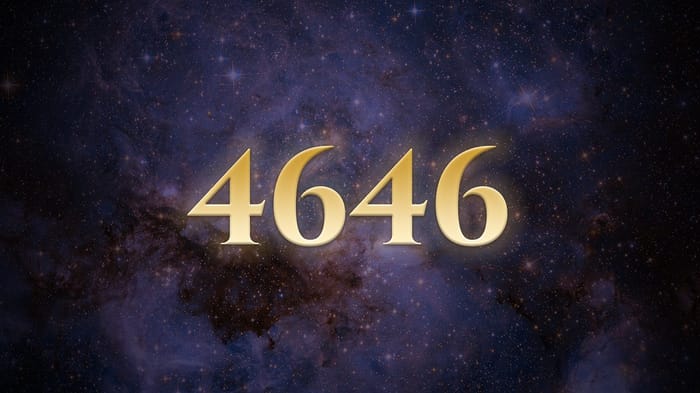
The numbers inside 4646
4Stability, foundation, building something solid
6Home, responsibility, the people closest to you
4 + 6 + 4 + 6 = 20 → 2
2: Partnership, patience, trust
What 4646 means for you specifically depends on which of the 11 Life Paths you’re on. Your birthday determines that.
Enter your birthday below:

I know a couple who've been married thirty-one years. If you watch them work on their property - and they are always working on their property - you start to notice a rhythm so steady it looks choreographed. He builds the fence. She tends the garden inside it.
A few years later, the fence needs repair, and he rebuilds it while she plants new beds along the repaired sections. Build the fence, tend the garden. Repair the fence, tend the garden again.
I asked them once how they divided the work, and she laughed. "We didn't divide it. We just fell into it. He makes the edges. I fill them. He makes them again. I fill them again."
He said: "I didn't realize until maybe year twenty that we were doing the same thing. I thought I was building fences and she was growing tomatoes. But we were both making a home. Just from different angles."
That conversation is 4646.

The Fence and the Garden
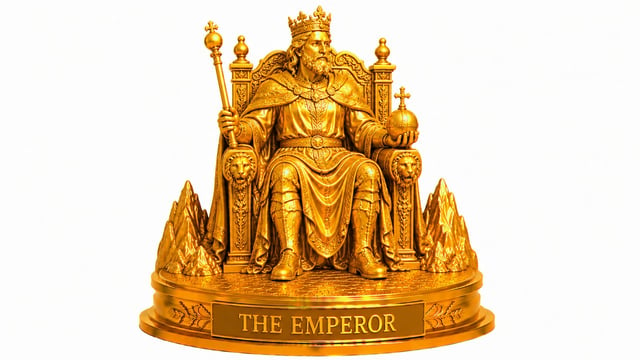
4 is structure. The Emperor in the tarot - the four-cornered foundation, the square, the room with load-bearing walls.
Balliett described 4 as "the rank and file of the world," the number that "builds the buildings of which No. 1 is the architect." The Pythagoreans called the Tetractis "the perpetual fountain of nature," and Agrippa wrote that 4 doth also contain the whole of Mathematics in four terms, viz. point, line, superficies, and profundity. YHVH, God's chief name, is four letters.
When you see 4, someone is building something real with their hands or their hours or their patience.
6 is stewardship.
The Lovers in the tarot, but Balliett saw something broader - she called 6 the Cosmic Mother, the Finisher, the one who completes the work of six days. "Arranging the temple for others to use." Agrippa called 6 the only truly perfect number, the one whose parts (1 + 2 + 3) add up to itself.
The Pythagoreans named it "the Scale of the world" and applied it to generation and marriage. When 6 arrives after 4, it is the person who looks at what was built and asks: who is this for? How do we care for it? What does it actually serve?
The fence and the garden. Structure and tending. Build the boundary, then fill it with life.
4646 runs that sequence twice.

The First Round: Learning What Building Is For
The first 4-6 is usually the one you remember because it surprised you.
You built something. Poured the foundation, squared the corners, made something solid enough to stand on its own. A career, a household, a set of skills, a bank account, a reputation. The Emperor's work, done with the Emperor's hands - methodical, physical, real.
And then the 6 arrived and changed the question. The structure was sound. The fence stood straight. But the 6 looked at it and asked: what grows inside this? Who are you building this for? The Cosmic Mother doesn't tear down what the Emperor built.
She walks through it, running her hand along the walls, and says: "This is well made. Now let me plant something here."
If you've lived this, you know the particular disorientation of it. You were so focused on making the structure hold that you forgot to fill it. The career is stable but the evenings are empty. The household runs like a machine but the people inside it are just going through motions.
The fence is perfect and the garden is bare.
The first round of 4-6 teaches you that building without tending is just construction. You can make walls all day long, but walls without a garden are a compound, not a home.

The Second Round: Building from the Soil Up
The second 4 is different from the first. This time you're building after having tended. Your hands still know how to lay a foundation, but now they know what the foundation is for. The fence you're repairing has garden soil at its base and tomato vines climbing its posts.
Balliett noted that 4 works entirely upon the intellectual plane. But a 4 that has been through 6 - softened by the Cosmic Mother's tending - builds with awareness now. The walls know what they're protecting.
And then the second 6 arrives, deeper than the first. The first 6 asked "what grows inside this structure?" The second asks "what are we tending together?" Because by now, the separation between the fence-maker and the gardener has started to dissolve. The tending was always a kind of building.
The building was always a kind of care.

The View from Above
4 + 6 + 4 + 6 = 20. In the tarot, card 20 is Judgement - the moment the trumpet sounds and everything you've buried rises to the surface. Not punishment. Revelation.
The moment you see the whole pattern from above, like looking down at your property from a hilltop and finally seeing that the fence and the garden and the second fence and the second garden form a single shape.
A shape you couldn't perceive while you were down in it, building and tending with your face inches from the work.
Judgement says: look at what you made. All of it, at once. The four walls and the flowers inside them. The repaired sections and the new growth along them. The labor and the love and the way they traded places so many times you can't remember which came first.
That aerial view shifts the whole reading of the pattern. Because from the ground, the rhythm felt repetitive - build, tend, build, tend, will this ever stop? From above, it looks like a dance. Two energies circling each other, each one feeding the other, creating something that neither could have made alone.
Whether 4646’s shadow side applies to you — and how strongly — depends on your core numbers. Your birthday reveals the first one.
Enter your birthday below:

Partnership Was the Rhythm All Along
20 reduces to 2. The High Priestess.
Balliett called 2 the pivot between Spirit and Matter and "the Mother Nature" - the one who "waters and nourishes the seed others plant." Agrippa described 2 as the number of charity, mutual love, marriage, and society: "Two shall be one flesh."
After all that work - the Emperor's four walls raised twice, the Cosmic Mother's garden planted twice, the Judgement trumpet sounding - the number resolves into partnership. The building and the tending were always two halves of one rhythm, and that rhythm is partnership.
Maybe the partnership is with another person. Maybe it's with yourself - the structured part of you and the nurturing part of you finally recognizing they were never enemies.
Maybe it's with the work itself, the way a farmer is partnered with the land: you build fences for it and it grows tomatoes for you, and over enough seasons you stop knowing where the farmer ends and the farm begins.

The Shadow in the Soil
The shadow of 4646 splits into two familiar patterns.
One is the person who builds without tending. Fence after fence, each one straighter than the last, and no garden inside any of them.
Balliett warned that 4 "does not believe in inspiration" and that "when they attain success, often lose the power to enjoy it." If the structures are immaculate but the people inside them feel managed rather than loved, the 6 is asking you to put down the hammer and get your hands in the soil.
The other shadow is all garden, no fence. The care is genuine but there's no structure to hold it. Love flows freely but nothing contains it, so it floods and recedes and leaves everyone uncertain. Without the Emperor's walls, the Cosmic Mother's garden has no boundaries - everything grows everywhere, including the weeds.
4646 asks you to hold both. The rhythm only works when both halves are present.

What the Priestess Hears
There is a moment, after two full rounds of building and tending, when the work falls quiet. The fence is standing. The garden is blooming. And in that silence, you hear something you couldn't hear while the hammering and the planting were going on.
The 2 at the bottom of this number is a listener. The High Priestess sits between two pillars - one dark, one light, one structured, one organic - and she holds a scroll she doesn't need to open. She already knows what it says. She learned it by being still while everything else was moving.
What she knows is this: the building and the tending, the structure and the care, the fence and the garden - they were never the destination. They were the practice. The actual destination was the rhythm itself, the way two different kinds of work can interlock and produce something neither one could make alone.
Agrippa described 2 as the first branch of unity, "the first procreation." Something comes into being when two things work together.

Two People, One Rhythm
My friends don't talk about their property like it belongs to either of them. They say "we" when they talk about the fence, and "we" when they talk about the garden, even though his hands are on the posts and her hands are in the beds. After thirty-one years, the rhythm has become identity.
The building and the tending aren't things they do. They are who the partnership is.
That is what 4646 resolves to. Two energies that circled each other long enough to discover they were dancing. The Emperor and the Cosmic Mother, fence and garden, structure and care, building and tending - moving in a rhythm so steady it stops being effort and starts being music.
The Judgement trumpet sounded. You saw the whole pattern from above. And what you saw was partnership. What you saw was love made visible through repetition - the same rhythm, trusted over and over, until it became the ground you stand on.
The fence is standing. The garden is growing. The Priestess is listening.
She hears the same song in both.

Frequently Asked Questions About Angel Number 4646
What does angel number 4646 mean?
4646 alternates structure (4) and stewardship (6) twice - build, tend, build, tend. It reduces through Judgement (20) to partnership (2), meaning all that building and tending was creating a single rhythm of care. The number is about discovering that your structured self and your nurturing self aren't separate forces. They're dance partners.
Why does 4646 reduce to 2?
4 + 6 + 4 + 6 = 20 (Judgement in the tarot - the moment you see the whole pattern from above), and 2 + 0 = 2 (the High Priestess, partnership, receptivity). After two full rounds of construction and care, what remains is the relationship between them.
The partnership was the rhythm all along.
What does 4646 mean for relationships?
It often shows up when two people are building and tending in alternating rhythms - one provides structure while the other provides care, then they swap, then they swap again. The deeper message is that these aren't competing roles. They're complementary halves of a single rhythm that produces something neither person could create alone.
The number asks: can you see the dance?
What's the shadow side of 4646?
Two versions. Building without tending produces immaculate structures with no life in them - the career that runs perfectly but brings no joy, the household managed like a business.
Tending without building produces warmth with no container - love that floods and recedes because nothing holds it steady. 4646 asks you to do both, always both.
How is 4646 different from 46?
A single 46 is one pass from structure to care - powerful, but it feels like a single event. 4646 doubles the cycle, and that doubling reveals a pattern the single pass could not. It reveals that the movement from building to tending isn't a phase you pass through once.
It is a repeating rhythm, a way of living, and when you see it from above (Judgement, 20), you recognize the partnership that the repetition was creating.

Curious which numbers are active in your chart right now? Your birthday is the starting point.
Enter your birthday below:
Explore Angel Numbers
| Digit meanings | Angel Number 4, Angel Number 6 |
| Reduces to | Angel Number 2 |
| Mirror | Angel Number 6464 |
| Similar patterns | 4545, 4747, 4848, 4343, 4949, 4242, 5050, 4141 |
Behind Your Angel Number
numerology chart calculator·life path number calculator·numerology guide