The builder becomes an architect - the foundation laid, tended until it becomes a home, and the home teaches how to build the next one better. 46 says the perpetual fountain (4) meets the most perfect number in nature (6), producing a new beginning informed by both.
Angel Number 46: Love That Finished a Full Rotation
By Blair Andrews · Published April 27, 2023 · Updated May 12, 2026
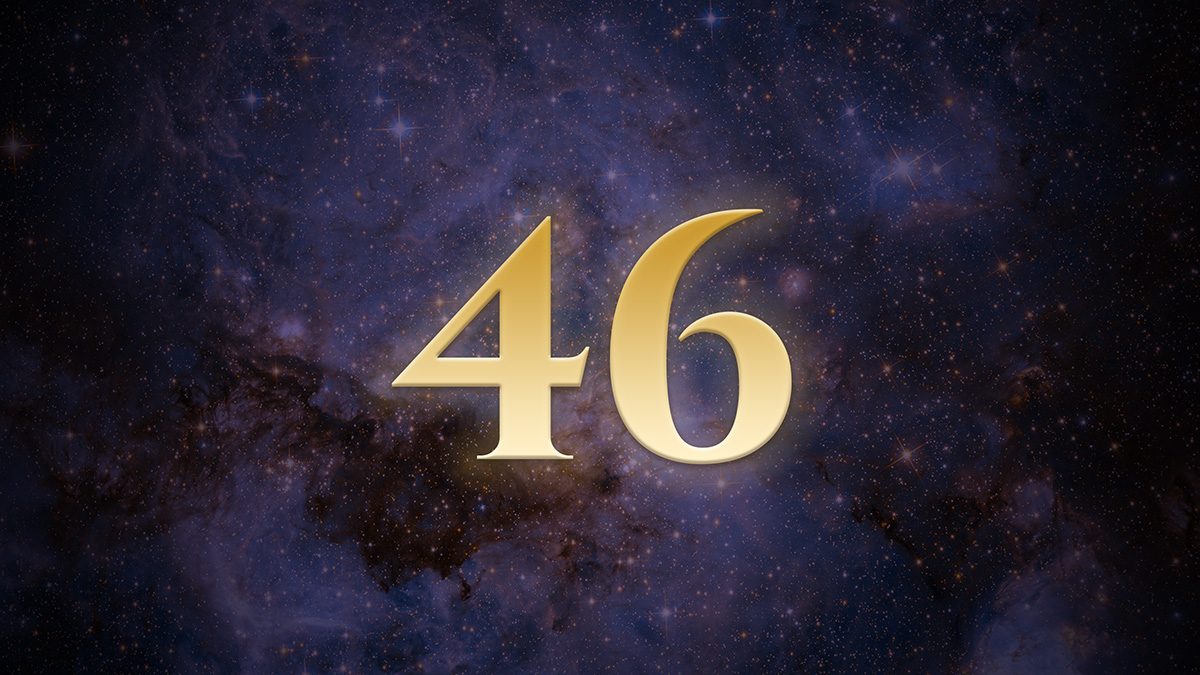
The numbers inside 46

4Stability, foundation, building something solid

6Home, responsibility, the people closest to you
4 + 6 = 10 → 1
1: New beginnings, independence, going first
What 46 means for you specifically depends on which of the 11 Life Paths you’re on. Your birthday determines that.
Enter your birthday below:

You build a house. You move in. You take care of it for years - mend the fence, replace the shingles, plant something along the walkway that comes back every spring. The house changes you.
The act of tending it, of showing up for it season after season, rearranges something inside you that no blueprint could have predicted.
And then one morning you wake up and realize: you know how to build another one. A better one. One that accounts for everything the first house taught you about load-bearing walls and where the afternoon light falls and which rooms actually get used.
You did not set out to become a builder. You set out to have a home. But the home made you into something, and now that something wants to build again.
That is 46. The house that teaches you to build the next one.

The Builder and the Finisher
4 is the builder. The cube. Balliett called it the number of physical and mental force, the rank and file of the world - the one who constructs the buildings of which others are the architects.
The Emperor in the tarot, sitting on his stone throne, deciding what holds and what doesn't. 4 works entirely on the intellectual plane, trusts what can be measured, and builds things that last. Agrippa called it the Tetractis, the foundation and root of all other numbers - four elements, four seasons, four corners of heaven.
4 is not romantic about any of this. It shows up, pours the concrete, checks the level. It builds the walls that everything else will rest on.
6 is the finisher. Balliett's Cosmic Mother - not a hard worker like 4, but the one who completes what was started. The one who arranges the temple for others to use. Where 4 lays the foundation, 6 makes the house livable. Curtains in the windows. Meals on the table.
The garden maintained not for show but because things that grow need someone paying attention to them.
In the tarot, 6 is the Lovers - and the Lovers card is less about romance than it is about stewardship. The choice to bind yourself to something and keep choosing it, day after day, long after the initial thrill has settled into something quieter and more real.
Agrippa called 6 the most perfect number in nature, the only one whose parts (1, 2, 3) add up to itself. Neither wanting nor abounding. Complete in its own composition.
The Pythagoreans called it the Scale of the World - the number of marriage and creation, the world made in six days and finished on the sixth.
So when 4 and 6 sit next to each other, you get a specific picture. The builder who sticks around to tend what they built. The foundation that has been lived in, cared for, kept warm. Structure married to devotion.
Most readings stop there. The builder plus the caretaker, domestic harmony, stable home life. All technically accurate. All missing what happens next.

The Wheel Nobody Mentions
4 + 6 = 10.
Most sites skip straight from 10 to 1, as if the 10 is just arithmetic you need to get through on the way to the real answer. It is not. The 10 is where 46 becomes itself.
10 is the Wheel of Fortune. Agrippa called it the universal number, the full course of life - "as circular as unity, because being heaped together, returns into a unity, from whence it had its beginning." The origin and the completion meeting in the same place.
The single-digit journey from 1 through 9, every station visited, every lesson encountered, and then the whole thing turning over like a page.
When a reduction passes through 10, the number is telling you: a full cycle finished before the next thing began. You did not skip ahead. You did not cut corners. The wheel turned all the way around.
So this is what 46 is actually saying. You built something (4). You cared for it faithfully (6). And the combination of building and tending carried you through a complete rotation. The house did not just shelter you. It educated you.
It took you through every lesson that structure-plus-devotion has to offer, and now you are standing at the place where the wheel has come full circle.
Remove the 10 from 46 and you lose the story. You are left with a vague domestic-bliss number and a generic fresh start. Put the 10 back and the number gains weight and direction: the builder's apprenticeship is finished. The next house is waiting.

A House That Teaches You
Think about the first house you ever really took care of. Maybe it was an apartment with radiators that clanked and a kitchen barely wide enough for two people to stand in.
Maybe it was a house you bought too young, before you understood what maintenance actually meant, and the first winter taught you about frozen pipes and the second winter taught you about ice dams and the third winter you just knew, in your body, what to do before the cold arrived.
That house was never just a place to live. It was a curriculum.
The same thing happens in relationships. The first real partnership - the one you stayed in long enough for the infatuation to burn off and leave behind the actual work of two people sharing a life - that relationship teaches you things about yourself that no amount of self-reflection could reach.
You learn where your patience ends and what is on the other side of it. You learn the difference between sacrifice and self-abandonment. You learn that love is a verb with a morning shift and an evening shift and no vacation days.
46 shows up when that education is complete. When the house has taught you everything it knows. The lesson is not that the house failed or that you outgrew it.
The lesson is that the house succeeded - so thoroughly that you now carry its knowledge in your hands, and those hands are ready to build again.

The Magician Who Already Knows the Trade
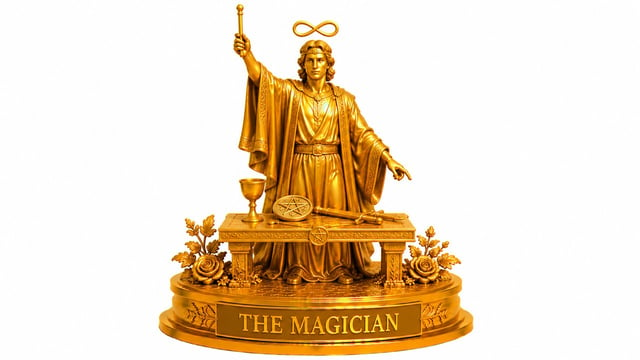
10 reduces to 1. The Magician. The beginning.
But this is a very particular Magician. Balliett described the number 1 as the adept and creator, the independent thinker who expects their opinions to be respected - but also the one who must overcome self before attaining highest success. Everything gained, until self is overcome, comes through affliction.
The Magician at the end of 46 has already been through that affliction. The building (4) was the labor. The tending (6) was the sacrifice.
The Wheel (10) was the reckoning - the moment you looked back at everything you built and cared for and realized it had changed you into someone you did not expect to become.
So this 1 is not the naive beginner. It is not the raw spark with no experience behind it. This is the 1 that emerges after a full rotation, carrying the builder's calluses and the caretaker's patience and the turning wheel's perspective.
A creator who has already created, failed, repaired, maintained, and completed - and is now ready to begin again with the full weight of that experience.
The first house was for living in. The second house will be for someone else.
That is the arc of 46. Builder becomes steward, steward completes a cycle, and the completed cycle produces a creator who can build things that serve more than just themselves.
Whether 46’s shadow side applies to you — and how strongly — depends on your core numbers. Your birthday reveals the first one.
Enter your birthday below:

What This Looks Like in Practice
You will recognize 46 when it arrives because it does not feel like an ending or a beginning. It feels like graduation.
A marriage passes its tenth year and the two people inside it are visibly different from the two who started. The early version of the relationship - the one organized around courtship, around proving yourselves to each other, around figuring out the basic mechanics of shared life - that version is done.
It completed its rotation. And what is being offered now is not more of the same but the next version, built on everything the first one discovered.
A parent watches their child become an adult. The years of structure - bedtimes, packed lunches, the careful architecture of a childhood - those years did their work. The house held. And now the parent stands in the empty room where the crib used to be and feels something that is not loss but transformation.
The skills they built raising this child are skills. They can be used again, differently, in service of something the parent has not yet imagined.
Someone finishes a career that lasted twenty years. The career was the house. The daily work was the tending. And now it is complete, and the person on the other side of it is not tired - they are capable. More capable than they have ever been. The completion did not deplete them.
It equipped them.
That is the feel of 46. Something you poured yourself into has made you ready for the thing you are about to pour yourself into next.

The Shadow
The shadow of 46 is the person who refuses to leave the first house.
They know the cycle completed. They can feel it in the way the rooms have gone quiet, the way the routines that used to feel purposeful now feel mechanical. The structure is still sound. The tending still happens.
But the life has gone out of it - not because the love disappeared, but because the love did its job and the job is done.
These are the people who keep renovating the kitchen instead of noticing that the whole house is asking them to move on. Who re-read the old chapters hoping to find a paragraph they missed. Who insist that more effort will fix what completion already resolved.
46 is not asking for more effort. It is asking you to take everything the effort taught you and carry it forward. The wheel already turned. The education is already complete.
You can stay in the old house if you want, but the thing that made it alive - the active cycle of building and tending and learning - is finished. What remains is maintenance, and maintenance without purpose is just going through the motions.
The house that taught you to build is releasing you. Let it.

The Second House
The first house was for you. You needed shelter, and you built it, and the building and the sheltering changed you. That was the point. The house was never just a house. It was a forge.
The second house - the one your hands are ready for now - is different. You are no longer building for survival, or for proof, or because you need to learn how load-bearing walls work. You are building because you know how they work, and someone else needs a house.
This is the Cosmic Mother meeting the Magician. The finisher who tended the temple until the temple was complete, now handing its knowledge to the creator who can begin something new. You do not lose the first house by building the second. You honor it.
Everything sound in the new structure will be sound because the old one taught you where the stress falls.
46 is the number that says: you built for love, and love built you back. The wheel turned. You are not who you were when the first foundation was poured. And the person you have become is ready - genuinely ready, not just hopeful - to begin again.
The pen already knows your handwriting. Pick it up. Start the next page.

Frequently Asked Questions About Angel Number 46
What does angel number 46 mean?
46 means something you built with care has completed a full cycle - and you are ready to build again. The 4 is the structure, the 6 is the devoted tending of that structure, and together they add to 10, the Wheel of Fortune, a complete rotation.
Then 10 reduces to 1: a genuine new beginning, but one that carries everything the old cycle taught. You are not starting from scratch. You are starting from experience.
Why does 46 reduce through 10 instead of straight to 1?
Because the 10 is doing real work. The Wheel of Fortune represents a full journey from 1 through 9 - beginning through completion - turning all the way over. When a reduction passes through 10, it means the new beginning (1) arrives because a cycle finished, not because something was interrupted.
Skipping the 10 flattens 46 into a generic "fresh start" number and loses the whole meaning: that you earned this beginning by completing what came before.
What does 46 mean for relationships?
In relationships, 46 signals that a particular phase has run its full course. The early version of the partnership - the one organized around courtship, around establishing routines, around learning how to share a life - has done its work.
What is arriving is not an ending but a new chapter built on the ground the old one covered. The love does not disappear. It graduates.
Is 46 telling me to leave my current situation?
Not necessarily leave it - but stop trying to repeat the cycle that already completed. 46 shows up when the wheel has turned and the next rotation is waiting. For some people, that means starting something entirely new. For others, it means allowing the relationship or career or home to evolve into its next version.
The key is recognizing that more of the same will not bring the old chapter back, because the old chapter did its job.
How is angel number 46 different from 64?
64 leads with 6 - the Lovers, the caretaker - and reaches for 4's structure afterward. It is devotion looking for a container. 46 reverses the order: structure first, devotion woven into it.
Both reduce through 10 to 1, but 46 is the builder who learned to tend, while 64 is the caretaker who learned to build. Different starting points, same destination.
Curious which numbers are active in your chart right now? Your birthday is the starting point.
Enter your birthday below:
Explore Angel Numbers
| Digit meanings | Angel Number 4, Angel Number 6 |
| Reduces to | Angel Number 1 |
Behind Your Angel Number
free numerology calculator·life path calculator·what is numerology