Angel Number 108: The Number That Cultures Found on Their Own
By Blair Andrews · Published October 21, 2022 · Updated May 10, 2026
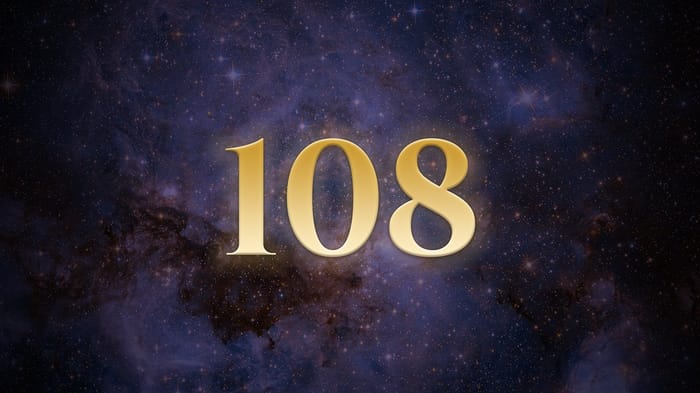
The numbers inside 108

1 + 0 + 8 = 9
9: Completion, letting go, a bigger purpose
A Buddhist mala has 108 beads. The practitioner moves through each one, breath by breath, arriving back at the guru bead - the 109th, which is not counted - having completed a full cycle of recitation.
The number was not arbitrary. It was chosen because 108 had already, long before any single tradition codified it, acquired the weight of something sacred.
What 108 means for you specifically depends on which of the 11 Life Paths you’re on. Your birthday determines that.
Enter your birthday below:
Hindu scripture names 108 Upanishads. There are 108 sacred sites across India, 108 names of Vishnu, 108 names of Shiva.
In Jain tradition, the combined virtues of the five categories of holy ones total 108. Japanese Buddhist temples ring their bells 108 times at New Year to cleanse the 108 earthly temptations.
The distance between the Earth and the Sun is approximately 108 times the Sun's diameter. The distance between the Earth and the Moon is approximately 108 times the Moon's diameter.
That last detail is the one that stops you. Because the astronomical ratios are not culturally constructed. They are measured. And yet the number that emerges from the measurement is the same number that monks and mystics across unconnected civilizations independently recognized as complete.
Too many traditions arrived at the same answer for 108's sacredness to be in doubt. The real question is why - what lives inside this number that so many different eyes, looking from so many different directions, converged upon?
The Architecture of 108
The Pythagorean tradition offers a framework that is, in its own way, as old as any of these. And when you apply it to 108, something remarkable happens.
The structure of the number (its individual digits, their sequence, and the single digit they collapse into) tells a story that maps almost perfectly onto the cross-cultural reverence.
Start with the digits themselves. 1, 0, 8.
The 1 is the Magician. The monad. The first point of concentrated intention before anything else exists. It is not a number among numbers but the act of beginning itself, the impulse that precedes all form. Fire before there is anything to burn.
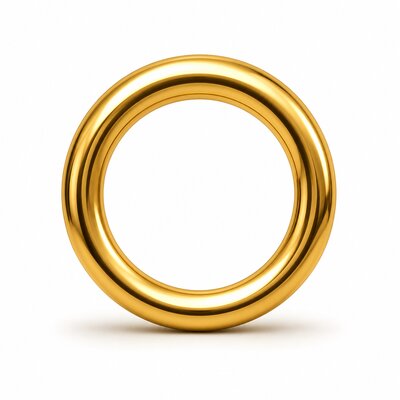
The 0 is the void - though void here means fullness of potential, never absence. The zero is the universal egg, the Akasha, the field of all possibility that precedes differentiation.
In the context of a compound number, 0 does not add or amplify. It strips. It removes the scaffolding from whatever stands beside it and asks what remains when every support has been taken away.
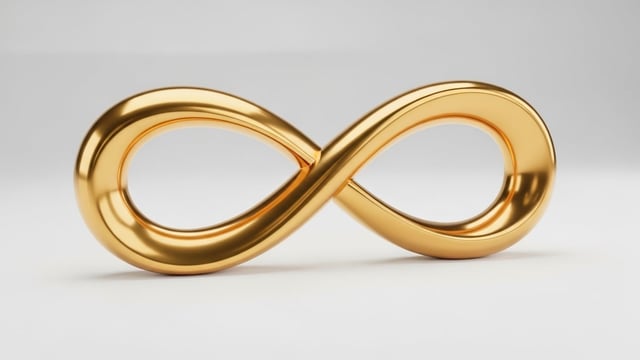
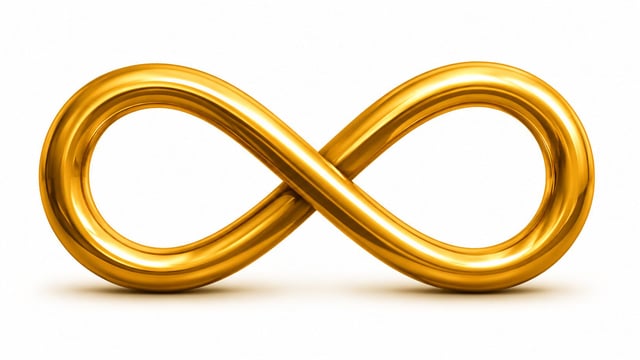
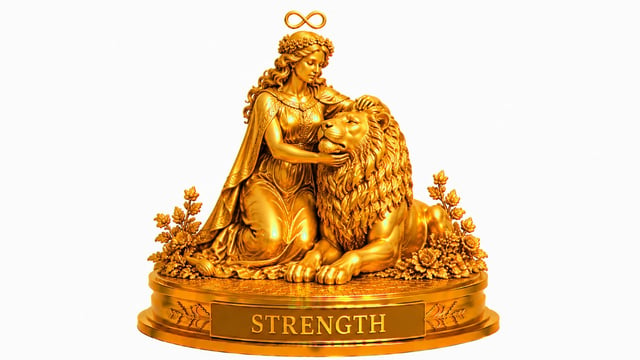
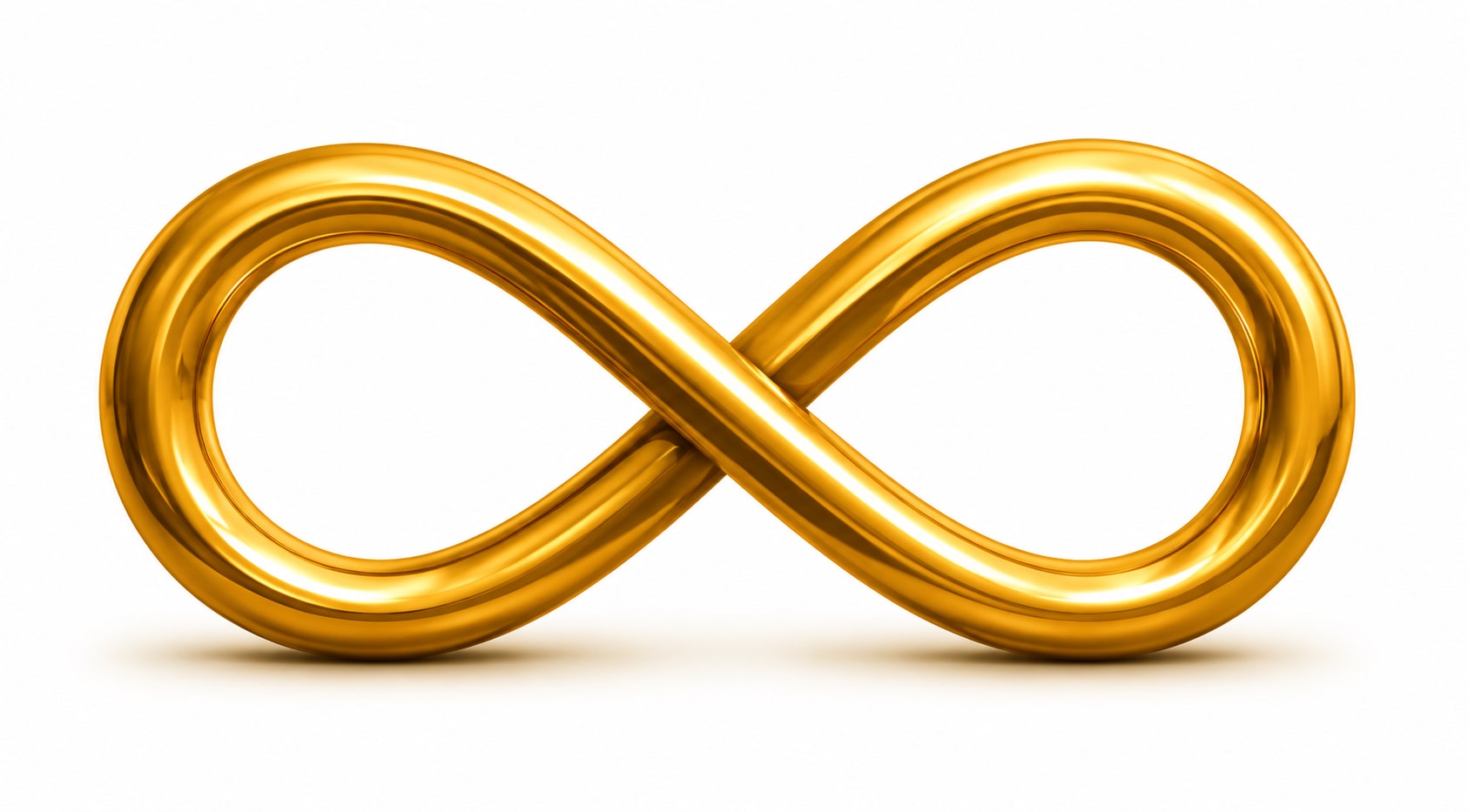
The 8 is Strength. The lemniscate, the figure drawn without lifting the pen, the loop that flows from inner to outer and back again without interruption.
In the tarot, the Strength card depicts not a warrior but a woman gently closing a lion's mouth, roses draped around both of them. The energy is not domination. It is rhythm. The ebb and flow that sustains itself because it never fights what moves through it.
So the sequence reads: initiation - void - rhythm. A beginning passes through emptiness and emerges as sustained pattern. The seed enters the dark soil and becomes the pulse of seasons.
That alone would be interesting. But there is a further step, and it is where the convergence becomes genuinely striking.
The Hermit at the Bottom
1 + 0 + 8 = 9.
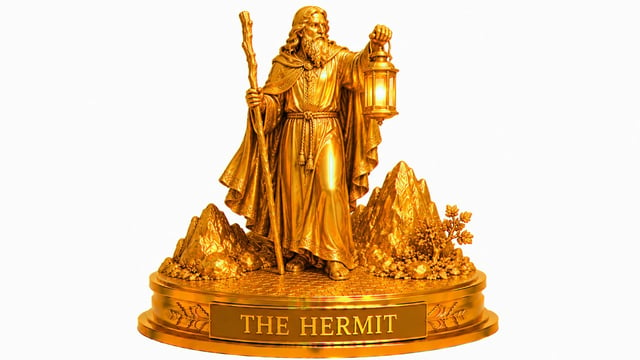
Nine is the Hermit. The old figure on the mountaintop, holding a single lantern in the dark. Not isolated; illuminating.
The 9 has already walked the entire single-digit journey, from the first spark of 1 through every trial and expansion and contraction and rhythm the road contains, and has arrived at the place where all those experiences distill into something that can only be called wisdom.
Not wisdom as information. Wisdom as pattern recognition across the whole of a life. The Hermit sees how things connect because the Hermit has been every point of connection.
The completion that 9 represents is not an ending. It is the moment when the circle becomes visible from above, when you have traveled far enough around the curve to realize it was a curve all along.
And here is where 108 begins to explain its own sacredness.
The mala has 108 beads because the practice of moving through them is itself the journey this number describes. You begin - that is the 1. You enter the space between breaths, the gap where thinking falls away and something older takes over - that is the 0.
You find the rhythm, bead after bead, the body swaying gently with a pulse that is neither forced nor fought - that is the 8.
And when you arrive at the end of the cycle, you have not collected 108 units of prayer. You have become the person who has completed the passage. You have arrived at 9.
The Hermit does not count beads. The Hermit is what remains after the counting is done.
Whether 108’s shadow side applies to you — and how strongly — depends on your core numbers. Your birthday reveals the first one.
Enter your birthday below:
Why Cultures Found It Independently
This is the part a Scholar cannot help but sit with for a long time.
108 was not exported from one tradition to another. Buddhism did not borrow it from Hinduism's Upanishads, and neither borrowed it from Jain enumeration, and certainly none of them consulted the ratio of the Sun's diameter to its distance from Earth. These are separate streams, arriving at the same shore.
The Pythagorean reading suggests a reason. The journey from initiation through emptiness through rhythm to completion is not a cultural narrative. It is a structural one.
It describes a pattern that exists independently of the tradition observing it. The way seeds actually become forests, the way breath actually sustains life, the way practice actually produces understanding.
Cultures found 108 sacred for the same reason they independently found circles sacred, or the number 7 aligned with celestial bodies, or the spiral encoded in shells and galaxies alike. Because the pattern is real.
The traditions are not projecting meaning onto an inert number. They are recognizing a structure that was already there, the way a geologist recognizes a fault line that has been shaping the landscape since before anyone was watching.
The Pythagorean system, at its best, is exactly this kind of recognition. Pure observation - pattern seen, pattern named.
The 1-0-8 structure describes a genuine arc (beginning, dissolution of assumption, sustained rhythm, earned understanding) and the fact that separate civilizations gave this arc the status of sacred is not coincidence. It is convergence. Different instruments, measuring the same thing, arriving at the same reading.
What 108 Does in a Life
If this number is present for you, the pattern it describes is not abstract.
Something has begun, probably some time ago. That beginning passed through a period of dissolution where the original plan, the original framework, the way you expected the beginning to unfold, was stripped away. Not destroyed. Emptied. The zero does not break things. It clears them.
And what emerged from that clearing was not the original intention in its original form, but a rhythm. Something you do now - a practice, a way of thinking, a way of showing up - that has the quality of the lemniscate.
It flows. It sustains itself. It does not require the desperate energy of a new beginning because it has already passed through the void and proven that it survives emptiness.
The 9 beneath all of this is what the rhythm is quietly building toward. Less a destination you arrive at and stop than a vantage point you reach and recognize. The Hermit's mountaintop is not the end of the road. It is the place where the road's shape becomes visible.
People in a 108 passage often describe the feeling as something clicking into place. Not dramatically, not with fireworks, but with the quiet satisfaction of a pattern completing. The sense that scattered experiences have been, all along, tracing a single line.
That the emptiness was not wasted. That the rhythm was not merely habit but was carrying something forward, bead by bead, toward a form of understanding that could not have been reached any other way.
The Lantern and the Mala
There is one more detail about the mala that matters here.
When the practitioner reaches the 109th bead - the guru bead - they do not cross over it. They stop, reverse direction, and begin again.
The cycle completes, but the completion is not a passage through to something beyond. It is a turning back. A willingness to walk the same ground again, this time carrying what the previous circuit taught.
The Hermit does the same thing. The lantern is not held up for the Hermit's benefit. The Hermit already knows the path. The light is raised for the ones still climbing.
108 is the number of wisdom that circles back. The journey from spark through void through rhythm arrives at understanding - and the understanding turns around and illuminates the journey for whoever comes next.
This is what the monks sensed. This is what the Upanishads encode. This is what the distance between the Earth and the Sun quietly, mathematically, happens to describe.
A beginning that dissolves its own scaffolding, finds its rhythm in the emptiness, and arrives at the mountaintop not to stay but to light the way back down.
108 beads. One lantern. The same number, found by everyone who looked long enough to see what was already there.
Curious which numbers are active in your chart right now? Your birthday is the starting point.
Enter your birthday below:
Explore Angel Numbers
Behind Your Angel Number
numerology chart calculator·life path number calculator·numerology guide