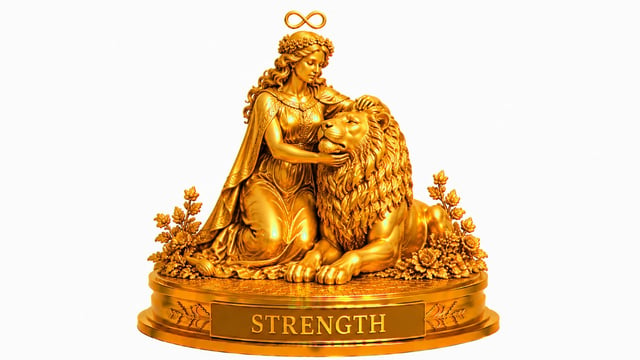
The scholar reaches for the hammer. 71 says sacred knowing picks up a tool and decisive action gives the reservoir an outlet - the first complete mastery, where the person who understands how things work can also build them.
Angel Number 71: The Victor Taking the First Step
By Blair Andrews · Published April 12, 2023 · Updated May 21, 2026
The numbers inside 71

7Understanding, depth, seeing what others miss

1New beginnings, independence, going first
71 reads as a 7.
Understanding, depth, seeing what others miss
What 71 means for you specifically depends on which of the 11 Life Paths you’re on. Your birthday determines that.
Enter your birthday below:

There is a particular kind of person you meet in the trades - the master carpenter, the structural engineer, the old professor - who spent twenty years going deep into theory and then, one morning, picked up a hammer.
Not because the theory was wrong. Because it was finished. The models were understood, the proofs were proven, and somewhere in the back of the mind a quiet voice said: now build something.
So the scholar walks onto the construction site. Hands that spent years turning pages start swinging tools. The first calluses form. The first mistakes happen - the kind books never warn you about, because books describe what should work, and the job site shows you what actually does.
But the scholar's mistakes are different from a beginner's. They are faster to correct. The theory is already living in the body, and when the hammer hits wrong, the hands adjust with an intelligence that pure beginners do not have. The calluses form on top of knowledge.
After a year, the scholar's hands look like anyone else's on the crew. Rough, capable, stained with work. But the structures hold differently. They solve problems the other builders did not know were problems. The mastery is in the joints - invisible, load-bearing, earned twice.
That scholar with calloused hands is 71.

The Knowing That Picks Up a Hammer
Seven leads this number, and that means everything about what follows has to be read through the lens of completed understanding.
A note on sources: Agrippa spent more ink on 7 than on any other single digit in his Three Books of Occult Philosophy - and for good reason. He called it the number that "neither generates, nor is generated" within the first ten. That mathematical virginity is not trivia.
It tells you that the knowing 7 carries cannot be produced by combining lesser parts. It had to be earned whole. When 7 leads a composite like 71, the completeness of that knowing is what drives everything that follows.
Agrippa spent more ink on 7 than on any other number in his Three Books of Occult Philosophy. He called it "the Vehicle of man's life" and noted its peculiar mathematical virginity: seven "neither generates, nor is generated" within the first ten numbers.
You cannot produce it by multiplying two smaller numbers, and doubling it takes you past ten. It stands alone. The Pythagoreans gave it to Pallas, the goddess born fully formed.
In the tarot, 7 is the Chariot - the driver who has aligned the two sphinxes, who has taken the opposing forces inside themselves and brought them under a single direction.
Balliett placed 7 under the element of Earth, the container of "the highest in limited vibration." Seven is the ceiling of the ordinary numbers, the most complete a single vibration can be before the master numbers begin.
When 7 leads a composite number, it tells you the person has already been through the full arc of something. The study is done. The alignment was earned. Whatever inner work needed doing - spiritual, intellectual, therapeutic - it reached its conclusion. The Chariot arrived at its destination.
And then comes the 1.

What a Beginning Means After a Victory
Balliett called 1 the Creator - "the adept," independent, the "binding chain" that makes all other vibrations active.
Agrippa described it as the source and return of all things: "Unity doth most simply go through every number, and is the common measure, fountain, and originall of all numbers." It is the match before the strike, the first breath of something that has never existed before.
Most people encounter 1 as pure potential - the blank page, the nervous first day. But a 1 that follows a 7 is the scholar picking up the hammer. The match is being struck by someone who already knows how fire behaves.
The beginning is born from completed knowledge that has nowhere left to go except into practice.
The Chariot driver does not park the chariot and retire. Someone who has earned genuine mastery feels a pull toward the next untested ground - not because the old ground was insufficient, but because competence wants to be used. Theory wants to touch the world.

Where Theory Gets Tested by Lumber
7 + 1 = 8.
A note on method: When I see a number reduce to 8 in a reading, I always check the path it took to get there. An 8 reached through 71 - the Chariot meeting the Magician - produces a lemniscate with momentum already built in.
Compare this to an 8 reached through, say, 53 or 44, where the loops are still learning their shape. The 71 lemniscate is already turning. Your job is not to start it. Your job is to step into its rhythm.
And this is where the number reveals its real depth. The Pythagoreans called 8 the number of justice and fullness. It is the first number to produce a genuine solid - the cube, 2×2×2, perfect on all sides.
Agrippa noted that Orpheus swore by eight deities when invoking justice, and that eight is "the number of blessedness" - Christ taught eight beatitudes, not seven, not nine.
The lemniscate, the infinity symbol, is 8 turned on its side: two loops feeding into each other with no beginning and no end. Balliett called 8 the "lamp-bearer" and placed its polarity between Light and Darkness - the higher octave of 2, the number that takes partnership and raises it into rhythm.
Knowing (7) plus beginning (1) equals mastery (8). The Chariot's completed journey plus the Magician's fresh start equals the lemniscate - the infinite loop where endings and beginnings feed each other. This is what happens when someone who has already proven themselves takes the next step, and the step does not exhaust them.
It feeds them. They are running on rhythm now, not willpower.

The Star Card Walks the Other Way
71 has a sibling that looks almost identical on paper but lives in a completely different story.
17 carries the same digits in reverse: the Magician first, then the Chariot. Both reduce to 8. But 17 passes through the Star - the tarot card of hope after devastation, the first clear night sky after the tower has fallen. Seventeen is recovery.
It is the person who lost everything, crawled out of the rubble, looked up, and saw a single point of light suggesting that something could still be rebuilt.
71 is the opposite trajectory. No tower fell. No rubble needed crawling from. The scholar did not lose the library - she finished it. The Chariot did not crash - it arrived.
And the new beginning that follows is not a recovery but a natural next step, the way a river that has carved one valley starts working on the next ridge.
17 arrives at mastery through healing. 71 arrives at mastery through application. Both produce the lemniscate, but 17's loops carry the memory of collapse, while 71's loops carry the momentum of completion. If you have been seeing 17, the work is about rebuilding trust in yourself.
If you have been seeing 71, the work is about trusting yourself enough to use what you already know in territory where the knowledge has never been tested.
Whether 71’s shadow side applies to you — and how strongly — depends on your core numbers. Your birthday reveals the first one.
Enter your birthday below:

The Shadow of the Scholar
But 71 has a harder edge. The shadow is the scholar who never leaves the library.
This person knows the theory cold. They can explain every principle, cite every source, map every system. And they use that mastery as a fortress against the vulnerability of actual practice.
The hammer stays in the drawer. The knowledge remains pristine and untested, because testing it means risking failure, and the scholar's identity is built on being the one who knows. To pick up the hammer is to risk being bad at something.
So the shadow 71 becomes the eternal student. Three degrees and no career. Every spiritual tradition studied, none practiced. The knowing is real. The application is permanently deferred.
If 71 keeps showing up and you recognize this pattern, the number is not asking you to learn more. It is asking you to pick up the hammer and let your hands get dirty. The theory will not break. It will just finally start to work.

Applied Wisdom and the Weight It Carries
When 71 shows up in your life, it almost never arrives during a crisis. It arrives during a calm - the particular calm that follows genuine completion.
You finished something real, and now the completion is sitting in your chest like a warm stone, and a new direction is forming at the edge of your attention.
These transitions tend to be undercelebrated. Nobody throws a parade for the person who quietly finished one chapter and is quietly beginning the next. But these are often the more substantial ones - the moments when competence earned over years begins to bear fruit in a completely new field.
The confidence that comes with this is not the loud kind. The Chariot driver does not announce victories - look at the card, the face is composed, the posture upright but not aggressive. When 71 energy is available to you, you do not have to convince anyone of anything.
You simply step, and the step carries. The knowing feeds the beginning. The beginning tests the knowing. Both loops turn.

The Hands Tell the Story
Look at your hands. What do they know how to do that your mind learned first? Where has the theory already become muscle memory? What practice, skill, or understanding has moved from the page into your body?
That is the 7. The completed knowing. It is already yours.
Now - where is the construction site? What piece of new, untested ground is waiting for you to bring that knowledge into? What hammer has been sitting in the drawer, waiting for the scholar to finally pick it up?
That is the 1. The beginning that only you can make, because only you carry this particular combination of deep knowledge and fresh willingness.
The mastery at 8 is not something you achieve later. It starts forming the moment you step onto the site. Every callus is a theorem confirmed. Every mistake corrected carries the speed of someone who understood the principle before the practice.
The hands get rough, and the structures get beautiful, and the two loops of the lemniscate turn and turn.
The scholar's hands are calloused now. The buildings hold.

Frequently Asked Questions About Angel Number 71
What does angel number 71 mean?
71 is sacred knowing (7) meeting a fresh beginning (1), which produces mastery (8). Think of the scholar who has spent decades in theory and then picks up a hammer to build something. The knowing is complete. The application is just starting.
And the mastery that emerges - the calloused hands on a person with a deep library behind them - is the kind that holds weight in the real world. If you are seeing 71, something you have learned deeply is ready to be tested by practice.
How is 71 different from 17?
Both reduce to 8, but they get there through opposite stories. 17 passes through the Star card - hope after devastation, the first clear sky after a collapse. It arrives at mastery through healing. 71 has no collapse.
The knowing was completed cleanly, and the new beginning is a natural next step, not a recovery. 17 rebuilds trust. 71 applies what was already trusted.
What does 71 mean for my career or creative work?
It means the study phase is over and the building phase is ready to begin. You have accumulated real knowledge or skill in your field, and 71 is saying the time has come to do something with it that you have not tried before.
A new project, a new application, a new direction that uses the old competence in unfamiliar territory. The mastery at 8 only arrives when the theory gets tested by practice.
What is the shadow side of 71?
The scholar who never leaves the library. The person with genuine understanding who uses knowledge as a fortress against the vulnerability of practice. Three degrees and no career. Every spiritual tradition studied, none practiced. The knowing is real but permanently untested, because testing it means risking being bad at something.
If this sounds familiar, 71 is asking you to pick up the hammer.
What should I do when I see 71?
Look at what you already know deeply - that is your 7. Then look for the beginning that is forming at the edge of your attention, the next thing that wants to happen - that is your 1. Take one step onto the construction site.
Not a dramatic reinvention, just the next practical move that only someone with your particular knowledge could make. The calluses will form. The theory will hold. The lemniscate will start turning.
Curious which numbers are active in your chart right now? Your birthday is the starting point.
Enter your birthday below:
Explore Angel Numbers
| Digit meanings | Angel Number 1, Angel Number 7 |
| Reduces to | Angel Number 8 |
| Numbers that share your vibration | 53, 98, 107, 314, and 719 all reduce to Life Path 8. |
Behind Your Angel Number
numerology chart calculator·life path number calculator·numerology guide