Angel Number 551 Meaning: When the Fresh Start Is Actually a Third Escape
By Blair Andrews · Published March 13, 2023 · Updated May 21, 2026
The numbers inside 551


5 + 5 + 1 = 11
11: Heightened awareness, sensing what others miss
After two departures, is this beginning actually new - or has starting itself become the familiar motion? 551 says Justice’s scales are weighing the new beginning at master-level scrutiny, asking whether fluency in leaving has become the thing being served.
What 551 means for you specifically depends on which of the 11 Life Paths you’re on. Your birthday determines that.
Enter your birthday below:

551 is not a simple "fresh start after breaking free." The scales this number produces are asking something harder: after two liberations, is the new beginning actually new? Or is it a third way of running?
That is the correction the rest of this piece is built around. It matters because the popular reading of 551 - the one that treats the number as a permission slip for a new chapter, a green light for the next big move - gets the sequence exactly backwards.
It treats the liberations as the story and the beginning as the reward. The older tradition reads it the other way. The beginning is the thing being weighed. The two liberations are the witnesses.

What the popular version gets wrong
The familiar reading goes like this. Two 5s mean "big change." A 1 at the end means "new beginning." Put them together and you get "a major transformation leading to a fresh start, full of possibility and growth."
A note from the practitioner: If you searched for 551 expecting a green light for your next move - stay a moment. This number is not saying no. It is saying: before you begin, look honestly at why you are beginning. After two liberations, the self gets fluent in leaving.
That fluency is real, and it is not a flaw. But the scales this number produces are asking you to check whether the next chapter is genuinely new, or whether starting has become the motion you reach for because it is the one you know best.
This reading has a problem. It assumes that two liberations followed by a new beginning is, on its face, a promising arithmetic. It is not, on its face, anything. What two liberations produce depends entirely on whether the "new beginning" at the end is actually new.
The scales exist because this last part is not automatic.

The order of the digits is the story
Look at 551 as a sequence rather than a reduction. A 5, and then another 5, and then a 1. Two acts of liberation, stacked. And only then a new beginning.
In the older reading, the digits of a compound number are a small narrative. The first digits describe what came first. The last digit describes the condition the reader now stands in.
Two liberations happened in succession. Then, on the far side of those two liberations, a beginning is starting.
This is not the shape of every life. There's something about us that makes us carry one significant liberation in a given decade, sometimes none. Two liberations in close enough sequence to register as a pattern is unusual.
It names a specific person in a specific season - the one whose recent life has been organized, whether they planned it or not, around the repeated act of getting out.

What a 5 actually is
Before weighing anything, it is worth correcting the 5 itself, because the popular reading of 551 sits on top of a misreading of 5 that has been repeated until it sounds like consensus.
The 5 in the older tradition is not restlessness. It is not impulse. It is not the thrill of change for its own sake.
The 5 in this tradition is the Hierophant - the inner teacher, the voice in the self that has learned how to listen to itself. It is constructive freedom.
It is the liberation that has earned itself by doing the slow interior work of figuring out which wants in the self are real and which were borrowed from outside.
A genuine 5 is not the person who left. It is the person who, before leaving, knew exactly why the leaving was necessary and what the leaving was going to cost.
This distinction matters for 551 because the number stacks two 5s in a row - and the older reading does not assume, the way the popular version does, that both 5s were constructive.

Two liberations are not automatically two freedoms
Here is the correction that does the most work in this piece.
A second liberation, following close on the heels of a first, is not necessarily a deeper freedom. It can be - sometimes it very much is.
A person leaves the career that was eroding them, and then, finding the courage, leaves the relationship that was also eroding them. Two real breaks, each one opening room the other could not open alone. That is a constructive doubled 5.
But a second liberation can also be something else. It can be the self, discovering that leaving worked the first time, learning to use leaving as a tool - not because the next situation was unsurvivable, but because staying has begun to feel unbearable in a way the self has not yet examined.
The scales of 551 do not assume. They ask.
Was the second 5 a genuine liberation - a second real break that opened room the first break could not have opened by itself? Or was the second 5 a repetition, a reaching for the tool that worked last time, a slightly less warranted version of the same motion?
Both kinds of second 5 are common. Neither is shameful. But they produce different beginnings, and the beginnings are what the scales are really weighing.

The 1 at the end
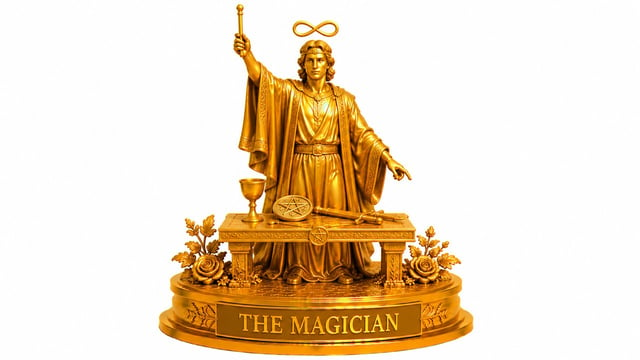
The 1 is the Magician of the tarot. The monad. The point of concentrated potential before the line has been drawn.
In most sequences, a 1 at the end of a compound simply means a beginning. Fresh potential. The opening of a new chapter.
The 1 in 551 is different, because of the two 5s that precede it.
This is not a 1 that arrived out of nowhere. It did not emerge from raw potential, the way the 1 in 111 or 1111 does. It emerged specifically from the two liberations that came before it. Its existence is contingent on those liberations having happened.
And this contingency is exactly what the scales are built to weigh.
A beginning that has inherited its existence from two recent liberations has to answer a question a beginning from raw potential does not. It has to answer whether it is genuinely a beginning at all - or whether it is, in some quiet way, a continuation of the motion that produced it.
Whether 551’s shadow side applies to you — and how strongly — depends on your core numbers. Your birthday reveals the first one.
Enter your birthday below:

The reduction
Add the digits of 551. Five plus five plus one.
Ten plus one is eleven.
The result is eleven. In the tradition, master numbers function like scaffolding - they hold a structure that single digits can't support. Reduce them and the structure they're holding comes down.
The 11 in this tradition is the Justice card of the tarot. A seated figure holding a sword in one hand and a set of scales in the other. The sword is for discernment - the clean cut between what is the case and what merely feels like the case.
The scales are for the patient weighing of one thing against another.
This is not an anxious 11. It is not a sensitive 11. Justice is the clear, unhurried, unflinching weighing of a specific thing against its honest counterweight.
In 551, the thing being weighed is the beginning at the end of the sequence. And the counterweight - what is on the other pan - is the honest question of whether the beginning is new, or whether it is a third instance of a motion the reader has been learning to perform.

The Justice of the start
The scales of 551 are not punitive. They are not interested in punishing the reader for having left twice. The older tradition has no moral objection to liberations - it is, after all, built partly around the 5.
What the scales are interested in is accuracy.
The question they ask is this, and it is worth reading slowly because it is the whole piece distilled.
Is the beginning about to be started here because something genuinely new is emerging? Or is it being started because starting is the one thing the two liberations have taught the self how to do?
This is a hard question. The honest answer, for some readers in some seasons of their lives, is the second one.
Starting is a motion. Like leaving, it is a motion the self can get good at. A person who has left twice in close succession has become, whether they realize it or not, fluent in leaving.
And a person fluent in leaving will often, at the far edge of the second liberation, find themselves starting something - because starting is what you do when you have just finished leaving. The motion has its own momentum.
The beginning produced by this momentum can look indistinguishable, from the outside, from a beginning produced by the genuine emergence of something new. The person is starting something. The chapter looks fresh. The first weeks have the charge that first weeks always have.
But the two produce very different second years. The beginning that emerged from something genuinely new continues to unfold. The beginning that was a third instance of running tends, somewhere in the second year, to reveal itself as a place the person is now also preparing to leave.
The scales are placed at the start because the start is where the difference can still be discerned. By the time the second year has arrived, the weighing is no longer useful - the evidence has already accumulated.
At the start, the evidence is still forming, which means the reader still has the chance to look honestly at what is actually beginning.

How to do the weighing
The weighing is quieter than it sounds. Not a dramatic self-interrogation. Not a matter of lists or advisors. The scales of 551 are interior instruments, and the weighing happens in the small moments the reader usually skips past.
One honest question, asked without theatre: Am I starting this because the thing itself is calling me? Or because the motion of starting has become the thing I know how to do?
Sit with the first possible answer. Notice whether it holds up to a second hour of attention, or whether, on closer inspection, it begins to sound more like a story the self is telling to cover a simpler motion.
Notice also the shape of the beginning itself. A beginning that emerged from something genuinely new tends to have weight. It is heavy to pick up. It requires patience, attention, a kind of seriousness that is not performative. It is not thrilling in the way a fresh start is thrilling. It is quieter. It takes up more room.
A beginning that is a third instance of running has a different texture. It is lighter. The excitement is higher. The plans are bigger. The person is more eager to be seen inside the new chapter, because part of what the new chapter is for is the being-seen.
Neither texture is automatically right or wrong. But the textures are real, and the scales can tell the difference.

What the number is not saying
It is not saying the reader should not start. The scales are not recommending paralysis. What they are weighing is whether this beginning is genuinely new. A reader who weighs honestly and finds that the beginning is real should begin, and should begin with confidence.
It is not saying the two liberations were mistakes. The two 5s are settled. They are not on the scale.
And it is not saying the reader is doomed to repeat the motion. The scales exist precisely because repetition is not inevitable. The weighing is the intervention. A reader who looks honestly at what they are about to start, and notices that it is a third escape, has already interrupted the pattern by seeing it.

The Justice at the doorway
The scales of 551 are doing what the Justice card has always done. Not punishing. Measuring, which is what the Justice card has always done - scales, not gifts.
A note from the practitioner: The scales of 551 are not here to stop you. They are here because you have earned the right to use them.
Two completed liberations gave you something most people never develop: the ability to tell the difference between a beginning that is genuinely calling you and a beginning that is just the next form of motion. That discernment is yours. Use it.
If the weighing shows the beginning is real - begin with your whole weight behind it. If it shows the beginning is a third escape - you now have the clarity to choose differently. Either way, the choice is yours.
The weight on one pan is the beginning itself, in whatever form it is currently taking.
The weight on the other pan is the honest question of whether the beginning is new - not whether the reader wants it to be new, not whether it looks new to the people watching, but whether it is, in the private and unflinching arithmetic of the self, actually new.
Where the scales settle is not a verdict. It is information. It is the reader seeing, clearly, what kind of beginning they are about to live inside of. The number is not pointing at the fresh start. It is pointing at the question the fresh start would otherwise skip past. The two 5s are past.
The 1 is not yet fully here. In the gap between them, the scales are patiently waiting, and the reader has the rare chance to answer honestly before the new chapter begins writing itself.
That is the Justice of the start. Not a judgment of the liberations. Not a prohibition of the beginning.
Just the scales, doing what they have always done - weighing the beginning against the honest question of whether it is a beginning at all, or whether it is the third form of a motion the self has been quietly rehearsing.
The two liberations were real. What happens next depends on whether the start is real in the same way, or whether the self has learned to mistake the motion of starting for the presence of something new.
The scales can tell the difference. So can the reader, if they are willing to look.

Curious which numbers are active in your chart right now? Your birthday is the starting point.
Enter your birthday below:
Explore Angel Numbers
| Digit meanings | Angel Number 1, Angel Number 5 |
| Reduces to | Angel Number 11 |
| Mirror | Angel Number 155 |
Behind Your Angel Number
free numerology calculator·life path calculator·what is numerology