Expression turned upside down by wisdom before it could speak again from depth. 327 says the creative voice combined with receptivity and alignment was inverted by the encounter - and returned to itself changed, carrying everything the inversion revealed.
Angel Number 327: The Voice That Partnered With Wisdom and Surrendered
By Blair Andrews · Published May 11, 2026
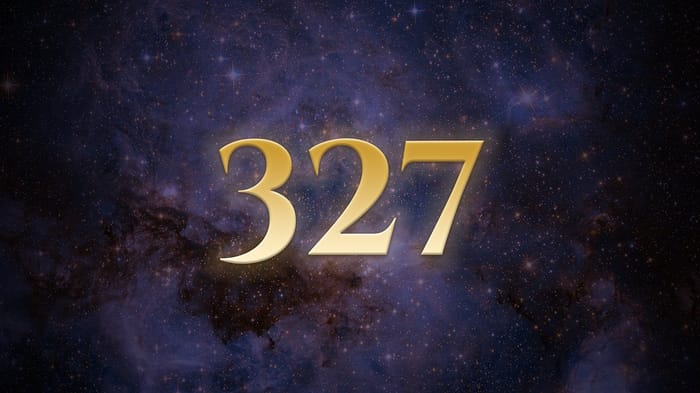
The numbers inside 327

3Creativity, expression, communication

2Partnership, patience, trust

7Understanding, depth, seeing what others miss
3 + 2 + 7 = 12 → 3
3: Creativity, expression, communication
What 327 means for you specifically depends on which of the 11 Life Paths you’re on. Your birthday determines that.
Enter your birthday below:

There is a moment in a cathedral when a single voice lifts into the nave and the building answers.
Something deeper than an echo - an echo is just the same sound bounced off stone. What happens in a cathedral is different. The voice enters a space designed, centuries ago, to receive it. The vaulted ceiling catches the sound. The stone walls shape it. The air between the pillars holds certain frequencies and lets others pass through. And what comes back to the singer is not what left their mouth. It is something the voice and the space made together - recognizably theirs, but changed. Given harmonics the throat alone could never have produced.
That is 327. A voice that found its cathedral.

The Voice Goes Out
3 is where this number begins, and 3 is always an act of expression. The Empress in the tarot. The number Balliett called the Christ principle - the outward expression of the Trinity - because 3 takes what was hidden and gives it a form others can receive. Artists, musicians, actors, the people who "can interpret and bring forth the silent hidden voices of all things." Agrippa called it "an incompounded number, a holy number, a number of perfection."
So someone speaks. Someone sings. Someone writes the sentence, makes the sketch, says the honest thing at the dinner table. The creative act comes first in 327. The voice leads.
But a voice that only knows how to go out fills the room and then dissipates. Expression without reception is a shout into open air. The sound has nowhere to land, nothing to shape it into more than what it was when it left.

The Space That Receives
2 is the cathedral itself. The High Priestess. The receptive presence. Balliett's "mother nature" who "waters and nourishes the seed others plant." The peacemaker. The one who draws great things to them not by reaching but by being a space worth entering.
In Agrippa's system, 2 is the "first multitude" - the moment unity divides and relationship becomes possible. Before 2, there is only 1 talking to itself. At 2, there is a listener.
This is not passive. A cathedral's acoustics are engineered with extraordinary precision. The curves of the ceiling, the density of the stone, the height of the nave - all of it shapes what the air carries. The 2 in 327 is meeting the voice with its own structure, its own intelligence, its own capacity to transform.
Think of the person who really listens to you. I don't mean the one nodding while they wait for their turn. The one whose attention actually changes what you are saying as you say it. You start a sentence one way, and something about their quiet presence makes the sentence end somewhere you did not expect. They did not speak. But they shaped what you said.

Where the Ceiling Opens
7 is where the sound reaches the top of the nave.
Agrippa wrote more about 7 than any other number. He called it "most full of all efficacy." The number of rest - God rested on the seventh day. Seven planets, seven metals, seven tones in the scale. The vehicle of human life. Balliett called 7 the bridge between the material and the spiritual, the point where ordinary understanding tips into the sacred.
In the cathedral, 7 is the height. The sound has traveled so far from the mouth that made it - up through the listening space, bouncing between surfaces that each add their own resonance - that it has become something the singer could not have produced alone. A single voice, in a room built to receive it, produces overtones the vocal cords never generated. The building adds harmonics. The space creates frequencies that exist only in the relationship between the sound and the stone.
7 is the place where expression (3) and reception (2) produce something that belongs to neither of them. Something sacred. Something that could only have come from the meeting.

The Hanged Man at the Keystone
Add the digits. 3 + 2 + 7 = 12.
12 is the Hanged Man.
The Hanged Man is suspended upside down, seeing the world inverted, and the critical thing about the card is that the suspension is voluntary. He is not hanging from a gallows. He chose this. The halo around his head says the inversion is illuminating rather than punishing. But it is inversion all the same.
In the cathedral, the Hanged Man is the moment the singer stops singing and just listens. The sound has gone out, the space has received it, the sacred overtones have begun - and now the singer has to do the hardest thing an expressive person can do. Surrender control of the sound. Let the building do what the building does, even though what comes back will not match what they sent out.
The voice you get back from a cathedral is yours, but rearranged. Certain notes you thought were central have been absorbed by the stone. Other notes you barely noticed have been amplified until they dominate. The building heard something in your voice that you did not know was there, and it made that thing louder.
The Hanged Man says: let it. The world from this angle is not wrong. It is the same world, seen from a vantage you could not have reached standing up.
Whether 327’s shadow side applies to you — and how strongly — depends on your core numbers. Your birthday reveals the first one.
Enter your birthday below:

The Voice That Returns
12 reduces to 3. 1 + 2 = 3. The Empress again.
The number begins with expression and ends with expression. But the expression that returns is not the expression that left. The 3 at the root of 327 has been through the Hanged Man. It has hung upside down from its own sound and listened to what the space made of it.
The singer hears what the building returned, and the next phrase they sing is different. The shift has nothing to do with learning a technique or correcting a mistake - it happened because they heard what their voice actually sounds like when a space worthy of it catches and reshapes it. They heard the overtones they did not know they were carrying. And now they cannot sing the old way, because they know something about their own voice that they did not know before.
This is the central insight of 327. Expression goes out, is received, touches the sacred, inverts the singer's understanding of their own sound. And the expression that comes next is truer - not because it is louder or more polished, but because it has listened to its own echo in a space that told the truth about it.
The returned 3 is the singer who now sings with the room instead of at it.

The Performer Who Cannot Listen
327 has a shadow, and it lives in the gap between performing and communicating.
It is the voice that refuses to let the space change it. The singer who hears the cathedral adding its own resonance and sings louder, pushing more volume, more control, more technical precision, drowning out the overtones because they were not in the original plan. The expressive person who needs you to hear exactly what they intended - not what emerged from the meeting between their intention and your reception.
You know this person. You may be this person, on certain days. The one who tells you what they meant, even after you tell them what you heard. The one who finishes your sentences because they need the conversation to arrive at the point they were already driving toward. The one who asks for feedback and then explains why each piece of it misunderstands the work.
This shadow is not about ego in the simple sense. It is about fear. The fear that if you let the space reshape your sound, you will lose yourself in the resonance. That surrender - the Hanged Man's voluntary inversion - will cost you the voice you spent years developing.
The shadow of 327 produces louder and louder expression aimed at smaller and smaller ears. The voice fills the cathedral like water fills a glass - leaving no room for the stone to answer. The architecture goes silent. The singer walks out with exactly the same voice they walked in with, having used a cathedral the way you would use a bathroom - just a room with good tile for volume.
The building had something to tell them. They were too busy singing to hear it.

What the Number Actually Asks
If 327 has been showing up in your life, the question it carries is specific.
What have you expressed recently that was received by something or someone capable of reshaping it? And did you let the reshaping happen?
It might be a creative project a collaborator took in a direction you did not expect. A relationship where the thing you said was heard more deeply than you intended. A prayer the silence answered sideways. Anywhere you put something out and the space gave something back that surprised you.
327 is asking whether you let the surprise stand. Whether you stayed with the inverted version long enough to learn from it. Whether the Hanged Man's suspension was something you endured or something you surrendered into.
Because the next expression - the root 3 - is waiting. And what it sounds like depends entirely on whether you listened to what the cathedral returned.

Frequently Asked Questions
What does angel number 327 mean?
327 is a cycle: expression (3) finds a receptive partner (2), and together they reach something sacred (7). The digits add to 12 - the Hanged Man - which reduces back to 3. So the voice that started the number returns at the end, but it has been inverted by the journey. You said something, it was received, the reception produced a depth neither of you expected, and now the next thing you say will carry all of that in it. The returning 3 is expression that has been through wisdom and come back changed.
What does 327 mean in love?
In a relationship, 327 describes the person whose self-expression drew a partner who could actually receive it - not just tolerate it or applaud it, but reshape it by taking it seriously. The love deepens the voice rather than silencing it. But the Hanged Man in the middle says this is not always comfortable. Your partner reflects back a version of you that you did not entirely plan on. The question is whether you can let that reflection teach you something.
Why is the Hanged Man important in 327?
Because the digits add to 12 before they reduce to 3, and 12 is the Hanged Man. This card is about voluntary surrender - seeing the world from an inverted perspective and finding illumination in the inversion. In 327, it means the cycle from expression through reception to sacred depth requires you to give up control of how your expression lands. You cannot dictate what the other person hears, what the space does with your voice, or what comes back to you. You can only listen to what returns and let it change how you speak next.
Is 327 a creative number?
It begins and ends with the Empress, so yes - creation is at both ends. But the creativity 327 points to is not the solitary kind. It is the creativity that comes from collaboration with something larger than yourself. The singer in the cathedral, the writer whose editor heard something in the manuscript the writer missed, the painter who lets the medium push back. 327 creativity is what happens when you stop trying to produce the finished product alone and let the process - the partner, the audience, the space - contribute to the work.
What should I do when I keep seeing 327?
Look for the place where your expression recently met a reception that changed it. Something you said or made or offered that was received in a way you did not expect. Instead of correcting the reception - instead of explaining what you really meant - stay with the version that came back. There is information in it. The cathedral added harmonics your throat did not produce, and those harmonics are telling you something true about your own voice. Sing the next phrase with that knowledge in it.
Curious which numbers are active in your chart right now? Your birthday is the starting point.
Enter your birthday below:
Explore Angel Numbers
| Digit meanings | Angel Number 3, Angel Number 2, Angel Number 7 |
| Reduces to | Angel Number 3 (via 12) |
| Numbers that share your vibration | 237, 660, 696, 714, 831, and 1236 all reduce to Life Path 3. |
Behind Your Angel Number
numerology chart calculator·life path number calculator·numerology guide