You sang on the corner, someone stopped, and the listening proved the song was real. 32 is the busker number - the creative voice attracting genuine partnership, not the other way around. The freedom at 5 is self-knowledge rather than collaboration.
Angel Number 32 Meaning: The Art of Listening Deeply
By Blair Andrews · Published April 14, 2023 · Updated July 19, 2026
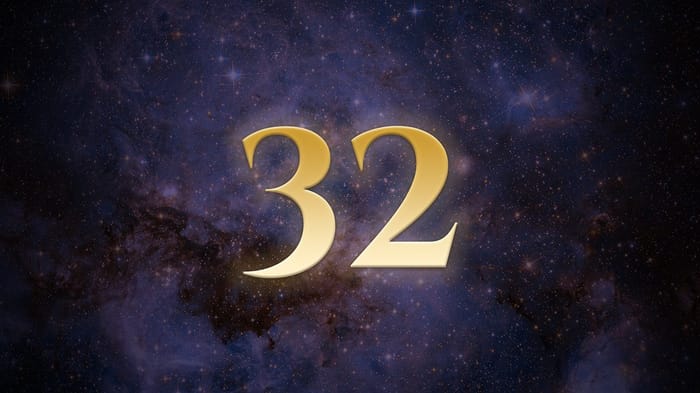
The numbers inside 32

3Creativity, expression, communication

2Partnership, patience, trust
3 + 2 = 5
5: Change, freedom, a new direction
Angel number 32 means your creative expression is drawing the right listener toward it. The 3 is your voice, and the 2 is the witness who confirms it. Together they reduce to 5, the freedom of knowing your work connects. Keep expressing honestly and let the audience arrive.
What 32 means for you specifically depends on which of the 11 Life Paths you’re on. Your birthday determines that.
Enter your birthday below:

You are singing on a street corner. No case, no tip jar, no plan. You started because the afternoon felt like it needed a song, and the song you picked was one your grandmother used to sing - something about a river, something about leaving - and your voice cracked on the second verse the way it always does when you mean something more than you can explain.
A woman stopped to listen. Canvas bag full of groceries, standing maybe ten feet away, completely still the way you stand when you are trying not to scare a bird. She did not say anything or smile or nod along. She just listened.
And something changed. The song was the same. Your voice was the same. But the presence of one genuine listener made the music real in a way it had not been thirty seconds ago. When you were singing alone, the song belonged to you and your grandmother. The moment the woman stopped, the song belonged to the street. To the afternoon. To two strangers and a melody that neither of them owned.
And here is the part that stays: you realized the music works either way. The listener did not make the music valid. The listener made you understand that it was already valid - that someone stopping proved it was worth singing in the first place.
That busker who draws a crowd - that is the whole architecture of 32.
What I notice about people drawn to 32 is that they have already been singing, usually for a while. The question they bring is not "should I start?" It is "does anyone hear this?" They already have the voice. What they have not yet trusted is that the voice connects. Something in them needs to know the song travels beyond the corner.

A Voice That Cannot Stay Indoor
The 3 leads this number, and leading position shifts the entire trajectory of where the story goes.
Balliett called 3 "the outward expression of the Christ principle of Trinity" - the digit whose mission is to take invisible things and make them heard. Three "can interpret and bring forth the silent hidden voices of all things." Musicians, artists, actors - she noted that most of them vibrate to 3. The Empress in the tarot sits crowned with twelve stars in a field of grain. She does not plan growth. She is growth, the way a warm kitchen turns flour into bread.
Agrippa called 3 "an incompounded number, a holy number, a number of perfection." Three persons complete the Trinity. Three dimensions complete physical space. Everywhere Agrippa looked, three was the number where things became whole through being expressed.
Balliett added something the modern summaries leave out: she called 3 the number that "interprets and brings forth the silent hidden voices of all things." That last phrase is doing heavy lifting. 3 does not invent. It reveals. When 3 leads in 32, the creative act is not performance. It is the making-visible of something that was already true and silent.
So when 3 leads 32, the creative act has already happened. You stepped onto the corner, opened your mouth, sang the song because the afternoon needed it and you were the person standing there with a grandmother's melody in your chest. The expression came first - before the audience, before anyone confirmed that what you were doing mattered.

The Woman With the Grocery Bag
The 2 arrives second, and second position is the whole point.
Balliett called 2 "the Mother Nature" - the collector, the peacemaker, the pivot between Spirit and Matter. Two "waters and nourishes the seed others plant; often reaps the harvest." She called 2 the Seer - because 2 perceives the present with a depth most people walk right past.
In the tarot, 2 is the High Priestess. She sits between two pillars holding a scroll she has not yet unrolled. Agrippa called 2 "the first Multitude" and "the first form of parity" - the number of charity, mutual love, marriage, society. But also the number of discord, because duality introduces the possibility of opposition. The listening can affirm. The listening can also reject.
When 2 follows 3, the expression finds a witness. You sang on the corner, and someone stopped. The creative act, which was already complete on its own terms, suddenly exists in relationship. The listener does not change the song. The listener changes what you understand about the song - what you understand about yourself as the one singing it. It is the difference between singing in the shower and singing on the corner: the song might be identical, but the corner teaches you something the shower never could.

The Duet and the Busker
23 carries the same digits in reverse, and the distinction between them is everything.
23 is the duet. Partnership first, then expression. Two voices finding together a song that neither could have produced alone. 23 is always about the relationship producing the creative act.
32 runs the other way. You sang alone first. The expression was already in the air before anyone else showed up. The listener arrived second, and what the listener provided was not collaboration but confirmation - the mirror that showed you your song was worth singing. 32 is about the creative act attracting the relationship.
Both roads lead to 5, but 23's freedom is the liberation of collaboration - discovering that you are more expansive with a partner. 32's freedom is the liberation of self-knowledge - discovering that you were already enough, and the audience proved it by showing up for what you were already doing.

What the Witness Unlocks
3 + 2 = 5.
Balliett called 5 the Sage - self-sufficient, well-poised, fascinating, someone who "begins the new cycle of mind" and "finds itself in high unexplored country with paths in all directions." Agrippa called 5 the Seal of the Holy Ghost, and a bond that binds all things. In the tarot, 5 is the Hierophant - the one who sits between the same pillars as the High Priestess but has found words for what she knew only in silence.
This is what the busker discovers on the corner. You sang the song because you needed to sing it. Someone stopped because the song was real. And the combination - expression plus witness - produced a freedom you could not have predicted from either one alone.
The freedom of 32 is realizing that the music works whether anyone is listening or not, but the listener made it real. Both halves of that sentence are true. The song was valid before anyone heard it. And the hearing completed something the singing alone could not. You are free because you expressed something honestly, the world responded, and the response taught you that your honest expression has a place in the world.
Whether 32’s shadow side applies to you — and how strongly — depends on your core numbers. Your birthday reveals the first one.
Enter your birthday below:

The Shadow of the Empty Corner
Left unexamined, 32's pattern has two faces that look nothing alike but come from the same wound.
The first face is the busker who cannot sing unless someone is watching. The 3 will not fire until the 2 arrives, and the result is a creative life held hostage by validation. You check the metrics before you check the work. The listener has stopped being a mirror and become a judge.
The second face is subtler: the busker who sings on the corner for years and refuses to acknowledge the crowd. People stop, people are moved, and the singer goes home and tells themselves it does not matter because the music was always just for them. This is 32's shadow of false self-sufficiency - the creative person who uses independence as armor against the vulnerability of being truly heard.
The cure for both shadows is the same: let the song be the song, and let the listener be the listener. The music was real before anyone heard it. The hearing made it realer. Both things, at the same time, without contradiction.

Thirty-Two Paths and a Grandmother's Song
Agrippa wrote that "the number thirty two, the Hebrew Doctors ascribe to wisdom, and so many paths of wisdom are described by Abraham" - thirty-two paths in the Kabbalistic Tree of Life, the routes by which understanding travels from the divine to the human and back. The Pythagoreans called it "the number of justice." Thirty-two is a threshold number, and that matches what the busker experiences. The corner was never the destination. It was where you discovered that your expression connects, that the honest creative act attracts the partnership it needs.
People who carry strong 32 energy often do not realize they are teachers until someone tells them. They thought they were singing for themselves. They did not see that the woman with the grocery bag went home humming the melody, mentioned the song to her daughter, and a grandmother's song traveled further than the singer will ever know.
The Hierophant at 5 does this quietly. The busker on the corner is teaching, whether the busker knows it or not. The teaching is in the willingness to sing on the corner at all - to put something real into the air and trust that the right listener will stop.

The Song That Travels
You finished the song. The woman shifted her bag to her other hand, looked at you the way you look at something you want to remember, and walked on. She did not clap. She did not leave a tip. She just carried the melody with her - and you stood on the corner and understood something about your own voice that you had never understood before: that it reaches.
32 is the number of expression that finds its witness. The Empress singing on the corner, the High Priestess standing still with her groceries, and the Hierophant emerging quietly at 5 - the freedom of knowing the voice is real, the song connects, and you can keep singing because the music was always yours and now you know it carries.

Frequently Asked Questions About Angel Number 32
What does angel number 32 mean?
32 pairs creative expression (3) with partnership and witness (2), producing the freedom of 5 at the base. Think of the busker who sings alone on a street corner, draws a listener, and discovers through the listening that the music was real all along. The 3 provides the voice. The 2 provides the mirror. The 5 underneath is the freedom that comes from knowing your expression connects - that you can keep singing on any corner because the song has a place in the world.
How is 32 different from 23?
They share digits but travel opposite roads. 23 is the duet - partnership first, then expression. Two voices finding together what neither could produce alone. 32 is the busker - expression first, then partnership. You sang alone, someone stopped, and the listening revealed what the singing actually meant. 23 discovers its voice through collaboration. 32 discovers its audience through courage. Both arrive at 5, both produce freedom, but 23's freedom is the liberation of partnership and 32's freedom is the liberation of self-knowledge.
What does 32 mean for relationships?
In relationships, 32 often shows up when you are learning the difference between performing for someone and being genuinely witnessed by them. The 3 brings creative warmth - the meal you cooked, the words you chose, the care you expressed in some way that is distinctly yours. The 2 is the partner who receives that expression and reflects back what it means. The deepening happens in the reflection, not the performance. 32 in love asks you to keep expressing yourself honestly and to let the right people witness it without needing their approval to validate the expression.
Why do I keep seeing 32?
Because you are singing on the corner and someone is about to stop. Something you have been expressing - creatively, emotionally, professionally - is about to find its audience. The work, the words, the way you show up in the world - it is connecting with someone, and that connection is going to show you something about your own creative life that you could not see alone. Pay attention to who stops to listen. They are showing you what your song means.
What is the shadow side of 32?
Two versions. The first is the singer who will not sing without an audience - expression held hostage by validation, creativity that checks the metrics before it checks the work. The second is the singer who refuses to acknowledge the crowd - using self-sufficiency as armor against the vulnerability of being truly heard. Both shadows miss the same truth: the music was real before anyone listened, and the listening made it realer. You do not need an audience to begin. You do need to let them in once they arrive.
Curious which numbers are active in your chart right now? Your birthday is the starting point.
Enter your birthday below:
Explore Angel Numbers
| Digit meanings | Angel Number 2, Angel Number 3 |
| Reduces to | Angel Number 5 |
| Numbers that share your vibration | 68, 86, 95, 131, and 428 all reduce to Life Path 5. |
Behind Your Angel Number
numerology chart calculator·life path number calculator·numerology guide
You Might Also Like

Life Path Number 5: The Hierophant - Mind Over Matter and the Meaning of Real Freedom
Life Path Number 3: The Empress - Where Creativity Gets a Body
Life Path Number 2: The High Priestess - The Art of Reflection and Balance