Marriage Lines in Palm Reading: Relationships, Commitment, and Emotional Bonds
By Blair Andrews · Published April 21, 2026 · Updated July 20, 2026
The marriage line shows your deepest committed bonds, not just legal weddings. These short lines sit under your little finger, above the heart line. Each one records a relationship strong enough to reshape your emotional life. Depth, position, and curve reveal intensity, timing, and outcome.
Of all the markings on the human palm, none generate more questions than these: a few tiny horizontal lines, barely a centimeter long, tucked along the edge of the hand beneath your little finger.
They are called marriage lines, and the name is both their charm and their curse. Because despite centuries of tradition, these delicate etchings do not predict weddings.
They do not tell you who you will marry, or when, or how many times you will walk down an aisle. What they actually record is something more honest and more intimate than any legal contract: the bonds significant enough to reshape your emotional landscape forever.
Every committed relationship that truly marks you, that changes the temperature of your inner world, leaves its trace here. The person who broke you open. The one who rebuilt you.
The partnership that became the architecture of your daily life. These are the connections your palm remembers, regardless of whether they ever involved a ceremony or a ring.

Where to Find Your Marriage Lines
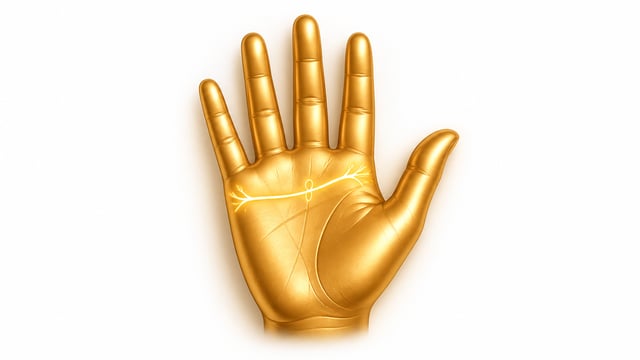
Turn your hand so the pinky side faces you, curling your fingers slightly inward. Look at the edge of your palm between the base of your little finger and your Heart Line.
You will see one or more short horizontal lines cutting across this narrow strip of skin. These are your marriage lines (sometimes called relationship lines or affection lines) in modern palmistry.
The area sits directly on the Mount of Mercury, which governs communication, connection, and the exchange of energy between people. It is no coincidence that the lines recording your deepest bonds live on the mount that rules the very mechanisms of intimacy: speech, listening, the electricity of being truly known by another person.
When reading these lines, directionality matters. You read from bottom to top, from the Heart Line upward toward the base of the little finger. Lines closer to the Heart Line represent earlier relationships in your life. Lines closer to the finger base represent bonds that form later. This vertical axis is your timeline of love.
What Counts as a Marriage Line
Let go of any notion that these lines only appear when you sign a marriage certificate.
In palm reading, a "marriage" line marks any deeply committed bond, the kind of relationship where two lives become genuinely entangled. Cohabitation that spans a decade. An engagement that shaped your twenties even though it ended before the wedding. A partnership that, for a season, was the gravitational center of your entire existence.
Fainter marks in this area can represent connections that were significant but didn't reach the level of full life-merging. A love affair intense enough to leave a mark but not sustained enough to become a defining structure. Proposals that didn't culminate. Relationships where commitment was offered but circumstances intervened.
These lighter etchings honor the truth that not every love story reaches its intended conclusion, and the ones that don't can still shape us profoundly.
Reading the Number of Lines
One strong, clearly etched marriage line suggests a single defining partnership, the kind of bond that becomes a through-line in the person's story. This doesn't necessarily mean one relationship for an entire lifetime (though it can). It means one relationship that overshadows all others in emotional significance.
Multiple lines indicate several meaningful committed relationships across a lifetime. Two clear lines might suggest a first marriage or long-term partnership followed by a second. Three or more lines speak to someone who has loved deeply and repeatedly, whose capacity for commitment is not diminished by previous bonds but renewed by them.
Having many marriage lines carries no moral weight in palmistry. It is not a sign of fickleness or failure.
It is a record of emotional depth, evidence that you have offered yourself fully to connection more than once, which requires both courage and resilience. Equally, having one line does not mean rigidity. It suggests focus, a channeling of relational energy into a single current.
Depth and Clarity: The Emotional Signature
The depth of a marriage line speaks directly to the intensity of the bond it records. A deeply incised line, one you can feel with your fingertip when you run it across the edge of your palm, indicates a relationship of extraordinary emotional impact.
This is a bond that consumed you, that restructured your identity, that you could not move through without being fundamentally altered.
A fainter line records a relationship that was meaningful but operated at a different frequency. Perhaps more companionate than passionate, or deeply loving without the particular intensity that rewires your nervous system. Faintness does not mean the love was less real. It speaks to the nature of the bond rather than its worth.
A broad, somewhat diffuse line (as opposed to sharp and thin) can indicate a relationship where boundaries were unclear, where one person lost themselves somewhat in the merging. Clarity in the line suggests clarity in the partnership: both people retained their edges even while building something together.
Direction and Curvature: Where the Relationship Leads
A perfectly straight, horizontal marriage line is the classical indicator of stability. It suggests a bond that maintains its equilibrium over time - neither ascending into idealization nor descending into disappointment. This is the line of enduring partnership, of love that settles into steady warmth.
When a marriage line curves upward at its end - rising toward the little finger - it indicates a relationship whose outcome is positive even if the partnership itself eventually concludes.
This is the mark of a bond that leaves both people better than they arrived. The love serves its purpose, confers its gifts, and whether it lasts a lifetime or a chapter, the person emerges expanded.
A marriage line that droops downward carries a different weight. This downward curve suggests a relationship that ends in sorrow, disillusionment, or separation that leaves a wound rather than a lesson.
In some traditions, a line curving sharply downward toward the Heart Line indicates a partner's serious illness or a loss that permanently alters the emotional landscape. This reading requires sensitivity - it speaks to grief rather than failure.
Timing Your Relationships
The position of a marriage line between the Heart Line below and the base of the little finger above provides a rough approximation of when the relationship occurs. The space between these two landmarks represents your adult relational life, and the midpoint corresponds roughly to age 35 to 40.
A marriage line sitting very close to the Heart Line - in the lower quarter of the space - suggests a significant bond forming in the early to mid-twenties. One positioned at the midpoint indicates a defining relationship arriving around the mid-thirties to early forties.
Lines in the upper portion of the space, closer to the finger base, point to later-life partnerships - the love that finds you after forty, after fifty, after you thought the chapter was closed.
These are approximations rather than calendar dates. Palmistry speaks in patterns and proportions, not precision. But the relative positioning of multiple lines to each other tells a clear story of sequence: which bonds came first, which followed, and how much life elapsed between them.
Forks, Islands, and Breaks: What Complications Look Like
A marriage line that forks at its end, splitting into two branches like a river delta, traditionally indicates diverging paths. The two people grow in different directions.
This is the classic marker of separation or divorce, though it speaks specifically to growing apart rather than to conflict. It is an organic divergence, a slow revelation that two lives no longer run parallel.
An island on a marriage line (a small oval interruption in the line's flow) indicates a period of significant difficulty within the relationship.
This might manifest as a prolonged rough patch, a crisis of trust, a time when the bond was genuinely threatened. The island doesn't necessarily mean the relationship ends. It means the bond passes through a season where its survival is in question.
A complete break in a marriage line, where the line stops and then resumes after a gap, can indicate a separation followed by reconciliation, or a relationship that pauses and restarts. The gap represents the period of distance; the line's resumption shows the bond persisting beyond the rupture.
Multiple strong lines at distinctly different heights confirm what most people already know about their own history: sequential committed relationships occurring at different life stages. Each line marks its own bond, its own world, its own chapter.
Children Lines: The Vertical Marks
Look closely at the marriage lines, and you may notice fine vertical lines rising from them or sitting just above them, reaching toward the base of the little finger. In traditional palmistry, these are children lines - and they carry their own system of interpretation.
Straight, clearly vertical lines have traditionally been associated with sons. Lines that lean slightly, carrying a subtle slant, have been associated with daughters. The depth of these lines can indicate the significance of the bond with that child - a deeply etched vertical line suggests a particularly close parent-child relationship.
In contemporary palmistry, many readers interpret children lines more broadly: as markers of creative offspring (projects, artistic works), nurturing bonds (including with stepchildren, adopted children, or nieces and nephews), or any relationship where you serve a parental or mentoring role.
Lines rising from a second marriage line into the children area can speak specifically to stepchildren or blended-family bonds - the children who enter your life through a later partnership.
As with marriage lines themselves, the number of vertical marks does not necessarily correspond precisely to the number of biological children. These lines record the bonds that leave their imprint, which may include children you helped raise, young people you mentored, or creative works you brought into being with parental devotion.
The Ring Finger and the Pulse of Connection
There is an old anatomical belief - not strictly accurate in modern terms but symbolically profound - that a vein runs directly from the ring finger to the heart. The ancients called it the vena amoris, the vein of love, and it is the reason wedding rings have been placed on that finger across virtually every culture that practices ring exchange.
What is true is that the ring finger is one of the few fingers where you can feel a pulse directly at the base. Press your thumb against the base of your ring finger and feel for it.
This sensitivity - this direct connection to your circulatory rhythm - is why palmists pay attention to the relationship between the marriage lines (on the Mercury mount) and the Apollo finger (the ring finger) directly beside them.
The Mount of Apollo governs creativity, joy, and self-expression. The Mount of Mercury governs communication and connection. Marriage lines sit at the border between these two energies - right where joy meets communication, where creative self-expression meets intimate exchange.
This is not accidental. It is the palm's way of telling you what healthy partnership requires: the ability to express who you are (Apollo) while remaining genuinely available to another person (Mercury).
Compatibility Through Heart Lines
One of the most practical applications of palm reading in relationships involves comparing Heart Lines between partners. Your Heart Line, the uppermost major horizontal line on your palm, governs your entire emotional orientation: how you give love, how you receive it, what you need, and how much you have to offer.
When two people compare Heart Lines, they are comparing their emotional capacities and styles. A very long Heart Line, one that stretches fully across the palm, indicates a generous giver, someone whose emotional energy extends broadly and freely.
A shorter Heart Line doesn't indicate less capacity for love but rather more selective, concentrated affection.
Difficulty arises when a person with an exceptionally long, giving Heart Line partners with someone whose Heart Line is significantly shorter. This creates an energetic imbalance where one person perpetually extends more emotional energy than the other returns.
This is not a moral judgment. Neither length is superior. But the mismatch itself generates friction that both partners feel, even when they cannot name it. One feels perpetually depleted; the other feels perpetually pressured.
The most harmonious pairings tend to show Heart Lines of similar length and depth - partners whose emotional reach matches, whose capacity for giving and receiving operates at a similar frequency.
Examining your own Heart Line alongside your marriage lines creates a fuller picture: the type of partnership your Heart Line seeks, and the bonds your marriage lines record.
Love Lines vs. Marriage Lines: The Distinction
Within the Mount of Venus (that large, fleshy pad at the base of the thumb) you may notice fine lines slanting downward toward the Life Line. These are family affection lines, sometimes called love lines, and they are distinct from marriage lines despite the confusing overlap in terminology.
Family affection lines on the Venus mount represent the influence of family bonds: parents, siblings, and the deep tribal loyalties that shape your earliest understanding of love.
When these lines cut across the Life Line (rather than stopping at it), they indicate moments where family influence directly intervened in the person's life path. A parent's demand. A sibling's crisis. A family obligation that redirected your trajectory.
Marriage lines, by contrast, sit on the opposite side of the palm, on Mercury's mount, and represent the bonds you choose rather than the ones you inherit.
The palm maintains this elegant separation: Venus holds what you were born into; Mercury holds what you build. Understanding this distinction prevents a common misreading where someone counts their Venus lines as relationship indicators and arrives at an inflated number.
Marriage Lines and Your Numbers
If you work with numerology alongside palmistry, you will notice meaningful resonances between your marriage lines and your core numbers. The marriage lines sit on Mercury's mount, and Mercury's vibrational frequency connects to communication, adaptability, and intellectual exchange within relationships.
In numerology, this same energy expresses through numbers like 5 (Mercury's number) - people who need mental stimulation within their bonds to sustain commitment.
Venus, the planet of love, beauty, and partnership, governs the number 6 in numerology. If your Life Path number is 6, you are someone for whom relationships are central to purpose itself. Your marriage lines likely reflect this: clear, deeply etched, positioned as dominant features rather than afterthoughts.
The Life Path 2, meanwhile, is the number of partnership and balance. People carrying this vibration often show marriage lines that are remarkably even and symmetrical - reflecting their innate orientation toward harmony and pairing.
Your Expression number, calculated from the full name given at birth, can reveal relationship patterns that mirror what the marriage lines show in physical form.
Someone with an Expression number resonating with Venus energy (6, or master number 33) may find that their marriage lines and their numerological profile tell the same story from different angles: a life structured around intimate bonds, a nature that finds its highest expression through partnership.
Together, these two systems create a more dimensional portrait of your relational life than either offers alone. The numbers tell you what you are drawn toward; the lines tell you what has actually imprinted.
Try This: Reading Your Own Marriage Lines
Find good light and a comfortable position. You will want to examine both hands.
- Locate the area. Turn each hand sideways so the pinky edge faces you. Curl your fingers slightly inward (not clenched - just gently bent). Look at the strip of skin between the base of your little finger and where your Heart Line meets the edge of your palm.
- Count the lines. How many horizontal lines cross this strip? Note which are deep and clear versus faint and fine. The deep ones represent your most significant bonds.
- Assess the timing. Where do the strongest lines sit within this space? Lower (closer to the Heart Line) = earlier in life. Higher (closer to the finger base) = later. The midpoint corresponds to roughly age 35-40.
- Check the direction. Do the lines run straight, curve upward, or droop downward? Trace each one with your eye from where it begins (toward the back of the hand) to where it ends (toward the palm center).
- Compare both hands. Your dominant hand shows the partnerships you are actively creating and experiencing. Your non-dominant hand shows your innate relational blueprint - what you came in expecting from love. Differences between the two reveal how experience has taught you things your original nature didn't anticipate.
- Look for vertical lines. Do any fine vertical marks rise above your marriage lines? These are your children lines - biological, adopted, chosen, or creative.
This is a practice, not a one-time reading. Return to your marriage lines periodically. They change as your relational life evolves - deepening, shifting, and occasionally adding new marks as new bonds form.
Frequently Asked Questions
What if I have no marriage lines?
The absence of marriage lines does not mean you will never have a significant relationship. Some people whose hands show no marriage lines are in deeply loving, long-term partnerships.
It may indicate that your relational energy expresses differently - perhaps through deep friendships rather than conventional partnerships, or perhaps your palm simply records bonds in other ways (through the Heart Line's branches, for instance).
It can also suggest someone who maintains significant emotional independence even within relationships - someone whose identity doesn't fully merge with a partner's, which means the bond doesn't "imprint" in the traditional marriage-line fashion.
What do multiple marriage lines mean?
Multiple marriage lines mean you have the capacity (and likely the life experience) of several deeply committed relationships. They may occur sequentially (first marriage, second marriage) or represent bonds that overlapped in some way.
In practical terms, most people with three or more clear marriage lines have experienced multiple long-term partnerships, each significant enough to reshape their understanding of love. Fainter additional lines may represent near-misses: relationships that approached but didn't quite reach the level of full commitment.
Can marriage lines predict divorce?
Marriage lines can indicate tendencies and challenges, but they do not seal fates. A forked marriage line suggests diverging paths, and an island on the line points to a period of serious difficulty. But these markings describe energetic patterns, not inevitable outcomes.
Many people with forked lines have navigated the divergence and found their way back together. The lines describe the landscape of the relationship, not a verdict on its conclusion. And because palm lines change over time, a marking that appears concerning today may shift as the relationship itself shifts.
Do marriage lines change over time?
Yes. Like all lines on the palm, marriage lines are connected to your nervous system and respond to changes in your emotional life. A new deep relationship can create a new line where none existed before.
A line that was once deeply etched can fade over years as the emotional intensity of that memory diminishes. Islands can appear during periods of relationship difficulty and sometimes resolve as the partnership stabilizes.
The palm is a living document. It records not just your past but your present emotional reality, updating continuously as you grow.
Are marriage lines the same on both hands?
Often not - and the differences carry meaning. Your non-dominant hand shows what you came into this life expecting from partnership (your innate relational blueprint).
Your dominant hand shows the actual bonds you have lived. Someone whose non-dominant hand shows one clear line but whose dominant hand shows three has experienced more committed relationships than their original nature anticipated.
Someone whose dominant hand shows deeper lines than their non-dominant hand has found more emotional depth in partnership than they were "programmed" to expect. Both versions are true.
They simply represent different layers of the story.
Return to the Palm Reading Guide | Calculate your Life Path number