The Fibonacci Sequence & the Golden Spiral in the Human Body
By Blair Andrews · Published May 19, 2015 · Updated July 20, 2026
If one mathematical principle could sum up the physical world, it would be the golden ratio. Known as Phi, it is the number 1.618. It appears again and again across nature, art, architecture, and biology.
You find it in the spiral of galaxies and in the petals of a flower. It is the universe's favorite blueprint. Nowhere is its presence more intimate than in the human body itself.
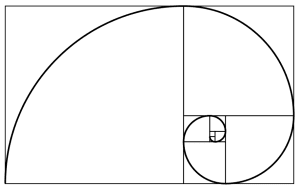

Understanding the Fibonacci Sequence
In 1202, the Italian mathematician Leonardo Fibonacci introduced a sequence that changed how we understand natural patterns. It begins simply: 1, 1, 2, 3, 5, 8, 13, 21, 34, 55, 89, 144, and onward forever.
Each number is the sum of the two numbers before it. Now divide any number in the sequence by the one before it. The further along you go, the closer the result gets to 1.618.
Early in the sequence, the approximation is rough. Three divided by two gives you 1.5. Five divided by three produces 1.666. As the numbers grow larger, the ratio converges with breathtaking precision. By the thousands, it is functionally indistinguishable from Phi.
This convergence is no coincidence - it is a law of growth across the natural world, from pinecones to hurricanes.
Plot the sequence as a series of expanding squares and draw curves through them, and you produce the Fibonacci Spiral. Nature repeats this shape in ocean waves, hurricane systems, sunflower seeds, and the nautilus shell.
Scale that same spiral to the proportions of the human body and something remarkable appears.

1. The Fibonacci Sequence on Your Face
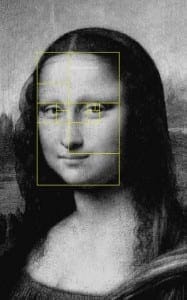
The face is the most studied example of golden ratio proportions in the body. Every face is unique in its details, yet the average positions of key facial features align closely with Phi.
Measure from the chin to the nose, then from the nose to the top of the head. The two distances approximate the golden ratio.
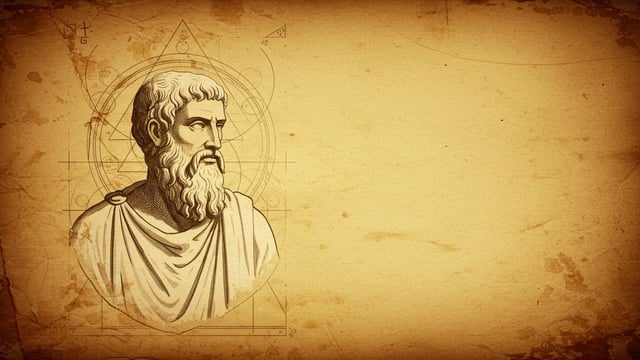
The same relationship holds between the width of the nose and the width of the mouth. Renaissance artists like Leonardo da Vinci were obsessed with these proportions. The Mona Lisa sits on a framework of golden rectangles. That framework gives it its mysterious sense of harmony.

2. Your DNA and the Golden Ratio
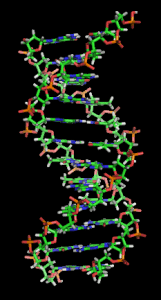
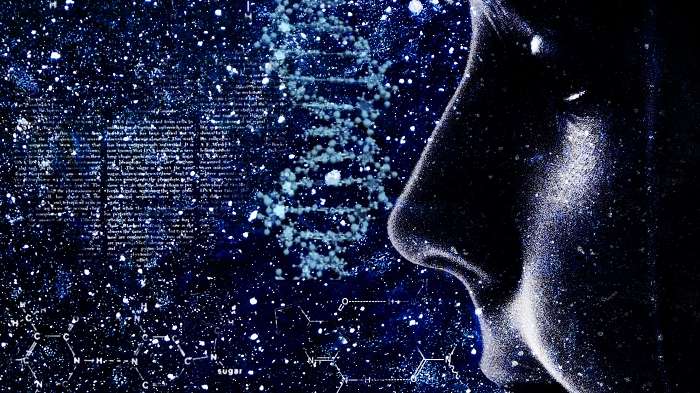
The golden ratio is written into you at the molecular level. Each complete turn of the DNA double helix measures 34 angstroms in length and 21 angstroms in width. Both 34 and 21 are Fibonacci numbers, and dividing 34 by 21 gives you 1.619 - a near-perfect expression of Phi.
The same principle governs the spiraling of galaxies millions of light-years across. It also governs the spiraling of the molecule that makes you uniquely you.

3. The Uterus
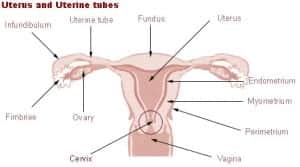
Dr. Jasper Verguts is a gynecologist at the University Hospital Leuven in Belgium. He measured 5,000 uteri using ultrasound technology. In a healthy uterus during peak fertility years, the ratio of length to width averages 1.6. That is extraordinarily close to the golden ratio.
The organ that creates new human life is built on the same principle that shapes every living thing on our planet. The implications reach far beyond anatomy.

4. Your Hands and Arms
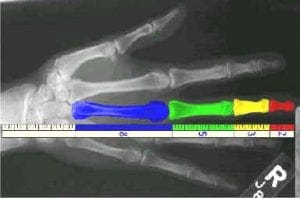
Your body is a Fibonacci counting machine in plain sight. You have two hands, each with five fingers. Each finger except the thumb is divided into three sections. The numbers 2, 3, 5, and 8 all belong to the Fibonacci sequence. And the mathematical elegance goes deeper than simple counting.
Each section of your finger relates to the adjacent section by the golden ratio. Extend the measurement to the palm and the forearm, and the pattern continues unbroken. The ratio of forearm to hand approximates Phi. So does the ratio of the entire arm to the forearm.

5. The Cochlea in Your Ear
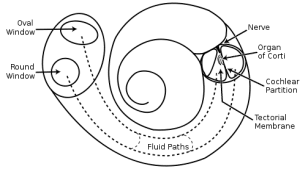
Deep inside your inner ear lies the cochlea. This small spiral structure converts sound vibrations into electrical signals your brain can interpret. Its name comes from the Greek word for "snail," and for good reason. The cochlea is a logarithmic spiral that follows the Fibonacci proportions with elegant precision.
This tiny organ is no larger than a pea. Yet it holds one of the most perfect golden spirals in the entire human body. The mathematics of beauty and the mechanics of hearing share the same underlying geometry.

6. The Outer Ear
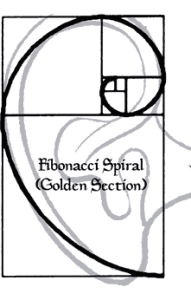
The golden spiral does not stop at the inner ear. The outer ear - the auricle or pinna - follows the same Fibonacci curve. Overlay the golden spiral on a photograph of a human ear. The curve traces the cartilage so closely it looks designed rather than accidental.
The ear is a fractal echo of the same principle behind seashells and the arms of spiral galaxies spanning millions of light-years.

7. Your Entire Body
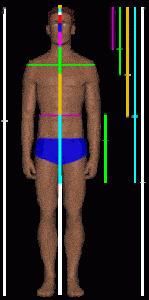
Step back and look at the human body as a whole. The golden ratio asserts itself at every scale of measurement. Your total height, compared to the distance from the ground to your navel, approximates Phi. Navel to the top of your head, compared to navel to chin, gives the same ratio.
Measure from the top of the head to the chest, the chest to the waist, and the waist to the fingertips. At each level, the same relationship emerges with striking consistency.

Beyond the Body: Numbers as a Map of Experience
The mathematical patterns that shape your body do not stop at the skin. In numerology, meaningful number relationships extend into personality, purpose, relationships, and personal timing.
Reduce your birth date through numerological calculation and you get numbers that carry their own vibrations. Those vibrations run through every dimension of your experience. The golden ratio runs through every dimension of your physical form in the same way.
The Fibonacci sequence shows that simple rules, applied consistently, produce extraordinary complexity and beauty. Numerology teaches the same lesson through a different lens. The numbers 1 through 9, plus the master numbers 11 and 22, hold a complete map of human experience.
Both systems point to one underlying truth: the universe is not random but patterned, not chaotic but profoundly composed.
Your body is living proof that you are made of mathematics.
Every spiral, proportion, and ratio in your physical form says the same thing. You are not separate from nature but an expression of it. The same golden principle shapes you, seashells, and solar systems. You are, quite literally, a Fibonacci masterpiece.
Image sources: Mona Lisa; DNA; Hand; Ear.

Reader Questions
What is the golden ratio and why does it keep appearing in the human body?
The golden ratio is the number 1.618, known as Phi. It emerges naturally when you divide consecutive Fibonacci numbers.
It appears throughout the human body because biological growth follows mathematical rules. This ratio produces structures that are stable, efficient, and proportionally harmonious. From the spiral of your inner ear to the proportions of your face, your body is built on this single principle.
How is the Fibonacci sequence connected to DNA?
Each full turn of the DNA double helix measures 34 angstroms in length and 21 angstroms in width. Both 34 and 21 are Fibonacci numbers, and dividing them gives you 1.619 - nearly a perfect expression of Phi. The same pattern behind spiral galaxies also governs the molecule that makes you uniquely you.
Does the golden ratio actually make faces more attractive?
Research consistently finds that faces close to golden ratio proportions are perceived as more harmonious and appealing. Renaissance artists like Leonardo da Vinci built entire compositions around these proportions.
That said, every face is unique. The golden ratio describes average proportional relationships, not a rigid template of beauty.
What does the Fibonacci sequence have to do with numerology?
Both the Fibonacci sequence and numerology point to the same underlying truth: the universe operates on meaningful numerical patterns, not randomness.
The Fibonacci sequence reveals this in physical form through spirals, proportions, and growth patterns. Numerology reveals it through personality, timing, and the vibrational qualities of each number. They are two lenses focused on the same reality.