Cancer: The One Who Remembers What Home Feels Like
By Blair Andrews · Published April 26, 2026
That Feeling Before You Open the Door
You know the feeling. You are standing outside a house where people you love are gathered inside. Through the window you can see warm light, movement, the shapes of familiar bodies.
For just a moment you pause. Not because you are hesitant, but because the anticipation itself is so rich. That pause, that ache of almost-belonging, is the emotional territory Cancer knows best.
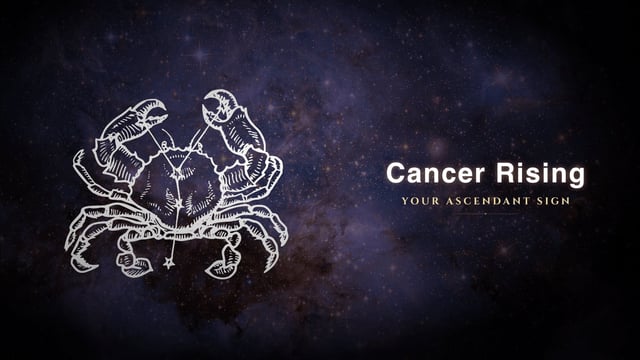
Cancer is the fourth sign of the zodiac, born between June 21 and July 22. It belongs to the water element, moves in the cardinal modality, and answers to the Moon, the oldest light in the sky, the one that waxes and wanes and always returns.
If you know a Cancer well, you have probably felt what they create around them before you could name it. A quality of emotional shelter. A sense that in their presence, you can put something heavy down.

Cardinal Water: What That Actually Means
Cancer is often described as passive, but that word misses the mark entirely. Cardinal signs initiate. They begin things. Cancer initiates in the realm of feeling. It actively reaches toward emotional connection, builds structures for belonging, and creates the invisible containers within which life can develop.
Water corresponds to the feeling function, the capacity that determines what matters, what has value, what is worth protecting. Cancer's knowing is pre-verbal.
It is the stomach-drop when something is wrong in the house before anything visible has changed. The warmth of recognition before a handshake is exchanged. The body reading the room before the mind has formed a single thought.
As the sign that opens the summer season at the solstice, Cancer carries an interesting paradox. It arrives at the moment of maximum light and initiates the turn inward.
The longest day of the year is also the first day of Cancer's season, the moment when the light begins its slow withdrawal toward winter. Cancer holds both the fullness and the beginning of its loss. There is a melancholy in this sign that is not sadness so much as awareness. Awareness that everything precious is also, by its nature, temporary.

The Moon's Deepest Home
The Moon rules Cancer, and this is the planet's home sign, where it functions most naturally. The Moon in astrology is not really about emotions the way pop culture describes them. It is about the survival instinct. The ancient, pre-conscious pattern of response that evolved to keep you alive.
Every adaptation you made in early childhood, the ways you learned to read your mother's face, to sense the emotional weather of a room, to know what was safe and what was not, that is lunar intelligence. Cancer is the sign most fluent in this language.
It picks up signals that other signs filter out. Where other signs rely on words or evidence, Cancer reads the atmosphere directly, the way a barometer reads pressure.
The gift is extraordinary sensitivity to emotional atmosphere. The genuine ability to hold space for someone else's vulnerability, to create what might be called a psychic home for the people they love.
The vulnerability is that Cancer can identify emotional security so deeply with physical containment (home, family, tradition) that any threat to these structures feels like existential danger.
The planetary number system assigns the Moon the number 2, the energy of association, duality, and the soul’s ancient drive toward partnership. That correspondence gives Cancer’s famous need for emotional shelter a common grounding deeper than psychology alone provides.
The 2 is the number that makes relationship possible at all. It is the first act of reaching beyond the solitary 1, the first recognition that survival requires another. Cancer’s sensitivity to belonging isn’t neediness operating unchecked. It is the 2’s foundational role in human connection, operating at full volume.
The tarot tradition paired Cancer with the Chariot, whose number 7 carries Neptune’s energy of spiritual seeking and what the numerological tradition calls “the perfection of man.” That pairing suggests Cancer’s real power runs deeper than passive protection.
The charioteer wins through invisible reins, steering emotional currents with the kind of disciplined interior mastery that looks like stillness from the outside.
When astrology and numerology point at the same sign from different angles, the convergence reveals something neither system states alone: Cancer’s emotional intelligence is simultaneously the most personal and the most cosmic faculty in the zodiac.
The Three Faces
The ancient tradition of the Triple Goddess gives Cancer three faces that cycle through the emotional life: the Maiden (fresh instinct, the pure desire to belong), the Mother (the full expression of nurturing power), and the Crone (the wisdom that only comes through loss and letting go). Cancer individuals do not pick one.
They cycle through all three, sometimes within a single week. Understanding this rhythm is the difference between experiencing your emotional shifts as random and recognizing them as a pattern with its own intelligence.

What Strengths Get Overlooked?
Cancer's real strength is not just caring about people. Plenty of signs care about people. Cancer's particular gift is the ability to build invisible architecture.
Think about what a truly great host does. Not the person who throws a flashy party, but the one who creates an atmosphere where everyone feels free to be themselves. That is Cancer energy: the construction of emotional containers that allow growth to happen inside them.
A classroom where students feel safe enough to be wrong. A friendship where you can finally say the thing you have been holding. A home that feels like more than a building.
Cancer also carries remarkable emotional endurance. That cardinal water energy means they do not just feel things, they can sustain feeling through long stretches that would exhaust other signs. The friend who stays. The parent who shows up again and again. The partner who weathers the storm without demanding recognition.
And there is a fierce protectiveness here that should not be underestimated. The crab's shell is not just defense. Those pincers are strong. When someone Cancer loves is threatened, the response is swift and powerful. This is not a passive sign, no matter what anyone tells you.
There is also a quiet form of leadership that Cancer practices instinctively. It is the leadership of the person who feeds everyone before the meeting starts. The one who remembers what happened last time and what was left unfinished.
The one who creates the conditions under which other people can do their best work, without needing credit for any of it. Cancer leads from the center of the circle, not the front of the line.

What About the Shell?
Here is what pop astrology gets wrong about the Cancer shell: it treats the shell as Cancer's defining feature. The crab is armored, therefore Cancer is defensive. But the most psychologically honest image for Cancer is not the crab sitting in its shell. It is the crab shedding its shell.
Crabs outgrow their exoskeletons. When it is time, they crack open the old one and emerge completely soft, completely vulnerable, completely exposed. They trust that a new shell is already forming beneath the surface.
That terrifying interval between the old protection and the new one is Cancer's most authentic self-portrait. Growth requires a period of being undefended. Cancer knows this in its bones.
The "clingy" charge misidentifies a real human need as pathology. Every psyche needs belonging, containment, and felt safety. Cancer is simply the sign most honest about these needs.
The clinging and manipulation through guilt, when they happen, are shadow behaviors that emerge when the direct expression of vulnerability has been repeatedly shut down. They are responses to wounding, not the sign's essential nature.
And "moody"? Cancer does not have moods. Cancer has tides. The rhythmic emotional cycle that governs Cancer's inner life has pattern and meaning if you track it rather than pathologize it. When someone tells a Cancer to "stop being so emotional," they are asking the tide to stop. It will not. And it should not.

Where the Water Gets Dark
Cancer's shadow is the other face of its greatest strength. When the nurturing impulse goes unexamined, it can become the need to prevent autonomy. The parent who cannot let the child leave. The partner who meets every move toward independence with guilt, illness, or emotional crisis.
There is also a pattern of emotional manipulation that develops when direct vulnerability keeps getting punished.
If asking openly for closeness has been met with rejection again and again, the water type learns to reach for indirect means. Guilt, obligation, self-sacrifice as leverage. The person who creates conditions for others' indebtedness through suffering that looks like generosity.
Cancer's deep connection to the personal unconscious means unprocessed feelings do not dissipate.
They crystallize. Old griefs get stored in rooms of the inner house that no one is allowed to enter. Decades can pass with that material sitting undisturbed, quietly shaping everything above it like the foundation of a building that nobody remembers was damaged.
And at the shadow level, Cancer's fierce loyalty to its own people can flip into suspicion of everyone outside the circle. The same warmth offered to family gets withheld from strangers with equal intensity. The boundary between "us" and "them" sharpens until it cuts.

How Does Cancer Love?
Cancer creates what might be called a home in the other person. The felt sense that this relationship is a place where you can be undefended. When this works, it is one of the most profoundly nourishing experiences in the zodiac.
The wound pattern in Cancer relationships often follows a specific sequence. Direct vulnerability is expressed. The vulnerability is met with withdrawal or criticism. Indirection gets adopted as protection. The shell hardens. Over time, the person who most needs to be held becomes the most defended against being reached.
Cancer often projects its opposite sign, Capricorn, onto partners. They seek the structured, authoritative, capable other who provides the external scaffolding that Cancer has not yet built internally.
The relationship becomes the shell. This works for a while, but the real growth happens when Cancer learns to build that structure inside themselves, so the relationship can be a choice rather than a necessity.
The Demeter-Persephone dynamic shows up in Cancer love stories again and again. The pattern where a partner's growth or departure is experienced as abandonment rather than development. The healing comes in recognizing that what leaves can return changed and enriched, and that some separations are required for the reunion to carry any real depth.
When Cancer love is working well, it offers something rare: consistent emotional presence. The kind of love that does not need to perform itself but simply shows up, reliably, in a hundred small gestures. The meal cooked with attention.
The birthday remembered without a reminder. The question asked at exactly the moment it was needed. Cancer's love language is the accumulated weight of all those small things, which over time amounts to something immense.

Growing Into the Full Moon
Cancer's growth axis runs toward Capricorn, from water to earth, from instinct to structure, from the mother to the father. The developmental work is profound: building an inner psychic foundation that does not depend on the external home for its sense of security.
This does not mean becoming hard or independent in the way the culture usually celebrates independence. It means learning to carry your roots internally. Knowing that belonging is not a place but a quality of your own psyche. The portable home. Emotional roots that are genuinely your own, not borrowed from a family, a partner, or a tradition.
The image of the crab shedding its shell applies most directly to Cancer's growth. The willingness to become temporarily homeless, containerless, vulnerable. Trusting that the new shell is already growing beneath the surface of the old one. You cannot skip this part. The interval of softness is where the growth actually happens.
Cancer's position at the summer solstice points toward this: the willingness to let the light begin its descent, trusting the inward-turning tide as generative rather than destructive. Not clinging to the peak of summer but letting the season do what seasons do.
The developmental task, at its most precise, is to open the flow of feelings outward, not just toward the inner circle but toward a broader life. Cancer that has done its growth work does not stop nurturing.
It nurtures more widely, more consciously, with boundaries that make the giving sustainable. The alchemical work is moving from the mother who cannot help giving to the one who gives as a conscious practice, knowing when to offer and when to let someone find their own way.
Remember the image from the beginning? Standing outside the house, the warm light through the window, the ache of almost-belonging? Cancer's deepest growth is the discovery that the warmth was never only inside that house. It was always also inside the one who stood at the door, carrying the light they were about to walk into.