Venus Conjunct Saturn: The Frozen Child and the Fortress
By Blair Andrews · Published February 1, 2021 · Updated May 10, 2026
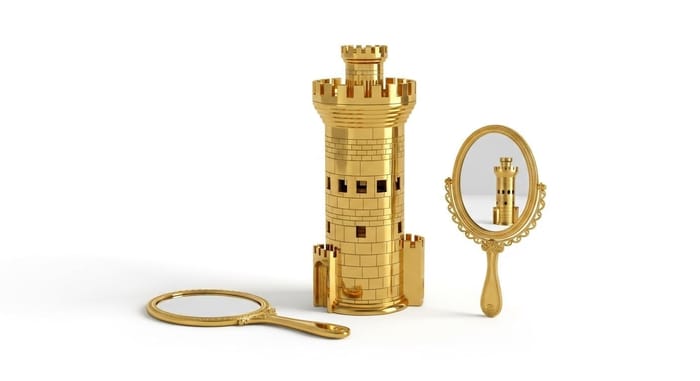
Of all the planetary contacts in astrology, Venus conjunct Saturn may be the one that hurts the most quietly. There is no dramatic explosion here, no volcanic eruption of passion or sudden reversal of fortune. Instead, there is a slow, persistent ache - the feeling of wanting love desperately while being almost constitutionally unable to reach for it.
Saturn sits on Venus like a stone on a seedling. The desire to connect, to be cherished, to give and receive affection freely - all of that is present. It never left. But somewhere early in life, the message arrived that love is conditional, scarce, and dangerous to depend on. And so the walls went up.

The Frozen Child
There is an image that captures this aspect better than any technical description: a three-year-old child, locked in place. The emotional development around love, self-worth, and the capacity to receive affection stalled at whatever age the wound landed. The rest of the personality kept growing - the intellect sharpened, the sense of duty deepened, the ability to function in the world became formidable. But the part that knows how to be held, how to soften, how to say "I need you" without terror? That part stayed small.
This is not a metaphor for immaturity. People with Venus conjunct Saturn are often among the most responsible, disciplined, and emotionally perceptive individuals you will encounter. They have to be. When the natural flow of affection is blocked, you develop compensating strengths - you become the person who shows love through duty, through reliability, through quiet acts of service that no one asked for but everyone depends on. The tragedy is that these gestures often go unrecognized as love, both by the giver and the receiver.
The defenses matured. The emotional core did not. That gap is the source of nearly every struggle this aspect produces.

Where the Wound Comes From
Venus-Saturn contacts almost always carry a generational inheritance. Look at the family chart and you will frequently find difficult Venus aspects recurring across multiple generations - grandmother, mother, daughter, or father, son, grandson - each one passing down a slightly different version of the same message: your worth is not inherent. It must be earned. And no amount of earning will ever quite be enough.
The specific childhood story varies. Perhaps a parent was emotionally unavailable - physically present but affectively absent, unable to provide warmth in any spontaneous or unconditional way. Perhaps love in the household was transactional: good grades earned approval, misbehavior earned cold silence. Perhaps there was a critical authority figure whose standards were impossible to meet, and whose disappointment became the lens through which the child learned to see themselves.
Sometimes the wound is even more subtle than that. A family that valued stoicism. A culture that treated emotional expression as weakness. A home where love existed but was never spoken, never demonstrated, simply assumed - leaving the child to wonder whether it was real at all.
Whatever the specific origin, Venus conjunct Saturn produces adults who have internalized one devastating belief: I am not enough to be loved simply for existing. And so they try to become enough through achievement, through self-denial, through making themselves indispensable. The strategy works brilliantly in professional settings. In intimate relationships, it is a slow-motion disaster.

How It Plays Out in Relationships
The pattern is recognizable once you know what to look for. Venus-Saturn people tend to enter relationships cautiously, often much later than their peers. There is a quality of testing - they are watching, evaluating, waiting for the other shoe to drop. Can this person actually be trusted? Will they stay? Early dates may feel stiff, formal, or guarded in a way that can be mistaken for disinterest when it is actually the opposite: interest so intense that it terrifies them.
When they do commit, Venus-Saturn partners are often profoundly loyal and devoted. They take vows seriously. They show up. They endure difficulties that would send lighter placements running. But there is a coolness to the way they express affection that can bewilder partners who need warmth delivered in obvious, demonstrative ways. The Venus-Saturn person may be thinking "I reorganized your entire filing system because I love you" while their partner is thinking "Why won't you just hug me?"
The fear of rejection runs so deep that it creates preemptive withdrawal. Rather than risk being turned away, the Venus-Saturn person pulls back first - becoming distant, critical, or emotionally unavailable at precisely the moments when closeness is most possible. They build a fortress and then grieve the loneliness inside it, not quite seeing that they are both the prisoner and the architect.
There can also be a pattern of choosing partners who confirm the wound. Emotionally withholding people feel familiar and therefore safe to the Venus-Saturn psyche, even though they perpetuate exactly the dynamic that caused the injury in the first place. Alternatively, some Venus-Saturn individuals seek out much older or much younger partners, unconsciously trying to replay and repair the parent-child dynamic where the original damage occurred.

The Aspect of Rejection
It needs to be said plainly: Venus conjunct Saturn is the aspect of emotional rejection par excellence. Not because these people are unlovable - they are often deeply lovable, in that quiet, complicated way that reveals itself slowly. But because their internal experience of love is filtered through Saturn's lens of scarcity, inadequacy, and fear.
Every romantic disappointment hits harder than it should. Every perceived slight feels like confirmation of the core belief. A partner who is simply tired or distracted can trigger a cascade of abandonment anxiety that is wildly out of proportion to the actual situation - because the response is not really about the present moment. It is about every moment the frozen child was left wanting.
This sounds bleak, and in its unprocessed form, it genuinely is. But Saturn aspects have a quality that no other planet offers: they get better with age. Saturn rewards patience, discipline, and the willingness to do slow, unglamorous inner work. The Venus-Saturn person who commits to understanding their patterns - through therapy, through honest self-reflection, through the accumulated wisdom of relationships that taught them something even when they failed - often arrives at a depth of love in their forties and fifties that they could not have imagined at twenty-five.

When Saturn Transits Your Venus
A Saturn conjunction to natal Venus is one of the more sobering transits in the cycle. It comes around roughly every 29 years, and each time it asks the same uncompromising question: what do you actually value, and what have you been accepting as a substitute?
During this transit, relationships that lack real substance tend to end - not dramatically, but with a quiet finality. The romance that was held together by habit, by fear of being alone, by the comfort of familiarity rather than genuine connection - Saturn strips those justifications away and leaves you looking at what is actually there. Sometimes what is actually there is more than you realized. Sometimes it is much less.
Financially, this transit often coincides with a period of belt-tightening or reassessment. Spending that once felt justified now seems frivolous. Investments in beauty, pleasure, and social life may feel restricted. This is not punishment. It is Saturn asking you to build your sense of worth on bedrock instead of sand.
The transit is uncomfortable, sometimes genuinely painful, but it is not cruel. Saturn is the great teacher, and the lesson of Saturn conjunct Venus is always the same: you deserve real love, not the performance of it. If that means being alone for a while until you can tell the difference, so be it. The loneliness of being single and clear-eyed is infinitely less corrosive than the loneliness of being in a relationship where you are not truly seen.

Growing Into the Aspect
The most beautiful thing about Venus conjunct Saturn is that it ages like nothing else in the chart. The same placement that produced agonizing shyness at fifteen, heartbreak at twenty-five, and emotional isolation at thirty-five can become a source of extraordinary depth and tenderness at fifty. Saturn does not withhold forever. It withholds until you have built something strong enough to hold what it eventually gives.
The Venus-Saturn person who has done their work loves with a steadiness and devotion that more easily aspected charts rarely achieve. They do not take love for granted because they know exactly what its absence feels like. They do not confuse infatuation with commitment because Saturn burned that illusion out of them long ago. When they finally let someone in - truly in, past all the walls and tests and quiet acts of sabotage - the love they offer is bedrock. It will not leave when things get hard. It has already survived hard.

Frequently Asked Questions
Does Venus conjunct Saturn mean I will always struggle with love?
Not always - but early and middle life can be genuinely difficult. Saturn aspects improve with age and with conscious inner work. Many people with this placement report that their deepest, most fulfilling relationships came later in life, after they had spent years understanding their patterns of withdrawal, their fear of rejection, and the difference between earning love and simply receiving it. The struggle is real, but it is not permanent.
Why do I keep choosing emotionally unavailable partners?
Venus conjunct Saturn often creates an unconscious attraction to people who replicate the original childhood wound. Emotionally withholding partners feel familiar, and familiar feels safe - even when it is not. The pattern usually breaks when you become aware of it and begin deliberately choosing differently, which often means tolerating the discomfort of being with someone who is actually available and present. That warmth can feel almost threatening at first, because it asks you to lower defenses you built for very good reasons.
Is Venus conjunct Saturn the same as Venus in Capricorn?
They share some qualities - reserve in expressing affection, a serious approach to relationships, loyalty, and the tendency to improve with age. But Venus conjunct Saturn is more intense and more personal than a sign placement. It specifically involves Saturn's restricting influence directly touching your capacity for love and self-worth, which creates a sharper wound and a more focused journey of healing. Venus in Capricorn can express itself warmly with relative ease; Venus conjunct Saturn usually has to fight harder for that warmth.
How long does a Saturn conjunct Venus transit last?
The exact conjunction is in effect for roughly two to three weeks, though you may feel Saturn approaching your Venus for a month or more beforehand. If Saturn is retrograding, it can make three exact passes over your Venus across a span of several months, which deepens and extends the process considerably. Each pass tends to address a different layer: the first pass reveals the issue, the retrograde pass forces you to sit with it, and the final direct pass helps you integrate what you have learned.