Mercury: The Mind Between Worlds
By Blair Andrews · Published April 26, 2026

The oldest known Mercury tablet dates to roughly 1500 BCE in Babylon, where scribes tracked a restless point of light that never strayed far from the Sun. They called it Nabu, the divine scribe, keeper of the tablets of fate.
The Egyptians called their version Thoth and credited him with inventing writing itself. The Greeks named him Hermes, and the stories they told about him are stranger and more revealing than any horoscope column has space to mention.
In astrology, Mercury rules the mind. But not "intelligence" in the way most people mean it. Mercury is something more specific and more interesting: the part of your psyche that perceives connections, names what it sees, and builds bridges between things that would otherwise remain separate.
If you've ever wondered why Mercury retrograde gets more press than any other planetary transit, it's because Mercury governs the infrastructure of daily life. Communication. Transportation.
The flow of information. When that infrastructure hiccups, everyone notices. But there's a lot more going on with this planet than email glitches and flight delays.

What Kind of Mind Do You Have?
Your Mercury sign describes your cognitive style. Not how smart you are, but how your thinking actually works. What satisfies your mind. What it reaches for when it's curious. What it does with information once it has some.
Mercury in air signs thinks through connection. Ideas spark other ideas. Language is the native medium, and the pleasure comes from naming things precisely, from finding the exact word that captures something previously formless. These are the people who think by talking, who often don't know what they believe until they hear themselves say it.
Mercury in earth signs thinks through the body and the senses. Abstract concepts need to be grounded in something tangible before they feel real. "Show me" matters more than "explain it." These minds trust what they can verify through direct experience, and they have a patience for detail that air Mercury can only admire from a distance.
Mercury in fire signs thinks through intuition. They grasp the whole picture before the pieces are in place, leaping ahead of the evidence to conclusions that often turn out to be right. The problem is backfilling the logic. They see where the road leads but can't always explain how they got there.
Mercury in water signs thinks through feeling. Information arrives wrapped in emotion, and the emotional layer is the one that matters most. They read the room before they read the document. They pick up on what's not being said, on the mood beneath the words, on the thing everyone is carefully stepping around.

Why Can't Mercury Leave the Sun's Side?
Mercury can never be more than twenty-eight degrees from the Sun in your birth chart. This is an astronomical fact with a psychological meaning worth sitting with. Your mind (Mercury) is always close to your core identity (Sun). The way you think shapes the story of who you are, and the story of who you are shapes how you think.
This closeness means Mercury is the Sun's translator. It takes the solar impulse - your deepest drive toward becoming yourself - and converts it into thoughts, words, and ideas that the rest of the world can receive.
A brilliant Sun with a struggling Mercury is a person who knows who they are but can't communicate it. A strong Mercury with a struggling Sun is a person who can talk about everything except what actually matters to them.
Mercury also governs the nervous system. The body's communication infrastructure. When Mercury is under stress in a chart, anxiety often shows up in the gut (Virgo is Mercury's home sign, and Virgo rules the intestines). The mind-body connection isn't a metaphor here. It's a literal correspondence that generations of astrologers have observed.

The God Who Stole Cattle Before Lunch
The myths about Hermes are unlike any other god's stories because Hermes doesn't play by anyone's rules. Born at dawn, he invented the lyre from a tortoise shell by noon. By evening, he had stolen Apollo's sacred cattle and invented another instrument from the evidence.
When caught, he talked his way out of punishment and ended up with Apollo's gratitude as a bonus.
This is the Mercurial archetype in its purest form. Speed. Cleverness. The ability to create something new from whatever materials happen to be lying around. And a relationship to honesty that is… creative. Hermes doesn't lie exactly. He reframes reality.
More importantly, Hermes is the only god who can move freely between all three realms: Olympus, earth, and the underworld. He guides souls after death. He carries messages between gods and humans. He is the god of thresholds, doorways, and in-between states. The crossroads where two paths meet is his territory.
Psychologically, this means Mercury governs your ability to move between different modes of consciousness. Between waking and dreaming. Between the logical and the intuitive. Between what you know and what you haven't discovered yet.
The caduceus - Mercury's staff with two snakes winding around it - is a symbol of this capacity to hold opposing forces in tension without collapsing into either one.
This image of the caduceus has a direct correspondent in the esoteric tarot. Case assigns The Magician to Mercury, and the figure standing at his table with all four elemental implements - Wand, Cup, Sword, Pentacle - is the mind that can hold opposing forces in organized tension.
The horizontal figure-eight above his head represents what Case called "the law that opposite effects are produced by identical causes," which is the caduceus principle rendered as symbol.
The Magician is not cleverness. He is, in Case's phrase, "the concept of concentration itself": the capacity to hold multiple things in simultaneous awareness without collapsing into any one of them.
The numerological tradition maps Mercury to Number 5, which Avery calls the pivot number - literally the number all other numbers pivot around. The keyword is Freedom, and the description reads like a portrait of the Mercurial mind at full extension: restless, magnetic, capable of living more in a single lifetime than others manage in several.
If your Life Path is 5, your chart's Mercury placement describes how the pivot function actually moves through your life - the sign gives it a cognitive style, the house gives it a domain, and the aspects tell you which other parts of the psyche the trickster-mind has to negotiate with.
The god who moves between all three realms, the pivot around which all else turns, the figure with all four implements on the table: three traditions pointing at the same cognitive architecture.

What Mercury Retrograde Actually Is
Three to four times a year, Mercury appears to reverse direction in the sky for about three weeks. It doesn't actually move backward. It's an optical effect created by the relative orbital speeds of Mercury and Earth. But the astrological effect is real, consistent, and wildly misunderstood.
Mercury retrograde isn't a breakdown. It's an internalization. The mind's broadcast mode switches to reception. Communication turns inward. You're meant to reflect, review, and reconsider rather than launch, announce, and finalize.
Problems arise when people try to force forward motion into a retrograde window.
Signing contracts, starting projects, launching products - these often need revision later, not because Mercury is malicious but because the retrograde period is designed for reconsideration, and anything initiated without that reconsideration tends to miss something important.
The three-pass structure matters. Mercury crosses a stretch of the zodiac going forward, then crosses it again going backward, then one final time going forward. What you start on the first pass gets reconsidered on the second. The third pass brings resolution. It's a built-in review process, and fighting it is like arguing with the tide.
If you were born during Mercury retrograde, your mind has a permanent inward orientation. You process before you broadcast. You revise constantly. You may prefer writing to speaking because it allows for the editing that your particular cognitive style requires. This isn't a deficiency. It's a mind tuned for depth rather than speed.

Where Mercury Thrives and Where It Struggles
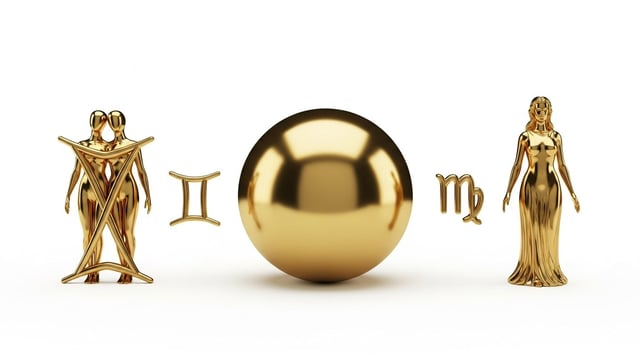
Mercury rules both Gemini and Virgo, which shows two distinct modes of the same cognitive function. In Gemini, Mercury connects. It gathers, associates, networks, and multiplies.
The Gemini Mercury mind is a switchboard, routing information from everywhere to everywhere else. In Virgo, Mercury discriminates. It sorts, refines, analyzes, and edits. The Virgo Mercury mind is a laboratory, testing every piece of data for usefulness before filing it.
Both are necessary. Connection without discrimination is noise. Discrimination without connection is isolation.
Mercury struggles in Sagittarius, where the mind wants to generalize before it has enough data. The big picture seduces and the details feel like a trap. And Mercury has its hardest time in Pisces, where the boundaries between categories dissolve entirely.
The Pisces Mercury mind doesn't think in straight lines. It absorbs. It receives impressions rather than constructing arguments. This can produce extraordinary artistic and empathic intelligence, but it can also make it very difficult to fill out a tax return.

How Mercury Shapes Your Relationships
Your Mercury sign determines how you understand yourself, which is the prerequisite for understanding anyone else. It also determines your communication style in a relationship, and mismatched Mercury elements are one of the most underrecognized sources of relational friction.
Mercury in air thinks about feelings. Mercury in water feels about thoughts. Mercury in fire acts on intuitions. Mercury in earth processes through what's tangible. These are genuinely different ways of engaging with reality.
When an air Mercury tries to talk through a problem with a water Mercury partner, the air person is trying to name and organize; the water person is trying to feel and merge. Neither approach is wrong. But without translation, they talk past each other for years.
The best thing you can do with Mercury in a relationship is learn your partner's cognitive language. The goal isn't replacing yours. It's becoming bilingual.
The relationship where both people can shift between thinking modes - where the thinker can sometimes feel and the feeler can sometimes name - has a resilience that single-language relationships lack.

The Trickster's Shadow
Mercury's shadow is the mind turned against itself. The rationalizations that prevent you from feeling what's actually happening. The analytical capacity that becomes a critic so relentless it paralyzes action. The facility with words that becomes spin, misdirection, and the substitution of clever language for genuine understanding.
There's also the shadow of permanent liminality. Mercury lives at the threshold, which is powerful but can become a way of never fully committing to any position, any relationship, any single version of the truth. The person who is always in-between, always seeing both sides, always mediating - and never standing anywhere of their own.
The trickster in mythology serves a vital function: he disrupts rigid systems and introduces new possibilities. But the trickster who can't stop tricking has no ground to stand on. Mercury integrates when the mind can be flexible without being slippery. When the capacity to see multiple perspectives doesn't destroy the ability to hold one.

What Is Your Mind Actually For?
The caduceus, Mercury's ancient staff, shows two serpents winding in opposite directions around a central axis. It's usually interpreted as a medical symbol now, but its original meaning is about consciousness itself. The two snakes are opposing forces - any pair of opposites will do. The staff is the awareness that holds them both.
That's what your Mercury is for. Holding the tension between things that seem incompatible. Translating between the languages spoken by different parts of yourself. Building bridges between what you know and what you're about to discover.
The question Mercury leaves open, because Mercury always leaves things open, is this: what would you think if you weren't afraid of where the thought might lead?