The Second House: What You're Actually Worth
By Blair Andrews · Published April 26, 2026 · Updated May 10, 2026
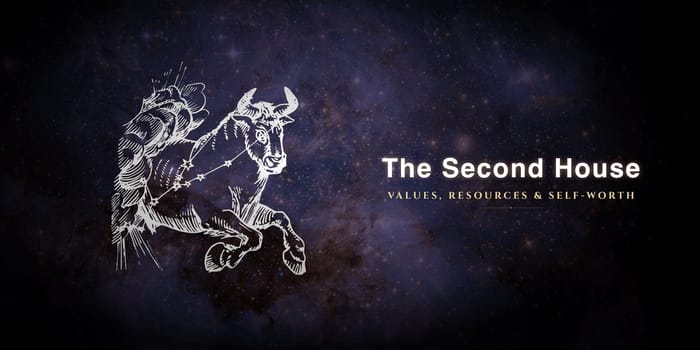
There's a feeling that comes when you hold something that's truly yours. Not borrowed, not inherited, not given conditionally. Something you built, earned, or discovered was already there inside you. A warmth in the chest. A settling. The world feels a little more solid underneath your feet.
That feeling - the felt sense of having substance - is the second house. It lives in the body before it ever shows up in a bank account.
If you've seen the second house described as the "money house," you've gotten the shallowest possible version of what it actually represents. Money is one expression of second-house themes. But the deeper question this house asks is one that no amount of money can automatically answer: What am I worth?

After the Spark
The first house is emergence - the self arriving in the world. The second house is what happens immediately after. You've arrived. You have a body. Now what?
Now you need ground to stand on. Resources. A sense of your own substance. The second house is where the self that just emerged through the Ascendant consolidates for the first time. It asks: what do I actually have to work with? What's genuinely mine?
This is the developmental moment when a child first discovers that it has a body with edges - a me and a not-me, separated by skin. Taste, touch, smell, the pleasure and pain of physical existence.
The senses are the second house's earliest instruments. Before any concept of money or property, there's the body's raw experience of being a thing in a world of things.

The Gate Nobody Mentions
The ancient Greeks had a name for this house that modern astrology has quietly buried. They called it Haidou Pule - the Gate of Hades.
That sounds alarming until you understand the logic. The first house is life itself. The second house is what you encounter immediately after arriving in a body: the conditions of survival. How precarious existence actually is. How close scarcity always sits to abundance.
The Gate of Hades isn't a curse. It's a reminder that the body is mortal and that what we call security is always temporary.
This ancient name carries a shadow that the modern "money house" label completely erases. Every financial crisis, every loss of possessions, every moment when security feels threatened contains within it a miniature encounter with that Gate. The reminder that all material things are borrowed.
In the traditional ranking system, the second house was one of the least favorable positions in the chart. No planet takes its joy here. That's a far cry from the breezy modern interpretation that treats more planets in the second house as a sign of greater wealth.
Numerology arrives at the same territory through a different door. The second house resonates with the number 2 - the Moon's energy of association, duality, and the primal sense of self in relation to what sustains it.
Both the second house and the 2 address a foundational question that precedes any conversation about money: what can you genuinely depend on when outer supports fall away? The 2 is the number that makes relationship possible at all, and the second house is where the self first encounters the reality of needing something outside itself to survive.
Venus, this house's natural ruler through Taurus, carries the number 6 in the planetary system - the energy of responsibility and genuine adjustment. This reframes the second house beyond mere financial management.
What you truly value (the 6's domain) and what you truly need (the 2's domain) must be brought into honest alignment before either outer wealth or inner worth can stabilize.
Practitioners who work across both systems find that the astrology-numerology convergence here illuminates why some people accumulate resources yet never feel secure, while others build genuine substance from very little.

Worth That Doesn't Depend on Evidence
The second house separates into two questions that look connected but can diverge wildly. The first: what material resources do you have access to? The second: what is your internal sense of your own value?
A person with abundant resources may carry a profoundly deflated sense of self-worth. A person with very little may walk through the world with an unshakeable sense of their own substance. The outer and the inner don't always match.
This is where the body-ego comes in. The second house is where you first learn that you have edges, that you occupy space, that you matter enough to have needs and preferences and boundaries.
When this early development goes well, there's a baseline sense of solidity - I am here, I have value, I can sustain myself. When it doesn't, no external accumulation ever quite fills the gap.
The stocktake metaphor captures this well. The second house is an inventory of what you actually have to work with. Not just money, but innate capacities. Embodied gifts. Resources that don't depend on anyone else's approval. What can you genuinely rely on when every external support has been removed?

The Preservation-Transformation Axis
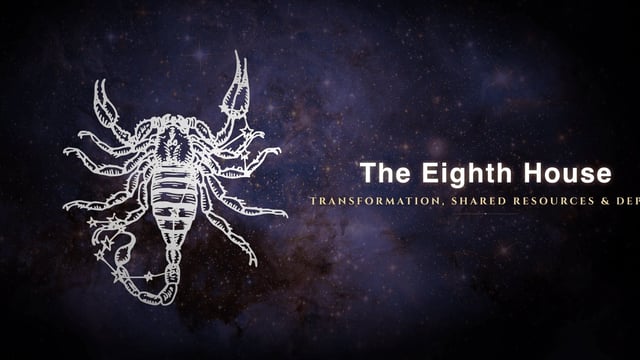
The second house pairs with the eighth, and the tension between them runs through some of life's most difficult passages.
The second house builds. It accumulates. It holds. This is mine. The eighth house dissolves, shares, and transforms through union. This is ours - and therefore neither of us fully owns it.
Where the second house preserves individual forms, the eighth tears them down. Shared finances, inheritance, sexuality, death - the eighth house brings you face to face with everything that can't be controlled through personal possession alone.
The developmental challenge is stark. Can you maintain a sense of inner worth when you can no longer rely on what's materially yours? Can the body-ego survive the experience of merging, of loss, of the ground shifting beneath your feet?
Both houses share an ancient association with mortality. The second with the material proximity to death - how precarious survival conditions really are. The eighth with death itself and what follows. Together they ask: what endures when possessions don't?

Planets and the Body's Ledger
The Sun in the second house ties the individuation journey to the development of personal resources. Identity gets worked out through what you build and sustain. There's a need to feel that what you create has material substance - that your contribution is tangible and lasting.
The Moon here makes emotional security and material security almost indistinguishable. Financial fluctuations feel personal. A dip in the bank account registers as a dip in safety.
The need to accumulate may express an underlying need to feel held, and the relationship between the mother's early nurturance and adult self-worth is often tangled in revealing ways.
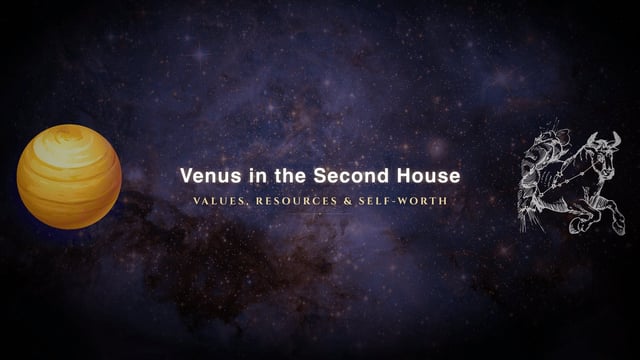
Venus in the second house is often oversimplified as "good with money." The deeper truth is that values, aesthetics, and the capacity for relatedness are the primary resources here. Self-worth links to what is beautiful and what is loveable about yourself. The question isn't how much you earn but how much beauty you can bring to what you build.
Saturn in the second is one of the more challenging placements to live with.
The core fear is financial loss and inadequacy - a deep anxiety that what you possess could be taken away, and with it, your sense of self. Some people with this placement develop extreme material caution. Others cycle through poverty by unconsciously sabotaging their own stability.
The growth work is building a relationship with your inherent worth that doesn't need external proof to feel real.
Mars generates resources through assertive effort but can also spend them impulsively. Jupiter expands abundance but retrograde may find meaning through privately held values rather than social wealth.
The outer planets each transform the resource landscape in their own way - Uranus disrupts it, Neptune dissolves its boundaries, Pluto overhauls it through crisis.

The Senses as First Teachers
Before money, before property, before any concept of financial worth, there's the body's raw encounter with the physical world. The second house is where the senses become teachers. Taste, texture, temperature, the weight of an object in the hand. These are the first experiences of having something real to work with.
The sign on your second house cusp and the planets here describe how you relate to physical experience at the most basic level. A Taurus second house may find grounding through sensory richness.
A Gemini second house may value variety and intellectual stimulation as primary resources. An Aquarius second house might place the highest value on independence from conventional material structures.
This is why the second house is about values in the broadest sense, not just finances. What you value shapes what you accumulate, what you protect, and what you're willing to let go of. Your relationship to money is ultimately an expression of your relationship to worth itself.

The Two Shadows
The second house has a shadow that runs in both directions.
On one side: displacement. Self-worth collapses entirely onto external objects. The person who can't distinguish between "I have lost money" and "I am worthless" is living in this shadow. Possessions become proof of existence. Their loss feels like self-destruction.
On the other side: denial. A complete rejection of material reality and the body. The conviction that caring about money or comfort is "unspiritual." Ascetics and martyrs who genuinely despise security may be enacting this version - denying the Gate of Hades rather than walking through it.
Both shadows share the same error. They confuse the container for the contents. The second house holds material life. It is not material life. The body has value. It is not the totality of value.

Building What Lasts
The growth direction of the second house points toward a self-worth that is genuinely independent of what is possessed, inherited, earned, or lost.
This isn't spiritual bypassing. It's not pretending money doesn't matter or that the body's needs are illusions. It's the recognition that the body-ego can trust its own inherent value without requiring constant external confirmation. That you are worth something not because of what you hold but because of what you are.
Where the ruler of the second house falls in the chart tells you where this work happens. If it lands in the tenth, career and public recognition become the arena. If it lands in the fourth, family inheritance - both material and psychological - is where you work it out.
The second house always connects back to the eighth eventually. Sooner or later, the individual must engage with resources that aren't purely personal - with shared finances, with the resources of partnerships, and ultimately with the reality that all material things are temporary.
The alchemists had a term for the raw, unrefined material from which gold is extracted: prima materia. The second house holds that raw relationship to matter and mortality. The work isn't to transcend it. It's to recognize, within the base material, the seed of something that was always genuinely precious.

Planets in the Second House
A planet in the second house shapes what you value, what you build, and how security actually works for you. Explore each placement:
- Sun in the Second House
- Moon in the Second House
- Mercury in the Second House
- Venus in the Second House
- Mars in the Second House
- Jupiter in the Second House
- Saturn in the Second House
- Uranus in the Second House
- Neptune in the Second House
- Pluto in the Second House