The First House: Where You Begin
By Blair Andrews · Published April 26, 2026 · Updated May 10, 2026
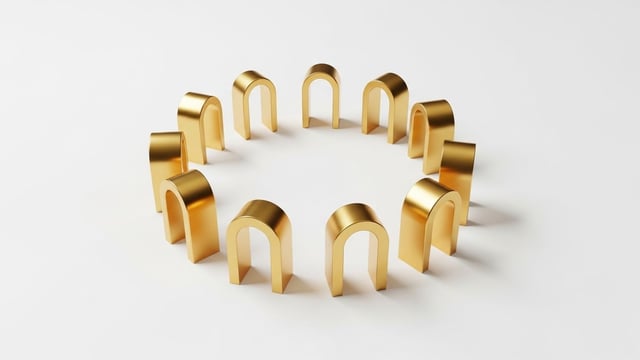
A circle has 360 degrees. Divide it into twelve equal sections and the first section starts at the eastern horizon - the exact line where the earth meets the sky at the moment you were born. That line is the Ascendant. The slice of sky rising above it is the first house.
Every astrology chart begins here. Not at the Sun sign, not at the Moon, but at this single degree of the zodiac that was climbing over the horizon as you drew your first breath. The ancient Greeks called it the Horoskopos - the hour-watcher - because it marks the precise quality of the moment you arrived.
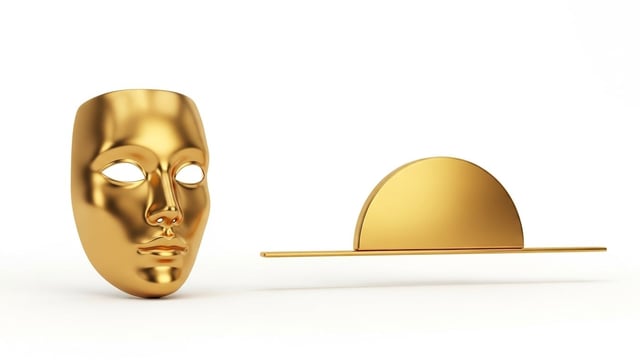
If you've heard that your rising sign is "the mask you wear," you've been given a metaphor that's more misleading than helpful. The first house isn't a mask at all. It's something much more fundamental than that.

The Lens You Can't Remove
Here's what the first house actually is. It's the lens through which you perceive everything. Not how you present yourself to others. How the world reaches you before you've had time to respond.
A Scorpio rising doesn't "act intense" the way someone puts on a leather jacket. A Scorpio rising perceives intensity everywhere. The room feels charged. Subtext is louder than text. Emotional undercurrents register before anyone speaks. That's not performance. That's perceptual structure.
You can change your clothes, your habits, your career. You can't change the lens. It's not something you wear - it's something you are. The difference matters enormously. A mask implies a "real you" hiding underneath. The first house says there's no underneath. This is how reality arrives for you, full stop.
The parallels with numerology run deeper than most practitioners realize. The first house resonates with numerological 1 - the solar principle of individuation, the primal spark that says I exist as a distinct self.
Both the first house and the number 1 address the same foundational question: what does it mean to stand as a particular being in an undifferentiated world? The resonance is structural, not decorative. Numerology's 1 radiates outward from a center, and the Ascendant is that center made visible in the birth chart.
What deepens the picture is that Aries, this house's associated sign, is ruled by Mars, and Mars carries the number 9 in the numerological planetary system - the energy of completion, the number that contains the full arc of human experience within it.
That the house of beginnings is stewarded by the number of endings suggests something the ancients understood intuitively: authentic identity is not the starting point of the journey but something approached through the whole cycle of living.
If you work with both systems, the convergence between astrology and numerology at this particular point in the chart is worth sustained attention.

What Pop Astrology Gets Wrong
The biggest misunderstanding is treating the Ascendant as interchangeable with the Sun sign. They do completely different things.
Your Sun sign describes who you're becoming through the long arc of your life - the hero at the center of your story. Your rising sign describes the quest that hero has been sent on. The mode of travel. The quality of the road.
A Leo Sun with a Virgo Ascendant is a very different person from a Leo Sun with a Sagittarius Ascendant, even though both share the same solar identity. One encounters life through precision and careful analysis. The other encounters it through adventure and the search for meaning.
Reducing the first house to "appearance" also misses the point. Yes, the rising sign often shows in the physical body. But that's because the body is the first house's most visible expression - not its purpose.
The purpose is the quality of aliveness itself. The ancient term was zoe: the animating principle, the life-force flowing through a particular form.

Arriving as a Stranger
Something strange happens with the rising sign. Most people don't recognize themselves in it - at least not at first. The qualities of the Ascendant often feel foreign. You meet them in the people around you rather than in the mirror.
If you have Libra rising, you may spend years attracted to effortlessly graceful people before realizing that grace is actually your own mode of perception. If you have Capricorn rising, you might resent authority figures for decades before understanding that authority is the lens you were given to navigate the world with.
This is one of the most psychologically interesting things about the first house. The quest begins in estrangement. You don't start by knowing your lens - you start by projecting it outward, seeing it in others, gradually recognizing it as your own. Integration takes time. For some people, the rising sign doesn't feel like home until midlife.

The Self-Other Axis
The first house never exists alone. It's permanently paired with the seventh house (the Descendant) sitting directly across the chart. This is the axis of self and other.
Whatever qualities your Ascendant embodies, the opposite qualities live in your seventh house. And because they're opposite, they tend to feel foreign. So you project them onto the people closest to you - partners, collaborators, open rivals - and encounter your own unconscious material through relationship.
Aries rising sees the world through the lens of independence and self-assertion. Across the axis sits Libra - cooperation, compromise, the art of balance.
The Aries Ascendant attracts partners who seem to carry these qualities effortlessly. But those qualities aren't just the partner's. They're the undeveloped side of the Aries self, reflected back through another person.
This is why relationships are so consistently transformative. The seventh house holds what the first house can't yet see about itself. Every significant partnership is, at some level, a mirror.

How You Arrived
There's a striking idea in psychological astrology that the Ascendant describes the birth experience itself. Not as a literal medical prediction, but as a mythic frame: how you arrived shapes how you expect arrival to feel, in every situation afterward.
Scorpio rising may correlate with a birth that was intense, dramatic, or touched by genuine danger. Sagittarius rising may describe a birth that involved a journey, or that carried a quality of adventure even in its difficulty.
Saturn or Capricorn at the Ascendant often appears in charts of people whose births were delayed, long, or required intervention. Mars or Aries rising suggests eagerness, a rapid arrival, the quality of urgency.
This isn't mystical speculation. It's pattern recognition across many charts, noticed by practitioners over decades. The quality of the first threshold shapes expectations about every threshold that follows.
If your first experience of arriving was a fight, you may approach every new beginning with a fighter's readiness. If it was slow and effortful, new starts may always feel like they require more patience than you think you have.
The Ascendant lord, wherever it falls in the chart, carries this theme forward. It's one of the most important planets in any birth chart because its condition, house placement, and aspects describe the general trajectory and quality of the life. The first house says how you perceive. The Ascendant lord says where that perception naturally travels.

When Planets Show Up Here
An empty first house doesn't mean an empty identity. The sign on the Ascendant and the condition of its ruling planet carry the full weight of interpretation even when no planet sits in the house itself.
But when planets do land in the first house, they color the lens directly. The Sun here makes identity and life purpose inseparable from physical presence. You are what you appear to be, for better and worse. There's a high-visibility quality that can feel both empowering and exposed.
The Moon makes emotional responsiveness immediate and visible. Others experience you as fluid, instinctively attuned, sometimes overwhelmingly present. The emotional body is right there at the surface, impossible to hide.
Mercury has a traditional affinity with the first house. When it's placed here, the mind becomes the primary instrument of perception. You read rooms, catch nuances, process information at a speed that can make you hard to pin down. There's a trickster quality. The Ascendant itself becomes mercurial, quick-changing, hard to categorize.
Saturn in the first house weights the lens. Life feels heavier than it looks from the outside. There's caution, self-evaluation, a sense that every step needs to be earned. Two patterns tend to emerge: some people withdraw from assertion entirely, afraid that claiming space will lead to failure. Others overcompensate with rigid control.
The growth work is finding a disciplined, self-directed will that doesn't require either collapse or domination.
Venus softens the lens toward beauty and connection. Mars sharpens it toward directness and action. Jupiter expands it toward optimism and meaning-seeking. Each planet that touches the first house becomes part of how you encounter reality at the most basic level.

The Shadow Side
The first house has two shadow expressions, and they look nothing alike.
The first is rigidity. The lens hardens into armor. Instead of perceiving the world openly, you present a fortress - a controlled, defensive version of the Ascendant that protects against vulnerability but also blocks genuine contact. You're so busy managing how you appear that you've stopped actually seeing what's in front of you.
The second is dissolution. The lens collapses entirely. You absorb whatever the environment demands, becoming a different version of yourself in every room, losing the orienting function that the Ascendant is supposed to provide. There's no consistent point of view because there's no consistent perceiver.
Both patterns share a common root: mistaking the lens for the entire field of vision. The Ascendant is how you see. It is not all there is to see. When you confuse the glass for the landscape, you either grip the glass too tightly or shatter it altogether.

Where Growth Points
The developmental arc of the first house moves from unconscious projection toward conscious inhabitation. Early in life, the rising sign happens to you.
The world seems to be a certain way - intense, structured, adventurous, analytical - and you assume that's just how reality is. Only gradually does it become clear that you're the one filtering things.
The practical growth direction depends on where the ruler of the Ascendant falls in the chart. If that planet lands in the fifth house, the life-force flows naturally toward creativity and self-expression.
If it lands in the tenth, toward public contribution and career. If it lands in the twelfth, toward solitude, spiritual practice, or working behind the scenes. The first house says how you perceive. The ruler's placement says where that perception is ultimately headed.
There's an alchemical metaphor that captures this beautifully. The Ascendant is the vessel - the container in which the conscious self and the instinctual self are brought into relationship. The vessel doesn't impose its will on the contents. It creates the conditions under which transformation becomes possible.
The first house isn't your destination. It's the quality of the journey itself - the way you'll meet every threshold, every beginning, every moment of arrival for the rest of your life. Learning to inhabit it consciously, with awareness rather than autopilot, is one of the deepest forms of self-knowledge astrology offers.
The horizon keeps turning. New degrees keep rising. And every morning, the first house reminds you: you are still arriving.

Planets in the First House
Every planet in the first house becomes part of how you meet the world - it shows up in your presence before you say a word. Explore each placement:
- Sun in the First House
- Moon in the First House
- Mercury in the First House
- Venus in the First House
- Mars in the First House
- Jupiter in the First House
- Saturn in the First House
- Uranus in the First House
- Neptune in the First House
- Pluto in the First House