Angel Number 36: The Number That Gives Itself Away
By Blair Andrews · Published April 27, 2023 · Updated May 21, 2026
The numbers inside 36
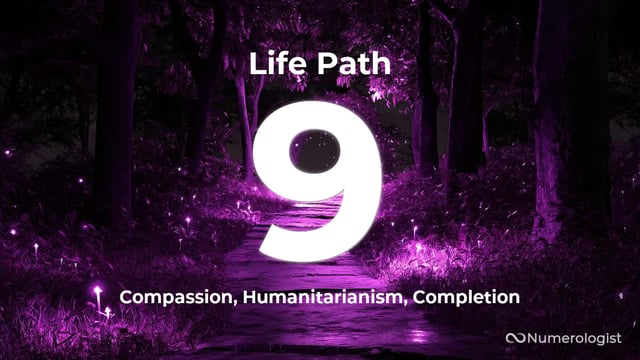
3 + 6 = 9
9: Completion, letting go, a bigger purpose
The creator who has met their work - expression passing through the test of love arrives at the lantern-holder. 36 is the sun amplified by itself, the Pythagorean Great Tetractys: completeness-through-service, where the Hermit holds the lantern for others.
What 36 means for you specifically depends on which of the 11 Life Paths you’re on. Your birthday determines that.
Enter your birthday below:

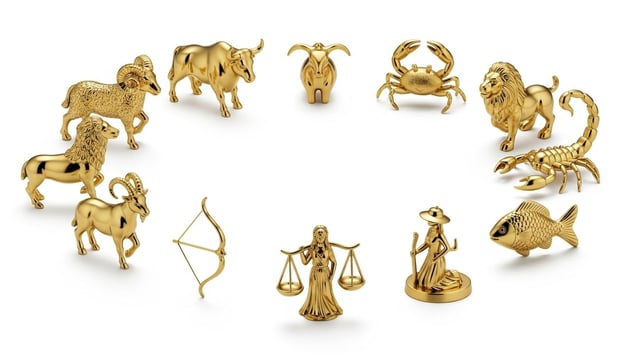
There are 36 decans in traditional astrology - 36 ten-degree divisions of the zodiac, each with its own ruling image, its own presiding spirit, its own hour of the night.
Before tarot as we know it, before the kabbalah was written down, before any of the Western esoteric systems took the shape they carry today, the number 36 was already how astrologers sliced the sky.
The Egyptians carved these divisions into temple ceilings. The Greeks inherited them. The Renaissance magicians reworked them. For thousands of years, 36 has been the number that carves the whole of heaven into parts small enough for a human being to study.
This is not a small inheritance.
And when a number arrives with that kind of weight behind it - a number that civilizations kept returning to because it somehow kept working - it is worth slowing down. Worth asking what it was that the old astronomers and mystics and moralists all seemed to recognize in 36 that modern numerology tends to skim past.
Because 36 is not a casual number. It is not a motivational number. It is a number that has been taking people somewhere for a very long time, and the destination is stranger and more beautiful than most interpretations admit.

The Number Cultures Return To When They Want to Describe Completeness
Look at what the world's traditions have done with 36.
In Jewish mysticism, there is a legend of the Lamed Vavniks. The thirty-six. At any given moment, the story says, there are thirty-six righteous souls alive in the world, and the world is held together by their hidden goodness.
They do not know who they are. They do not suspect their role. They live ordinary lives (tailors, teachers, quiet women selling bread in a market) and they hold the whole of creation upright simply by the unnoticed quality of their kindness.
The number is specific - not forty, not a hundred, but thirty-six.
In classical Chinese military philosophy, there are thirty-six stratagems - a compendium of tactical principles distilled over centuries into a single completed system. The text does not offer thirty-two stratagems or forty-eight.
The tradition settled on thirty-six, and the Chinese phrase san-shi-liu ji carries the weight of totality. These are the patterns by which conflict resolves. The number is meant to be exhaustive.
In astrology, the decans partition all of heaven into thirty-six faces.
In some rabbinic traditions, thirty-six is the count of the miracles surrounding Moses, or the number of times the Torah mentions the stranger, or the hours Adam spent in the Garden before the fall. The number keeps surfacing wherever a tradition wants to say: this is the whole of it. Nothing has been left out.
There is a pattern here.
The Pythagoreans treated 36 as the sum of the first four odd and first four even numbers combined, which they called the "Great Tetractys." These are not arbitrary rankings. When three separate civilizations reach for the same number to describe completeness-through-service, the mathematics is carrying something real.
When cultures reach for a number to name a completeness that arrives not through magnitude but through quiet humility - the whole world upheld by thirty-six ordinary people, the whole of conflict distilled into thirty-six principles, the whole sky divided into thirty-six faces that ordinary hands can calculate - 36 is what they reach for.

The Sun, Doubled
There is a simpler way to see this, and it lives in the mathematics.
36 is 6 squared. 6 multiplied by itself.
Six, in the older tradition, is the number of the sun. In the kabbalistic Tree of Life, the central sphere - the one that sits at the heart of the entire map, the one every other sphere connects through - is called Tiphareth. Its meaning is beauty. Its correspondence, among the heavenly bodies, is the sun.
Six is the sun at the heart of the system. The balancing center. The warm gravitational core that holds the whole tree in harmony.
And 36 is that sun amplified by its own nature. The sun reaching its own square, multiplying its own quality into a higher register. It is not a different energy from 6. It is 6 raised to the power of itself, becoming what it always was - only more so.
There is an old principle in esoteric numerology that compound numbers reducing to the same single digit carry different potencies depending on the route they took to get there.
A 9 arrived at through 18 is not the same 9 as one arrived at through 27 or 36. The larger the number behind the reduction, the greater its weight, either in promise or in warning.
36 is the highest octave of 9 that is still composed of a single-digit pairing. After 36 comes 45, 54, 63 - each one also a 9, but none with the particular resonance of 36, which alone is the perfect square of the sun.
This is why the number shows up where it does. It is structurally significant. It is not random that three separate civilizations, working in isolation, independently settled on 36 as the number of completeness-through-humility.
They were recognizing the mathematics.

The Creator Who Has Met Their Work
But enough astronomy for a moment. Let us come down from the decans and speak to what 36 actually does in a human life - because this is, in the end, what the angel numbers are for.
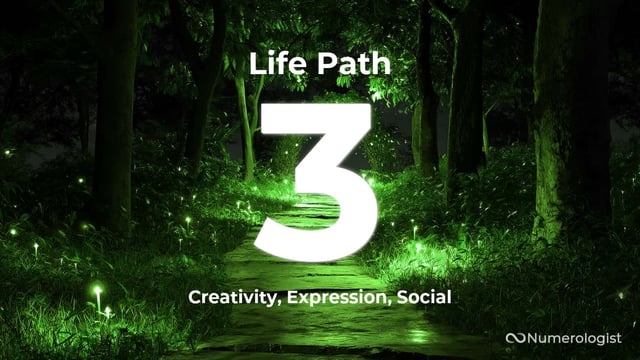
The number 36 begins with 3, and 3 is a particular kind of energy. 3 is the Empress of the tarot - the creator sitting in an already-flourishing garden, warm and fertile and productive almost without effort.
3 is the triangle, the first shape that encloses space, the first number with enough structure to build something that holds. 3 is expression, synthesis, making, the generative impulse that cannot stand to leave a blank page blank.
People whose lives are touched by 3 are makers. They write, paint, speak, perform, build, invent, design. They put things into the world that were not there before. This is their nature, and when they cannot express, something in them goes pale.
But 3, left to itself, has a characteristic vulnerability. It scatters. It starts fourteen projects and finishes three. It pours itself into making and then, when the making is done, moves restlessly on to the next making, never quite stopping to ask what the thing it made is for.
This is where 6 comes in.
6 is the next digit of 36, and 6 is the tempering of pure creative impulse through the discipline of love. 6 is Tiphareth, beauty as organizing principle.
6 is the Lovers card in the tarot, which is not really about romance at all - it is about the choice to serve, the choice to take responsibility, the choice to let what you love reshape what you do.
When 3 meets 6, the creator learns something they could not have learned alone. They learn that making is only half of the work. The other half is asking who the making is for, and whether it serves, and whether it heals.

What Happens When Creation Meets the Test of Love
This is the movement at the heart of 36: creation (3) passing through the test of love (6).
And test is the right word, because it is not automatic. The creator's first instinct is to create for the creator's own satisfaction. The pleasure of making is so intense, the dopamine of completion so rewarding, that it is easy to mistake the satisfaction of the act for the purpose of the act.
6 will not let this mistake stand.
6 is the question the universe asks the maker once the making is done: For whom?
This question has destroyed a lot of work. It has sent perfectly competent artists into crisis, wondering whether their paintings matter, whether their songs reach anyone, whether their books will be read. It has made successful people miserable in the middle of their success. It has driven whole careers off the map.
But for the people who sit with the question honestly - who do not run from it, and who do not answer it too quickly with a false piety - the question is the beginning of something. It is the beginning of a kind of work that does not scatter, because every act of making is organized around the same quiet inquiry: who is this serving?
This is the discipline that 6 lays on 3. The discipline of love as the organizing center of creation. Without 6, the creator makes endlessly and goes nowhere. With 6, every act of creation becomes an act of tending. An offering. A gift shaped by the particular needs of the people who will receive it.
The Lovers card shows a figure standing between two paths. One path is pleasure without responsibility. The other is love that has been chosen with full knowledge of its costs. The card is not a romance. It is a vocational decision.
36 is the number of someone making that decision. Over and over, at every stage of the work.
A note from practice: when the Lovers card appears in the reduction pathway of a creative number, the reading always pivots from what you are making to who you are making it for. That pivot is not a limitation. In my experience across millions of written reports, it is the moment the work stops scattering and starts landing. The 6 inside 36 is that pivot.
Whether 36’s shadow side applies to you — and how strongly — depends on your core numbers. Your birthday reveals the first one.
Enter your birthday below:

The Sun Magnified, Brilliance That Must Release Its Light
Remember that 36 is 6 squared - the sun at Tiphareth, doubled, amplified, glowing brighter than 6 alone could hold.
This matters because brilliance, in the old traditions, is not merely a gift. It is a responsibility. A light held in a single pair of hands is a light that can be hoarded, and the hoarding of light is one of the oldest spiritual failures we know about.
The hermit who stops holding the lantern up for others. The teacher who refuses to publish the method. The artist whose best work never leaves the studio because leaving the studio is terrifying.
36 is a warning against this. This is a warm number, not a scolding one - but the honesty in it is real. The sun was never meant to keep its own warmth. If it did, the whole system would die.
To carry 36 energy is to carry a kind of inner sun that is already full, already glowing, already ripe. And the ripeness is the point. Fruit that does not eventually fall is fruit that rots on the branch. Light that does not travel outward is not light, it is only heat, and heat without movement is a closed system collapsing under its own weight.
This is why the 36 of the Lamed Vavniks is so exact a metaphor. The thirty-six righteous hold up the world not by keeping their goodness private but by letting it move through them so continually that they do not even realize they are its channels.
They are not accumulating virtue. They are transmitting it. The light passes through and goes where it needs to go, and the Lamed Vavnik never gets credit, because the Lamed Vavnik is not the source - only the place where the source happens to be flowing that day.
36 is that geometry. A creator who has made something, a lover who has learned to serve, and now - in the final step that the whole number has been walking toward - a channel that is ready to let what it carries belong to others.

The Final Reduction
Here is the arithmetic the argument has been waiting for.
3 + 6 = 9.
Creation (3) plus love (6) equals completion (9). The Empress meets the Lovers and arrives, finally, at the Hermit.
This is not just addition. It is an entire spiritual architecture.
9, in the tarot, is the Hermit on the mountain. A figure who has walked through every preceding number - who has been the Magician, the Priestess, the Empress, the Emperor, the Hierophant, the Lovers, the Chariot, Strength - and has arrived, at last, at the summit. Alone, but not isolated. Holding a lantern up for the ones still climbing.
9 is completion. It is the last single digit. It is the number that absorbs every other number into itself and still returns to itself. Multiply 9 by anything and the digits of the result come back to 9. It is mathematically unbreakable in a way no other digit is. A number that can take everything in and still remain what it is.
And the Hermit does not keep what he has learned. The whole iconography of the card is about release. The lantern is not lit for him - he already knows the path. It is held up for others. His wisdom is only real to the degree that it moves outward.
This is where 36 has been taking us all along.
The creator (3) who learns to love (6) becomes, finally, the one who completes (9) by giving the work away - willingly, even eagerly, because giving is what the work was for from the beginning, and the maker has become old enough, and full enough, to understand this.

The Work That Belongs to Others
When 36 arrives as an angel number, it is arriving for someone who has been making and tending for a long time.
The making has been going on. The projects have been built. The relationships have been nurtured. The quiet steady work of someone who both creates and serves has accumulated, year after year, into something substantial.
And now the number is asking a particular question: is any of it ready to be let go of?
Let go of - in the way a ripe fruit is let go of by the branch that grew it, which is something altogether different from abandoning. The branch did its work. The fruit does not belong to the branch anymore. To cling to it would not be love; it would be a misunderstanding of what growing is for.
The book that has been in draft for seven years. The recipe that has been in the family but never shared. The wisdom that has been accumulating through a decade of hard seasons, waiting to be told to someone who needs it.
The project that is finished, truly finished, but that you keep polishing because letting it go feels like letting go of yourself.
36 is the number that sits beside you at that threshold. It has walked the whole argument with you. It has taught you to create. It has taught you to love what you create enough to shape it into something that serves.
And now, in its final gesture - the quiet gesture that both 666 and the deeper mathematics of 9 also perform - it is teaching you the last lesson.
The lesson is release.

The Lamed Vavnik Who Does Not Know
Think, one more time, of the thirty-six hidden righteous ones.
They do not know they are holding up the world. This is the genius of the legend. The moment one of them realizes their role and begins to act like a righteous person, they are replaced.
The holiness that sustains the world depends on a particular quality of unself-consciousness. Goodness that has forgotten to measure itself. Service that has forgotten to keep score.
This is what 36 ultimately points toward. Something far removed from spiritual accomplishment or a gold star on the chart of the soul, just the quiet competence of someone who has made, and tended, and given, so consistently that the pattern has become invisible even to them.
They are not thinking about their contribution to the world. They are just living, and the living itself is what holds things up.
Cultures return to 36 when they want to describe this kind of completeness - the completeness that arrives through having been used rather than accumulated, through having circulated what was given rather than hoarding it.
The thirty-six decans divide the sky into faces we can read. The thirty-six righteous divide the burden of the world into pieces small enough to carry. The thirty-six stratagems distill the whole of conflict into something a student can learn.
None of them keep anything for themselves. They are all, in their own way, systems for giving.

An Image to Close On
Picture, if you will, an old fruit tree at the end of a long summer.
It has flowered. It has set fruit. It has spent the whole season pulling water up through its roots, photosynthesizing sunlight into sugar, shaping each apple or pear or plum into something round and full and ready.
This has been the work of months. The tree has been both creator and nurturer - the Empress and the Lovers in the same bark - and now, in the late gold of a September afternoon, the work is done.
The tree does not eat its own fruit.
This is the detail that matters. Everything it has made, over the whole long cycle - it grew for something outside of itself. Birds. Foxes. Children passing by. The neighbor who will take a basket home. The worms that will break down what rots and return it to the soil. Not one piece of what the tree has made will be kept by the tree.
And the tree is not diminished by this. The giving is the whole point. A tree that held onto its fruit would not be a wiser tree. It would be a sick one.
This is 36. The creator (3) who has learned to love (6) becomes, in the final arithmetic, the completion (9) that releases. 36 is not about accumulation. It is about the moment when what you have made is finally ripe enough to belong to others.
The lantern is lit. The fruit is heavy. The thirty-six hidden righteous are at their quiet work, not knowing that they hold the world upright.
The sky, divided into thirty-six faces, is watching.
Let it fall.
Curious which numbers are active in your chart right now? Your birthday is the starting point.
Enter your birthday below:
Explore Angel Numbers
| Digit meanings | Angel Number 3, Angel Number 6 |
| Reduces to | Angel Number 9 |
Behind Your Angel Number
calculate your full numerology chart·find your life path number·numerology, explained