Angel Number 337: When the Work That Won Becomes the Cage
By Blair Andrews · Published July 11, 2023 · Updated May 21, 2026
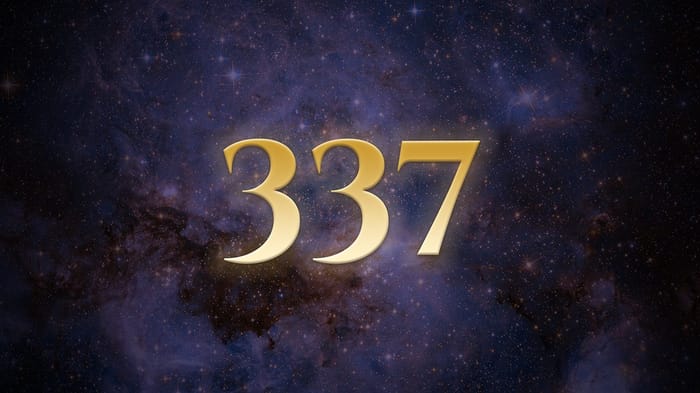
The numbers inside 337


3 + 3 + 7 = 13 → 4
4: Stability, foundation, building something solid
When the work that won becomes the cage, the orbit of the old success must compost. 337 passes through the Death card because creative victory can calcify - what emerges is a free foundation, untethered from the gravity of the celebrated work.
What 337 means for you specifically depends on which of the 11 Life Paths you’re on. Your birthday determines that.
Enter your birthday below:

The loneliness that arrives after the thing worked is its own animal.
Not the loneliness of obscurity - that one has a shape, and most makers know it intimately. This is the other one. The loneliness of being known for something so specifically that the knowing has become a room with the door locked from the outside.
You made the thing. Two of them, maybe. Three. They landed. People loved them. People love them still. And somewhere between the second book and the third, between the album that found its audience and the tour that proved it wasn't a fluke, you began to notice a strange pressure at the edges of your days.
The pressure of being expected to do it again.
There is a pattern in who looks up 337. They are almost never people whose work failed. They are people whose work succeeded, and the success built a room around them, and now the room has started to feel smaller than they are. That particular flavor of restlessness is unmistakable once you have seen it enough times.
Not something new. It. That thing. The one they already have.

The Room With Your Name on the Door
For a long time, you wanted the room. Any maker will tell you that. You wanted people to recognize the work, to know what to call it, to be able to find you on the shelf without having to ask.
Then it happened. And the room materialized around you, with your name on the door in a font you did not choose, and a ceiling slightly lower than you remembered asking for.
The requests started arriving. Gently at first. Could you write another one like the last one? Could you play the song everyone knows? Could you do the thing you did, but again, and a little more of it this time?
The requests are kind. This is what makes them so disorienting. They come from people who genuinely love what you made. They are the reward. They are also, quietly, the walls.

What You Notice in the Quiet
You notice it on the mornings when you sit down to work and realize you are writing toward the audience you have, instead of toward whatever is actually trying to come through.
You notice it when a new idea arrives - something a little stranger, a little off-brand, a little unlike - and you feel a small tired voice in your head that says: they won't want that.
You notice it in the interviews where you describe the work the way you have learned to describe it, and hear yourself saying sentences you first said three years ago, polished now by repetition into something that slides out without touching your actual mouth.
You notice it when you look at the next book, the next record, the next season, and realize you could sketch its outline from here. You know what shape it wants to be. You know what shape they want it to be. And the shapes are the same shape. And something in your chest goes very still.
This is not burnout. Burnout is when the tank is empty. The tank is not empty. The tank is full of something that does not fit the container anymore.

337 Arrives in the Middle of This
Not at the beginning, when the success was new and terrifying and thrilling. Not at the end, when you have already broken out. In the middle. In the hallway between who you were when you made the thing and whoever you are becoming now that the thing is out in the world doing its job without you.
337 is not a warning. It is not a scolding. It is something quieter and more generous than either.
It is the number that shows up when the creative life you built has become a role, and the role has become a costume, and the costume has started to chafe in specific places.
The shoulders where your new ideas keep trying to push through, the throat where the sentences you used to say freely have calcified into the sentences you are known for saying.

The Three, Twice
Look at the shape of it. Three, three, seven.
Two threes at the front. Two acts of making, stacked. The first three is the work that first found you - the book, the song, the show, the voice.
The second three is everything that came after, the repetition of that voice, the expansion of it into a body of work. Two creative expressions. Two proofs that you could do this. Two rounds of the thing that built the room.
And then, at the end, the seven.
The seven is the alignment question. The one that asks, quietly: who is driving?
It is the number of the real self under the trained self. The charioteer under the chariot. It arrives after the two threes to ask whether the person who made the first three and the person who made the second three is still the person making the next thing, or whether somewhere along the way the making became about feeding the room.
Two acts of creation, then a question. That is the architecture of 337.
The old numerologists understood 7 as the Chariot, not as passive contemplation. Agrippa called it "most full of all efficacy" and dedicated it to Pallas, goddess of wisdom born already wearing armor. So the 7 at the end of 337 is not asking you to retreat into quiet reflection. It is asking who is actually driving the chariot of your creative life, you or the audience that loved your last thing.
Whether 337’s shadow side applies to you — and how strongly — depends on your core numbers. Your birthday reveals the first one.
Enter your birthday below:

Thirteen, and What It Really Means
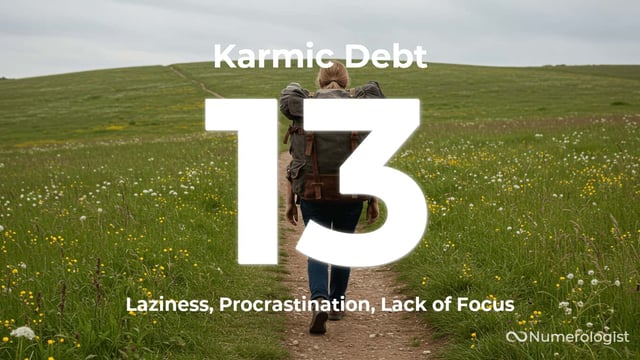
Add them. Three plus three plus seven. Thirteen.
Thirteen has been given a bad reputation by culture and a much better one by the tarot. It is the Death card. And the Death card, as every practitioner will tell you, is almost never about literal death.
It is about transformation so complete that you cannot go back. The sunrise behind the skeleton. The old form laid down so the new form has somewhere to stand.
That is what is happening here. Not to you - to the version of you that the room was built for. That version is ready to be released. Released - the way you release a breath you have been holding too long. The way you release a book into the world. The way you let something go because you have finished with it and it has finished with you.
The creative identity that made the first work is not the creative identity that is trying to make the next work. They are close relatives. They share a kitchen. But they are not the same person, and the new one has been standing in the doorway for a while now, waiting to be invited in.

The Reduction to Four
One plus three. Four.
Four is the Emperor. The builder. The square. The shape that holds.
After the transformation, after the old identity is allowed to rest, what is waiting is not chaos. It is a foundation. A new room, this one with a ceiling high enough for whoever you are becoming. Walls in the shape of the actual work, not the marketed work. A door you can open from the inside.
Four is not exciting on the surface. It is the shape that holds, the slow, unglamorous, deeply loyal number of building something that can stand on its own. It is the work of laying down new boundaries. Of deciding, quietly, what you will make next, regardless of whether the room approves.
Same hands. Same heart. Same craft. New permission.

What Releasing Actually Looks Like
You are allowed to make the strange thing.
You are allowed to make the quiet thing that no one asked for.
You are allowed to make the thing that confuses the audience you built, and trust that a different audience - or the same audience, reoriented - will catch up, or won't, and either outcome is survivable.
You are allowed to retire a signature. Songs. Sentences. Styles. Things you used to do that you do not want to do anymore. The transformation the 13 points toward is permission, not punishment.
You are allowed to be known for one thing and work on another.
You are allowed to disappoint the room.
The ones who love the work most are often more forgiving than the version of them you have been imagining in your head. And the ones who cannot forgive you for changing were never loving the work. They were loving a version of you that stopped being true a while ago.

The Quiet Landing
337 is not asking you to burn the house down. That is a different number, for a different kind of crisis. This one is gentler and more structural.
It is asking you to notice that the creative life that was built for the person who made the first successful thing may no longer fit the person who is making the next one. It is asking you to let the old identity rest with some dignity - to thank it, even. It did its job. It built the room. It let you be seen.
And then it is asking you to step out of that room and start building the next one. Smaller, maybe. Stranger. More yours.
The foundation is there. The quiet, grounded work of the 4 is waiting under everything. It has been waiting this whole time.
Same person. New permission.
That is the whole message.
You made it once. You are allowed to make something else now.
Curious which numbers are active in your chart right now? Your birthday is the starting point.
Enter your birthday below:
Explore Angel Numbers
| Digit meanings | Angel Number 3, Angel Number 7 |
| Reduces to | Angel Number 4 |
| Mirror | Angel Number 733 |
Behind Your Angel Number
calculate your full numerology chart·find your life path number·numerology, explained