Numerology & Color: The Vibrational Connection Between Numbers and Hues
By Blair Andrews · Published April 28, 2012 · Updated June 7, 2025
The Vibrational Link Between Numbers and Color
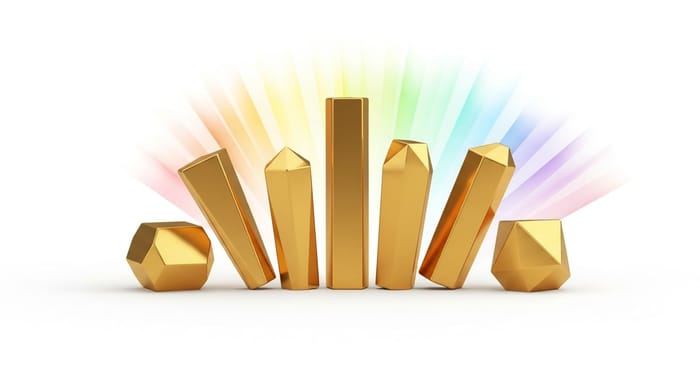
Numbers and colors share something fundamental: they are both expressions of vibration. In physics, color is simply light oscillating at different frequencies - red at the lower end of the visible spectrum, violet at the upper.
In numerology, each number from 1 through 9 carries its own distinct vibrational frequency that influences personality, life cycles, and destiny. When you align the right color with the right number, you create a resonance that amplifies both energies.
This is not a modern invention. Ancient civilizations from Egypt to India to China recognized the connection between numbers, colors, and healing. The chakra system assigns specific colors to each energy center. Pythagorean numerology linked numbers to musical tones, which are themselves frequencies closely related to color.
When you understand these correspondences, you gain a practical tool for shifting your energy, enhancing your strengths, and supporting yourself through challenging periods.

How to Use Color with Your Numbers
The simplest application is to identify the colors associated with your core numerology numbers - your Life Path, Expression, and Soul Urge - and consciously integrate those colors into your daily life. Wear them. Decorate with them. Meditate on them. Choose them when you need their specific energy.
Each number has a primary color that fully activates its vibrational characteristics, along with secondary colors that offer subtler support.
You can also use color strategically based on your current Personal Year cycle. If you are in a Personal Year 1, surrounding yourself with red can amplify the initiative and courage that year demands.
In a Personal Year 7, violet supports the introspection and spiritual study that define that cycle. Color becomes a tool for alignment - a way of tuning your external environment to match the internal energies you are working with.

Number 1: Red
The vibration of leadership, independence, unity, and focused action. Red is the color of the root chakra, the energy center governing survival, physical vitality, and the will to exist. When you need courage, determination, or the fire to begin something new, red is your ally.
It stimulates physical energy, accelerates metabolism, and ignites passion. Secondary colors include crimson, which adds depth and intensity, and apricot, which softens the aggressive edge while maintaining warmth and momentum.

Number 2: Orange
The vibration of cooperation, balance, and harmony between inner worlds and outer environments. Orange corresponds to the sacral chakra, the center of emotions, creativity, and relationships.
This color supports learning, harmonizing relationships, and developing the diplomatic skills that number 2 energy requires. Secondary colors include gold, which adds wisdom and warmth, salmon, which brings gentle nurturing energy, and black, which provides grounding contrast and depth.

Number 3: Yellow
The vibration of communication, optimism, joy, and creative self-expression. Yellow resonates with the solar plexus chakra, the seat of personal power and confident self-identity. It stimulates mental clarity, sparks creative ideas, and lifts mood during periods of heaviness or stagnation.
When you need to communicate effectively, think clearly, or access your natural joy, yellow opens those channels. Secondary colors include ruby, which adds passionate depth to creative expression, and amber, which provides warmth and emotional stability.

Number 4: Green
The vibration of structure, foundation, organization, and practical grounding. Green is the color of the heart chakra, connecting the physical and spiritual dimensions through love and balance. It cultivates inner peace, supports responsible decision-making, and attracts the abundance that comes from steady, reliable effort.
For number 4 energy, green provides the calm stability needed to build lasting structures. Secondary colors include indigo for spiritual depth, blue for clear communication, brown for earthiness, and silver for reflective wisdom.

Number 5: Blue
The vibration of change, freedom, movement, and flexibility. Blue corresponds to the throat chakra, the center of authentic expression and truth-telling.
It promotes patience during periods of rapid change, supports personal growth through new experiences, and brings tranquility to a number that can sometimes feel scattered by its own restless energy. Secondary colors include pink, which softens intensity with compassion, and cherry, which adds vitality and courage during transitions.


Number 6: Indigo
The vibration of nurturing, responsibility, home, and intuitive beauty. Indigo resonates with the third eye chakra, the center of intuition, inner vision, and higher perception.
This deep blue-purple hue activates creativity at its most refined level, strengthens intuitive guidance, and supports the personal power that number 6 needs to fulfill its role as caretaker and harmonizer. Secondary colors include orange for creative warmth and mustard for grounded optimism.

Number 7: Violet
The vibration of reflection, spirituality, analytical wisdom, and inner knowing. Violet corresponds to the crown chakra, the gateway to higher consciousness and divine connection.
It supports meditation, deepens spiritual practice, strengthens psychic abilities, and provides the contemplative energy that number 7 requires to do its important inner work.
This is the color of mystics, scholars, and seekers. Secondary colors include magenta, which adds heart energy to spiritual practice, and pearl, which brings purity and luminous clarity.

Number 8: Rose
The vibration of leadership, prosperity, authority, and material mastery. Rose - a sophisticated blend of red's power and white's purity - supports the ambitious energy of number 8 while keeping it connected to heart-centered values.
It cultivates innovation, supports big changes with grace, and helps number 8 step into powerful leadership without losing compassion. Secondary colors include opal, which brings multi-dimensional awareness, and ivory, which provides refined elegance and timeless quality.

Number 9: Gold
The vibration of universal compassion, humanitarian service, wisdom, and the evolution of consciousness. Gold carries the energy of the sun - warmth, generosity, and illumination.
It supports the highest expression of number 9 by unlocking inner wisdom, cultivating compassion for all beings, and attracting the wealth that flows naturally to those who serve a purpose larger than themselves.
Secondary colors include olive, which grounds spiritual wisdom in practical action, and red, which provides the vitality needed to sustain humanitarian effort.

Putting Color to Work in Your Daily Life
The colors you are intuitively drawn to each day often hold clues to the energies you need most. Pay attention to your instincts when getting dressed, choosing accessories, or selecting items for your home.
If you reach for blue on a particular morning, you may be unconsciously seeking the patience and honest communication that blue provides. If you crave red, your body may be telling you that courage and physical vitality are what this day requires.

Master Numbers and Color
The master numbers 11 and 22 carry intensified vibrations that correspond to amplified color frequencies. Master number 11, the Intuitive Illuminator, resonates with silver and white - colors of heightened awareness, spiritual insight, and the ability to channel universal wisdom.
Master number 22, the Master Builder, aligns with gold and deep coral - colors that combine spiritual vision with the practical power to manifest grand visions in the physical world.
If you carry a master number in your chart, working with these colors can help you sustain the intense energy these numbers demand without burning out.
Experiment with your power colors - the ones associated with your core numerology numbers - and notice how your energy shifts when you consciously surround yourself with them. Color is one of the most accessible and enjoyable ways to work with the vibrational wisdom that numbers reveal about your true nature.

Reader Questions
What color corresponds to my Life Path number?
Each number has a primary color: 1 is red, 2 is orange, 3 is yellow, 4 is green, 5 is blue, 6 is indigo, 7 is violet, 8 is rose, and 9 is gold.
These map to the chakra system and carry the same vibrational qualities as the number itself. Start by wearing or surrounding yourself with the color of your Life Path, then expand to your Expression and Soul Urge colors for layered support.
How do I actually use numerology colors in daily life?
Keep it simple. Wear your power color when you need its energy. Decorate your workspace with it. Choose it for meditation focus.
If you are in a challenging period, try the color associated with your current Personal Year to align your environment with the cycle you are in. Even a scarf, mug, or phone case in your number's color can shift your energy.
Can I use colors from numbers that are not in my chart?
Absolutely. While your core number colors will resonate most naturally, you can use any number's color when you need that specific energy. Need courage for a big meeting? Try red. Need patience during a difficult conversation? Reach for blue. Think of the full color spectrum as a toolkit you can draw from based on what the moment requires.
Why do the color assignments differ from other systems I have seen?
Different numerological traditions assign colors in different ways, and some systems prioritize chakra alignment while others use cultural or historical associations.
The system described here follows Pythagorean numerology paired with the chakra framework, which has been one of the most consistent approaches across centuries. The most important thing is to notice which colors genuinely shift your energy - your own experience is the best guide.